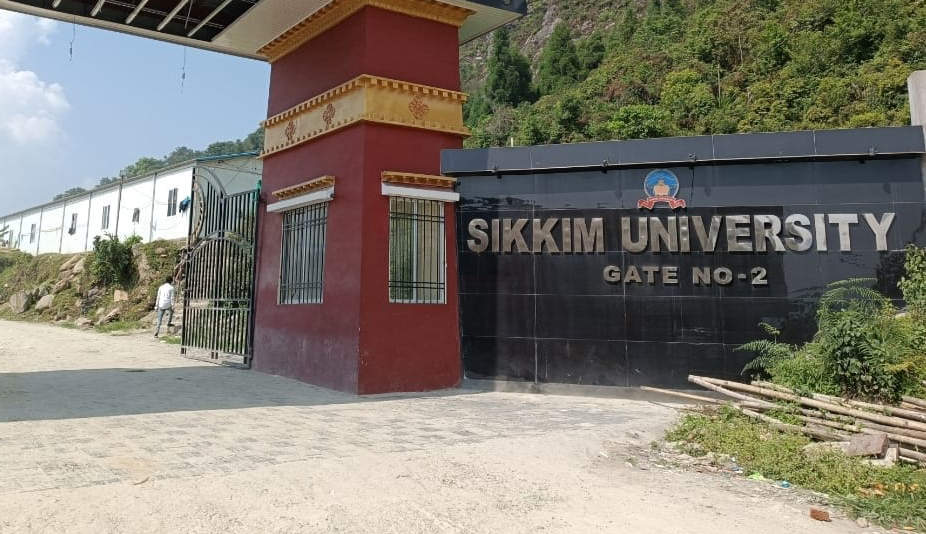
Ph.D. in Geology from Sikkim University: Eligibility, Entrance Exam, Fee Structure, Admission Process, Subjects, Research Areas, Syllabus, Scholarship & Career Scope
Introduction about Ph.D. in Geology at Sikkim University
Embarking on a doctoral journey in Geology at Sikkim University is a transformative experience that blends rigorous scientific inquiry with the breathtaking Himalayan environment. The university’s commitment to cutting‑edge research, interdisciplinary collaboration, and community engagement creates an inspiring platform for aspiring geoscientists to push the boundaries of knowledge. Whether your passion lies in tectonics, mineral exploration, environmental geology, or paleoclimatology, a Ph.D. from Sikkim University equips you with the expertise, credibility, and network essential for a distinguished career.
Eligibility Criteria for Ph.D. in Geology at Sikkim University
Prospective candidates must satisfy the following academic and professional prerequisites:
- Master’s degree (M.Sc. or equivalent) in Geology, Earth Sciences, or a closely related discipline with a minimum aggregate of 55% (or 5.0 CGPA on a 10‑point scale).
- Relevant research experience, publications, or field work is highly advantageous.
- For candidates holding a Bachelor’s degree and a valid GATE score in Geology/Earth Sciences, direct admission to the Ph.D. program may be considered.
- English language proficiency (IELTS/TOEFL) for international aspirants, if the medium of instruction is not the mother tongue.
Entrance Exam for Ph.D. in Geology at Sikkim University
The university conducts a two‑stage selection process:
- Written Test: A comprehensive examination covering advanced topics in Structural Geology, Petrology, Geophysics, Geochemistry, and Research Methodology.
- Interview & Proposal Evaluation: Candidates present a detailed research proposal, demonstrate analytical aptitude, and discuss potential supervisors’ alignment.
Applicants who have cleared national-level exams such as GATE (Geology), CSIR‑UGC NET, or UGC‑JRF are exempted from the written test, proceeding directly to the interview stage.
Fee Structure for Ph.D. in Geology at Sikkim University
| Component | Annual Fee (INR) | Notes |
|---|---|---|
| Tuition & Examination Fees | 15,000 | Applicable to all full‑time Ph.D. students |
| Laboratory & Field Work Charges | 8,000 | Includes equipment usage and field expedition support |
| Library & Digital Resources | 2,000 | Access to e‑journals, databases, and inter‑library loans |
| Registration & Miscellaneous | 3,000 | Administrative processing and certification |
| Total Approximate Annual Cost | 28,000 | Subject to revision each academic year |
Admission Process for Ph.D. in Geology at Sikkim University
The admission cycle follows a transparent, step‑by‑step workflow:
- Online Application: Submit the completed application form through the university’s portal, upload scanned documents, and pay the non‑refundable processing fee.
- Document Verification: The admissions office verifies academic transcripts, degree certificates, and research credentials.
- Entrance Examination: Eligible candidates are invited to sit for the written test (or submit GATE/NET score).
- Interview & Proposal Review: Shortlisted applicants attend a personal interview, presenting their research proposal to a faculty panel.
- Final Selection & Offer Letter: Successful candidates receive an admission letter, outlining stipend, fee waiver eligibility, and registration timelines.
Ph.D. Subjects and Specializations in Geology at Sikkim University
Sikkim University offers a diverse array of specializations designed to cater to emerging scientific challenges:
- Structural Geology & Tectonics
- Petrology & Mineralogy
- Geophysics & Seismic Hazard Assessment
- Environmental & Engineering Geology
- Hydrogeology & Water Resource Management
- Paleoclimatology & Quaternary Studies
- Geochemical Exploration & Isotope Geology
Research Areas in Geology at Sikkim University
Faculty members are actively engaged in nationally and internationally funded projects, offering Ph.D. candidates exposure to high‑impact research. Key research domains include:
- Himalayan Orogeny and Plate Dynamics
- Climate‑Driven Landscape Evolution
- Sustainable Mineral Extraction and Waste Management
- Natural Hazard Modelling (Landslides, Earthquakes)
- Groundwater Contamination and Remediation Strategies
- Remote Sensing & GIS Applications in Geosciences
- Carbon Capture, Storage & Geological Sequestration
Documents Required for Ph.D. in Geology at Sikkim University
| Document | Format | Remarks |
|---|---|---|
| Completed Online Application Form | PDF/Online | Signed digitally |
| Academic Transcripts & Degree Certificates | Scanned PDFs (high resolution) | Attested originals required at interview |
| GATE/NET Scorecard (if applicable) | Valid for the current academic year | |
| Research Proposal (max 2,500 words) | Word Document | Must include objectives, methodology, and bibliography |
| Curriculum Vitae (CV) | Highlight publications, fieldwork, and projects | |
| Two Letters of Recommendation | PDF (sealed) | From academic supervisors or industry experts |
Sikkim University Ph.D. Syllabus for Geology
The doctoral curriculum is structured around four core components:
- Coursework (24 credits) – Advanced seminars on Research Methods, Statistical Modeling, GIS, and Specialized Topics aligned with the chosen specialization.
- Comprehensive Examination – Evaluates depth of subject knowledge and readiness to commence independent research.
- Research Thesis – Original contribution to Geology, documented in a dissertation of at least 80 pages.
- Publication Requirement – Minimum of two peer‑reviewed journal articles or conference papers before thesis submission.
How To Apply for Ph.D. in Geology at Sikkim University
Follow these practical steps to secure your seat:
- Visit the official Sikkim University Ph.D. portal and create a user account.
- Fill out the application form, ensuring accurate personal and academic details.
- Upload all required documents (as listed in the “Documents Required” section) and pay the INR 1,500 processing fee.
- Submit your research proposal; consider consulting experienced mentors for feedback.
- Track application status via the portal; shortlisted candidates will receive an email invitation for the entrance exam/interview.
- After clearing the selection stages, confirm your admission by paying the first-year fee and registering with the university’s graduate school.
Career Scope and Job Opportunities After Ph.D. in Geology from Sikkim University
A doctorate in Geology opens doors to a spectrum of high‑impact careers:
- Academia & Research – Lecturer, Assistant/Associate Professor, Post‑Doctoral Fellow, Research Scientist.
- Government & Public Sector – Positions in Geological Survey of India (GSI), Ministry of Mines, Environment agencies, and state geology departments.
- Industry – Exploration geologist, reservoir engineer, environmental consultant, mining project manager, renewable energy analyst.
- International Organizations – United Nations Development Programme (UNDP), World Bank, NGOs focusing on climate change and natural disaster mitigation.
- Entrepreneurship – Establishing consultancy firms specializing in geotechnical investigations, resource assessments, or GIS services.
Scholarship for Ph.D. in Geology at Sikkim University
The university, along with central agencies, provides a range of financial aid options:
- University Merit Scholarships – Full tuition waiver and monthly stipend for top‑ranked candidates.
- UGC‑JRF/NET Stipends – Annual stipend of INR 31,000 plus medical allowance.
- CSIR‑NET Stipends – Similar to UGC, with additional research grant opportunities.
- External Fellowships – National Science Fund, Indo‑Swiss Joint Research Programme, and International Fulbright Scholarships.
- Project‑Based Funding – Many faculty members incorporate Ph.D. scholars into funded




