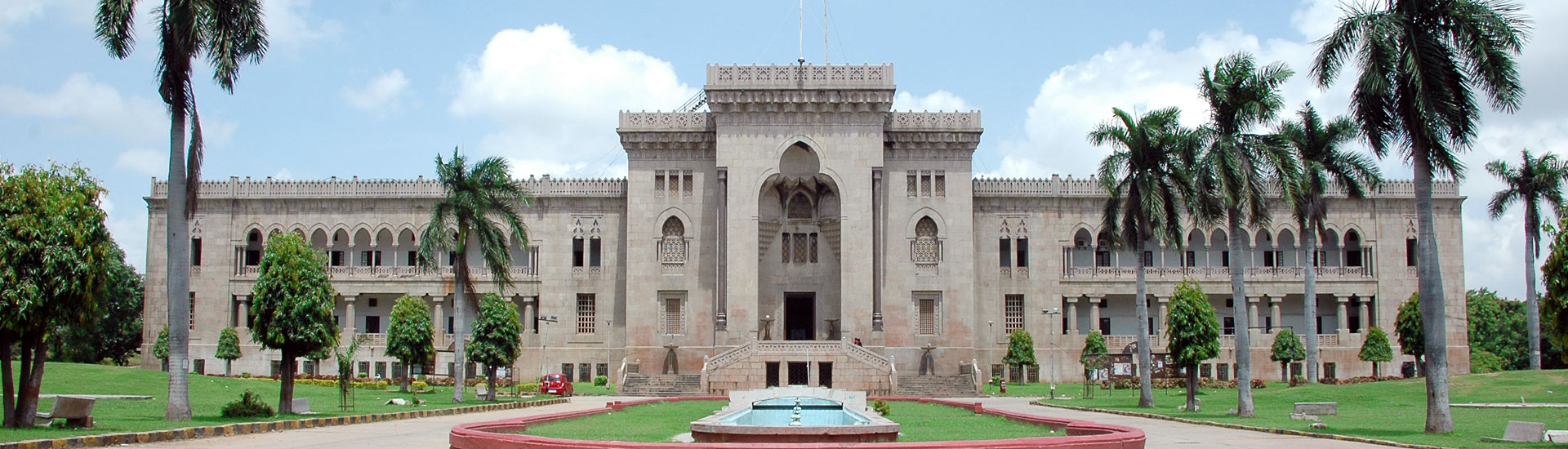
Introduction about Ph.D. in Hindi at Osmania University
Osmania University, one of the oldest and most prestigious institutions in India, stands as a beacon of academic excellence and cultural heritage. Pursuing a Ph.D. in Hindi at this historic university is more than just an academic endeavor; it is a journey into the heart of the "Rajbhasha" and its profound literary traditions. The Department of Hindi at Osmania University has consistently fostered an environment of intellectual rigor and creative exploration, making it a premier destination for scholars who aim to contribute significantly to the field of linguistics, literature, and cultural studies. For professionals seeking to elevate their careers and contribute to the national discourse, this program offers a platform to bridge traditional wisdom with contemporary research methodologies. The doctoral journey here empowers you to decode complex literary structures and preserve the linguistic tapestry of India while advancing your scholarly voice on a global stage.
Ph.D Admission 2026-2027 & Writing Support Services by Shiksha Research
Eligibility Criteria for Ph.D. in Hindi at Osmania University
The path to a doctorate requires a solid foundation in academic excellence and a deep passion for the Hindi language. Osmania University maintains high standards for its doctoral candidates to ensure that the research produced is of international quality. To be eligible for the Ph.D. program in Hindi, candidates must usually possess a Master?s degree in Hindi (M.A. Hindi) from a recognized university. A minimum of 55% aggregate marks is mandatory for candidates belonging to the General category, while a relaxation of 5% (bringing the requirement to 50%) is typically provided to SC/ST/OBC (non-creamy layer) and physically challenged candidates.
Furthermore, professionals who have already cleared national-level examinations like UGC-NET, JRF, or State Eligibility Tests (SET) are given high preference. In some instances, candidates with an M.Phil. in Hindi are also considered highly eligible, often bypassing the initial screening phases. Navigating these requirements can be complex, which is why many candidates seek professional PhD Admission Assistance to ensure their documentation and prerequisites are perfectly aligned with the university's evolving standards.
Entrance Exam for Ph.D. in Hindi at Osmania University
A critical milestone in the admission journey is the Osmania University Ph.D. Entrance Test. This examination is designed to test the candidate?s depth of knowledge in Hindi literature, grammar, history of the language, and research aptitude. The entrance exam usually consists of two parts: the first part focuses on research methodology, and the second part is subject-specific, covering ancient, medieval, and modern Hindi literature. Candidates must demonstrate not only their familiarity with classic texts by authors like Premchand, Kabir, and Tulsi Das but also their ability to critically analyze contemporary linguistic trends.
Exemption from the entrance exam is often granted to those who have qualified for the UGC-NET/JRF or have an M.Phil. through a regular mode. However, all candidates, including those exempted, must participate in the departmental interview process, where their research potential is thoroughly evaluated. Preparation for this stage requires a strategic approach, often involving a deep dive into previous years' question patterns and staying updated with recent developments in Hindi philology.
Fee Structure for Ph.D. in Hindi at Osmania University
Osmania University, being a state-funded institution, offers an affordable and transparent fee structure, making it accessible to dedicated scholars from various economic backgrounds. The fees are structured to cover registration, library usage, laboratory/computer facilities, and examination costs. Below is an approximate breakdown of the fee components for the Hindi Ph.D. program:
| Fee Category | Estimated Amount (INR) - General | Estimated Amount (INR) - SC/ST/OBC |
|---|---|---|
| Registration & Admission Fee | ? 2,000 - ? 5,000 | ? 1,500 - ? 3,000 |
| Annual Tuition Fee | ? 4,000 - ? 8,000 | ? 2,000 - ? 4,000 |
| Library & IT Infrastructure Fee | ? 1,500 / year | ? 1,000 / year |
| Thesis Submission/Evaluation Fee | ? 5,000 - ? 10,000 | ? 5,000 - ? 10,000 |
| Administrative/Miscellaneous Fees | ? 2,000 | ? 1,000 |
Note: The fees mentioned above are indicative and subject to change per the university's annual notifications. Detailed fee charts are provided at the time of session commencement.
Admission Process for Ph.D. in Hindi at Osmania University
The admission process at Osmania University is a rigorous multi-stage journey designed to select the most promising researchers. It typically begins with a public notification released on the university's official website. Following the notification, candidates must fill out an online application and appear for the entrance test if they are not specifically exempted. After the results are announced, a shortlist is prepared for the interview/viva-voce round.
During the interview, candidates are expected to present their research vision before a Departmental Research Committee (DRC). This is a crucial phase where your clarity of thought and academic maturity are tested. Successful candidates are then allotted a research supervisor based on their area of interest and the availability of guides. To stand out during this competitive phase, many applicants opt for PhD Topic Selection and Proposal Assistance, ensuring that their research blueprint is both innovative and feasible within the academic framework of Osmania University.
Ph.D. Subjects and Specializations in Hindi at Osmania University
The Hindi department at Osmania University offers a diverse range of specializations, allowing scholars to tailor their research to their specific passions and career goals. The curriculum is designed to push the boundaries of traditional literary criticism while embracing modern interdisciplinary approaches. Key subjects and specialization areas include:
- Bhakti Kavya: In-depth study of devotional poetry and its socio-cultural impact.
- Modern Prose (Gadya): Focused on the evolution of novels, short stories, and essays in Hindi.
- Comparative Literature: Analyzing Hindi literature alongside other Indian or International languages.
- Dalit and Tribal Literature: Exploring marginalized voices and social justice themes in Hindi writing.
- Linguistics and Philology: The scientific study of language structure, evolution, and dialectology.
- Functional Hindi (Prayojanmoolak Hindi): Focusing on Hindi in administration, media, and technology.
Research Areas in Hindi at Osmania University
Osmania University encourages research that is not only academically sound but also socially relevant. The faculty members are pioneers in various niches, providing scholars with a rich pool of expertise. Some of the most prominent research areas currently being explored include the translation of regional literary hits into Hindi, the impact of globalization on the Hindi language, and the digitalization of ancient Hindi manuscripts. Researchers are also delving into the "Pravasi Sahitya" (Diaspora Literature), examining how the Hindi language thrives and adapts in international contexts.
Developing a unique research area often leads to the creation of intellectual property. For scholars working on innovative linguistic tools or digital archival methods, Patent Filing and Support Services can be invaluable in protecting their original contributions to the field of educational technology and linguistics.
Documents Required for Ph.D. in Hindi at Osmania University
Accuracy in documentation is the first step toward a successful admission. Candidates must ensure that all certificates are attested and valid. The following documents are typically required during the verification process:
- Master?s Degree Certificate and Consolidated Mark Sheets in Hindi.
- Undergraduate Degree and Mark Sheets.
- Transfer Certificate (TC) and Migration Certificate.
- UGC-NET/JRF/SET Qualification Certificate (if applicable).
- M.Phil. Degree Certificate (if applicable).
- Caste/Community Certificate (for reserved categories).
- Aadhaar Card or any Valid Govt. Photo ID.
- Detailed Research Proposal/Synopsis.
- Passport-sized Photographs.
Osmania University Ph.D. Syllabus for Hindi
The syllabus for the Ph.D. coursework at Osmania University is meticulously designed to prepare scholars for high-level independent research. The first six months to a year are usually dedicated to "Pre-Ph.D. Coursework," which includes subjects like:
- Research Methodology: Techniques of data collection, bibliography preparation, and ethical considerations in research.
- Literary Criticism and Theory: Understanding Indian and Western poetic theories (Kavya Shastra) and their modern applications.
- Advanced Study of Hindi Literature: A deep dive into specific eras (Aadi Kaal, Bhakti Kaal, etc.) or genres selected for research.
- Computer Applications in Research: Training in using software tools for Hindi typing, data analysis, and digital archiving.
Once the coursework is cleared, the candidate focuses entirely on their thesis. Ensuring that the final draft of the thesis is of the highest caliber is essential; hence, utilizing professional Editing and Proofreading Services is a standard practice among top-tier researchers to eliminate linguistic errors and enhance readability.
How To Apply for Ph.D. in Hindi at Osmania University
Applying for a Ph.D. at Osmania University involves a systematic approach. Follow these steps for a smooth application experience:
- Monitor Official Notifications: Frequently check the Osmania University website (osmania.ac.in) for the Ph.D. admission link.
- Online Registration: Fill in the personal and academic details accurately in the online portal.
- Application Fee Payment: Pay the prescribed fee through the integrated payment gateway.
- Upload Documents: Scan and upload the required academic transcripts and certificates.
- Download Admit Card: Once the application is processed, download the entrance test hall ticket.
- Appear for Entrance/Interview: Attend the scheduled examinations and the departmental interview with a well-prepared research proposal.
Career Scope and Job Opportunities After Ph.D. in Hindi from Osmania University
A Ph.D. in Hindi opens doors to a multitude of prestigious career paths. Professionals with a doctorate from Osmania University are highly respected in the academic community. Career opportunities include:
- Academia: Assistant Professor or Associate Professor in universities and colleges across India.
- Research: Post-doctoral fellowships or positions in research institutes dedicated to language and culture.
- Government Sector: Hindi Officers, Translators, and Rajbhasha Adhikaris in Central and State Government departments and PSUs.
- Media and Journalism: Editorial roles in Hindi newspapers, magazines, and digital news portals.
- Publishing: Working as senior editors or content strategists for leading publishing houses.
To maximize these opportunities, scholars must publish their findings in reputable journals. Obtaining Research Publication Support can help in getting articles featured in Scopus, Web of Science, or UGC-CARE listed journals, which significantly boosts a candidate's profile for academic recruitment. For those who have made life-long contributions to the language without formal doctoral study, exploring Honorary Doctorate Programs might also be a viable path to recognition.
Scholarship for Ph.D. in Hindi at Osmania University
Financial support is a vital component for sustaining long-term research. Scholars at Osmania University can avail themselves of various national and state-level scholarships. JRF-qualified candidates receive a monthly stipend from the UGC. Additionally, the Telangana State Government offers fellowships for SC/ST and OBC students. There are also university-specific fellowships (OU-RF) for meritorious students who are not receiving any other financial aid. These scholarships ensure that financial constraints do not hinder the pursuit of knowledge and the eventual completion of a high-quality doctoral thesis.
FAQs Regarding Ph.D. in Hindi at Osmania University
1. Can I pursue a Ph.D. in Hindi part-time at Osmania University?
Osmania University generally offers full-time Ph.D. programs. However, in some departments, internal faculty or permanent government employees may be considered for part-time research under specific university guidelines.
2. Is there an age limit for applying to the Ph.D. program?
Generally, there is no upper age limit for the Ph.D. program itself, though specific scholarship schemes (like UGC-JRF) may have their own age restrictions.
3. How long does it take to complete a Ph.D. in Hindi?
The duration typically ranges from a minimum of 3 years to a maximum of 6 years, depending on the progress of the research and the approval of the supervisor.
4. Is the entrance exam compulsory for all?
No, candidates with UGC-NET (including JRF) or SET qualifications are usually exempted from the written entrance exam but must attend the interview.
5. What is the medium of the entrance exam?
Since the specialization is Hindi, the subject-specific section of the entrance exam and the subsequent thesis work will be primarily in Hindi.




