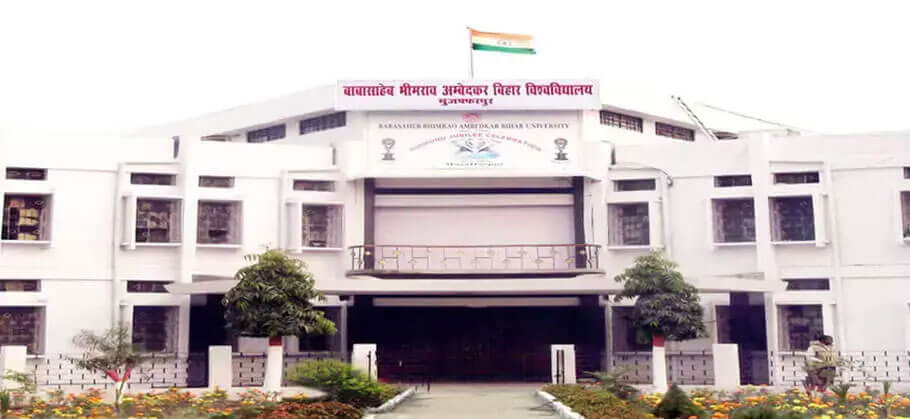
Introduction about Ph.D. in History at Babasaheb Bhimrao Ambedkar Bihar University
Embarking on a journey toward a Ph.D. in History at Babasaheb Bhimrao Ambedkar Bihar University (BRABU), Muzaffarpur, is more than just an academic pursuit; it is a profound commitment to uncovering the narratives that have shaped the human experience. As one of the premier institutions in the heart of North Bihar, BRABU offers a fertile ground for scholars to delve into the depths of the past, ranging from the ancient glory of Vaishali and Pataliputra to the socio-political movements of modern India. This doctoral program is designed for visionary professionals and historians who wish to contribute original knowledge to the world, analyzing the intricate socio-cultural, economic, and political shifts that define our existence. By pursuing this degree, you are not merely studying the past; you are becoming an architect of the future by providing context to current global challenges through the lens of historical wisdom. To ensure your application stands out, seeking professional PhD Admission Assistance can be a pivotal step in navigating the competitive landscape of higher education.
Ph.D Admission 2026-2027 & Writing Support Services by Shiksha Research
Eligibility Criteria for Ph.D. in History at Babasaheb Bhimrao Ambedkar Bihar University
The eligibility criteria for the Ph.D. program in History at BRABU are designed to identify scholars with the intellectual rigor necessary for high-level research. Candidates must hold a Master?s degree (MA) in History or a closely related discipline from a university recognized by the University Grants Commission (UGC). A minimum of 55% marks (or an equivalent grade) in the postgraduate degree is mandatory for general category candidates.
For professionals belonging to reserved categories (SC/ST/OBC/Differently-abled), a relaxation of 5% is typically provided, bringing the minimum requirement to 50%. It is essential that the candidate?s academic record reflects a consistent passion for historical inquiry. Furthermore, candidates who have already qualified for nationally recognized tests such as UGC-NET (including JRF), CSIR-NET, or those who have completed an M.Phil. through a regular mode following the UGC Regulations of 2009, may find themselves at a distinct advantage during the selection process.
Entrance Exam for Ph.D. in History at Babasaheb Bhimrao Ambedkar Bihar University
The gateway to research excellence at Babasaheb Bhimrao Ambedkar Bihar University is the Ph.D. Admission Test (PAT). This entrance examination is meticulously structured to test both the breadth of historical knowledge and the depth of analytical skills. The PAT usually consists of two papers:
- Paper I: General Research Aptitude, which evaluates quantitative ability, data interpretation, and logical reasoning.
- Paper II: Subject-specific paper focusing on History, covering themes from Ancient, Medieval, and Modern Indian History, along with World History and Historiography.
Qualifying for the PAT requires a disciplined approach to study. However, scholars who have cleared the UGC-NET/JRF or have been awarded prestigious fellowships are often exempted from the written test, though they must still appear for the personal interview. Preparing your research vision early is crucial, and utilizing PhD Topic Selection and Proposal Assistance can significantly enhance your chances of passing the initial screening with a compelling research narrative.
Fee Structure for Ph.D. in History at Babasaheb Bhimrao Ambedkar Bihar University
Investing in a Ph.D. is an investment in your intellectual legacy. Babasaheb Bhimrao Ambedkar Bihar University maintains a highly competitive and affordable fee structure to ensure that financial barriers do not hinder the pursuit of knowledge. The fees are subject to periodic revisions by the university administration.
| Particulars | Approximate Fee (INR) | Frequency |
|---|---|---|
| Application Fee (PAT) | 2,000 - 3,000 | One-time |
| Admission/Registration Fee | 5,000 - 10,000 | One-time |
| Ph.D. Course Work Fee | 10,000 - 15,000 | Once (6 months) |
| Annual Tuition/Research Fee | 4,000 - 8,000 | Yearly |
| Thesis Submission Fee | 10,000 - 12,000 | One-time |
*Note: The fees mentioned above are indicative and may vary based on category and university updates. Additional costs for library access, identity cards, and laboratory usage (if applicable) may apply.
Admission Process for Ph.D. in History at Babasaheb Bhimrao Ambedkar Bihar University
The admission process at BRABU is transparent, merit-driven, and designed to select the most dedicated minds. It begins with the release of the official notification for the Ph.D. Admission Test (PAT). Once candidates apply and qualify for the PAT (or secure an exemption), they are called for a comprehensive interview or Viva-Voce.
During the interview, the Departmental Research Committee (DRC) evaluates the candidate?s research interest, subject knowledge, and the feasibility of their proposed research. Successful candidates are then admitted into the mandatory six-month Ph.D. Course Work, which is a prerequisite for final registration. This coursework focuses on research methodology and advanced historical tools. For those who are established professionals looking for recognition through experience rather than traditional research, exploring Honorary Doctorate Programs might be an alternative route to academic distinction.
Ph.D. Subjects and Specializations in History at Babasaheb Bhimrao Ambedkar Bihar University
The History Department at BRABU offers a wide array of specializations, enabling researchers to focus on their specific areas of interest. The curriculum is vast, allowing scholars to engage with diverse temporal and thematic landscapes.
- Ancient Indian History: Focusing on archaeology, numismatics, and the socio-economic structures of early civilizations.
- Medieval Indian History: Studying the Sultanate and Mughal empires, cultural synthesis, and agrarian systems.
- Modern Indian History: Analyzing colonial dynamics, the Indian National Movement, and post-independence challenges.
- Regional History of Bihar: Specialized study on the role of Bihar in shaping Indian history, from the Mauryan Empire to the Champaran Satyagraha.
- Historiography and Theory: Examining the methods and philosophies used by historians to interpret the past.
Research Areas in History at Babasaheb Bhimrao Ambedkar Bihar University
Research at BRABU is characterized by its inclusivity and its drive to find unknown facets of history. The university encourages interdisciplinary research that connects history with sociology, political science, and environmental studies. Key research areas include:
Scholars often focus on Subaltern studies, gender history, and the history of disenfranchised communities in Bihar. Others explore the economic history of North Bihar, focusing on trade routes, zamindari systems, and labor migrations. The university's proximity to historical sites offers incredible opportunities for field research in Buddhist studies and Jainism. To ensure that these findings reach the global academic community, many scholars utilize Research Publication Support to get their work featured in indexed journals.
Documents Required for Ph.D. in History at Babasaheb Bhimrao Ambedkar Bihar University
Preparing the documentation accurately is a critical step in the admission journey. Candidates should ensure they have the following documents ready:
- Postgraduate Degree Certificate and Marksheets.
- Undergraduate Degree Certificate and Marksheets.
- PAT Admit Card and Scorecard (if applicable).
- UGC-NET/JRF/M.Phil. Certificate (for exemption categories).
- Caste/Category Certificate (if applicable).
- Migration Certificate and Transfer Certificate.
- A well-structured Research Proposal/Synopsis.
- Recent Passport-sized Photographs.
- Identity Proof (Aadhar Card, Voter ID, or Passport).
Ensuring your research proposal is error-free and academically sound is vital; therefore, professional Editing and Proofreading Services are highly recommended before final submission.
Babasaheb Bhimrao Ambedkar Bihar University Ph.D. Syllabus for History
The Ph.D. syllabus at BRABU is divided into two major phases: Coursework and Doctoral Research. The coursework syllabus includes:
Unit 1: Research Methodology: Focusing on historical methods, criticism of sources (internal and external), and the use of archives. It also covers the digital humanities and technological tools for historical research.
Unit 2: Historiography: A deep dive into various schools of historical thought?Imperialist, Nationalist, Marxist, and Subaltern.
Unit 3: Review of Literature: Scholars are required to analyze existing literature in their chosen area of specialization to identify research gaps. In some cases, where history intersects with technical or unique methodologies, scholars might even explore Patent Filing and Support Services if their research leads to innovative archival technologies or methodologies.
How To Apply for Ph.D. in History at Babasaheb Bhimrao Ambedkar Bihar University
The application process is typically handled through the university?s official online portal during the admission cycle. Here is a step-by-step guide:
- Visit the Portal: Navigate to the official BRABU website and locate the 'Ph.D. Admission' link.
- Registration: Create a user profile using your email and mobile number.
- Fill Application: Enter personal, academic, and professional details carefully.
- Upload Documents: Securely upload scanned copies of all required certificates and your research proposal.
- Fee Payment: Pay the PAT application fee through the integrated online payment gateway.
- Submission: Review all details and submit the form. Keep a physical printout for future reference.
Career Scope and Job Opportunities After Ph.D. in History from Babasaheb Bhimrao Ambedkar Bihar University
Holding a Ph.D. in History from a prestigious university like BRABU opens doors to various fulfilling career paths. It is not just about teaching; it is about becoming a subject matter expert and a cultural leader.
- Academia: Serving as Assistant Professors in universities and colleges across India.
- Archives and Museums: Working as Archivists, Curators, or Historians in public and private institutions like the National Archives of India.
- Civil Services: History is a popular optional subject for UPSC and BPSC; a Ph.D. provides an unparalleled depth of knowledge for these exams.
- Research and Think Tanks: Contributing to policy research, heritage management, and historical consultancy for international organizations.
- Content and Publishing: Writing scholarly books, working as historical consultants for media and films, or acting as editors for academic journals.
Scholarship for Ph.D. in History at Babasaheb Bhimrao Ambedkar Bihar University
BRABU and the Government of Bihar, along with central agencies, provide several financial aids to support doctoral candidates.
Candidates who have qualified for JRF receive a monthly stipend from the UGC. Furthermore, the State Government offers various fellowships for students belonging to SC/ST and minority communities. The university also may provide non-NET fellowships to a limited number of scholars based on departmental recommendations and fund availability. These scholarships are designed to allow researchers to focus entirely on their work without the burden of financial stress, fostering an environment of pure academic inquiry and excellence.
FAQs Regarding Ph.D. in History at Babasaheb Bhimrao Ambedkar Bihar University
1. What is the duration of the Ph.D. program in History at BRABU?
The minimum duration is three years, including coursework, and the maximum is usually six years.
2. Can I apply for a Ph.D. while working as a professional?
Yes, professionals can apply, but they must provide a 'No Objection Certificate' (NOC) from their employer and complete the mandatory six-month coursework in regular mode.
3. Is the PAT exam mandatory for all?
No, candidates with UGC-NET/JRF or regular M.Phil. degrees are generally exempt from PAT but must participate in the interview process.
4. How often does BRABU release Ph.D. admission notifications?
Notifications are typically released once a year, depending on the number of vacant seats available under supervisors.
5. Can I choose my research supervisor?
Candidates can express a preference based on the research area, but the final allocation is done by the DRC based on vacancy and specialization matching.




