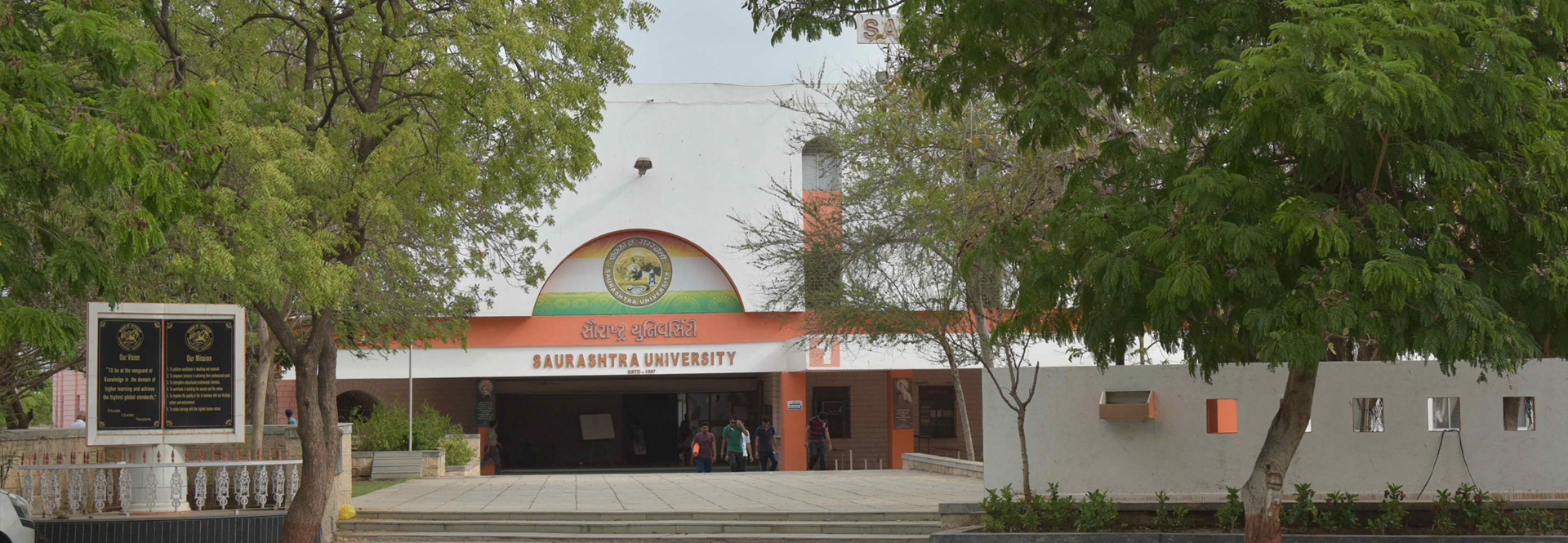
Ph.D. in History at Saurashtra University
Embarking on a doctoral journey in History at Saurashtra University opens a gateway to profound scholarly exploration, critical thinking, and a distinguished career in academia, research, and beyond. With a legacy of excellence, the university offers a robust curriculum, seasoned faculty, and a vibrant research community that nurtures innovative perspectives on past, present, and future societies.
Eligibility Criteria for Ph.D. in History at Saurashtra University
Prospective candidates must satisfy the following minimum requirements:
- A master’s degree (M.A.) in History or a related discipline with at least 55% aggregate marks (or equivalent CGPA).
- Alternatively, a recognized National Eligibility Test (NET), SLET, or UGC/CSIR Junior Research Fellowship (JRF) qualification is acceptable.
- For candidates with a professional or interdisciplinary background, a minimum of 60% in the qualifying degree may be required.
- English language proficiency is essential; non‑native speakers should be prepared to demonstrate competence via IELTS/TOEFL if requested.
Entrance Exam for Ph.D. in History at Saurashtra University
The university conducts a comprehensive entrance examination designed to assess research aptitude, analytical abilities, and subject knowledge. The exam comprises:
- Written Test – 100 marks covering historiography, research methodology, and thematic areas of Indian and World History.
- Interview (Viva‑voce) – 50 marks evaluating the candidate’s research proposal, motivation, and communication skills.
Candidates holding a valid NET/SLET/JRF score are exempted from the written test but must appear for the interview.
Fee Structure for Ph.D. in History at Saurashtra University
| Component | Amount (INR) | Notes |
|---|---|---|
| Admission Fee (one‑time) | 7,500 | Payable at the time of registration |
| Annual Tuition Fee | 12,000 | Charged at the beginning of each academic year |
| Laboratory & Library Charges | 2,000 | Includes access to digital archives and special collections |
| Examination & Evaluation Fee | 3,500 | Applicable per semester |
| Miscellaneous (Printing, Stationery) | 1,500 | Estimated yearly cost |
| Total Approximate Annual Cost | 26,500 | Subject to revision each academic session |
Admission Process for Ph.D. in History at Saurashtra University
The admission workflow is streamlined into clear stages:
- Online Application – Submit the digital application form via the university portal, uploading academic transcripts, research proposal, and supporting documents.
- Application Fee Payment – Complete the non‑refundable fee using net banking, debit/credit card, or UPI.
- Eligibility Verification – The admissions committee reviews qualifications and the proposed research topic.
- Entrance Examination – Appear for the written test (unless exempted) and subsequent interview.
- Final Selection & Offer Letter – Successful candidates receive an admission offer outlining enrollment instructions.
- Registration & Enrollment – Pay the admission fee, submit original certificates, and obtain student identification.
Ph.D. Subjects and Specializations in History at Saurashtra University
Students may choose from a wide array of specializations that reflect both regional and global historiographical trends:
- Ancient Indian History
- Medieval South Asian Studies
- Modern Indian Political History
- World Civilizations and Comparative History
- History of Science and Technology
- Cultural and Social History
- Heritage Management and Conservation
- Economic History and Trade Networks
Research Areas in History at Saurashtra University
The university’s research ecosystem encourages interdisciplinary inquiry. Prominent research themes include:
- Colonial and Post‑Colonial Transformations
- Maritime Trade and Oceanic Exchanges in the Indian Ocean
- Gender and Social Reform Movements
- Environmental History and Climate Change in South Asia
- Digital Humanities and Archival Digitization
- Public History, Museum Studies, and Community Engagement
- Comparative Imperialities and Globalization
Documents Required for Ph.D. in History at Saurashtra University
| Document | Format | Remarks |
|---|---|---|
| Completed Application Form | PDF (online upload) | Signed digitally |
| Mark Sheets & Certificates (M.A., B.A.) | Scanned PDF | Originals to be shown on campus |
| Research Proposal (max 1500 words) | Word Document | Must include objectives, methodology, and bibliography |
| NET/SLET/JRF Score Card (if applicable) | Exemption proof | |
| Identity Proof (Aadhaar/Passport) | Scanned PDF | Valid government ID |
| Four Recent Passport‑Size Photographs | JPEG/PNG | Uploaded as separate files |
Saurashtra University Ph.D. Syllabus for History
The doctoral syllabus is structured to build a solid foundation in research methodology followed by thematic specialization:
- Semester 1: Research Methodology, Historiography, Academic Writing
- Semester 2: Advanced Topics in Indian History, Seminar Participation
- Semester 3: Elective Modules (choose two) – e.g., Digital Archives, Cultural Heritage
- Semester 4: Fieldwork, Data Collection, and Interim Report Submission
- Semester 5–7: Thesis Development, Publication of Articles, Conference Presentations
- Semester 8: Thesis Submission and Defense
How To Apply for Ph.D. in History at Saurashtra University
Follow these step‑by‑step instructions to secure your seat:
- Visit the official Saurashtra University website and navigate to the “Postgraduate Admissions” section.
- Click on “Ph.D. Programs – History” and download the application brochure.
- Register with a unique email ID, fill in personal and academic details, and upload the required documents.
- Pay the application fee through the secure online gateway.
- Schedule your entrance examination date after receiving the confirmation email.
- Prepare for the written test using past papers and reference books; practice articulation for the viva‑voce.
- After clearing the exam, await the official offer letter, then complete the registration formalities on campus.
Career Scope and Job Opportunities After Ph.D. in History from Saurashtra University
A doctoral degree in History equips you for a diverse range of professional pathways:
- Academic Positions: Lecturer, Assistant Professor, Associate Professor, or Professor in universities and colleges.
- Research Institutes: Historian or Senior Research Fellow at think‑tanks, cultural foundations, and governmental research bodies.
- Archives & Museums: Curator, Documentation Specialist, or Heritage Conservation Manager.
- Publishing & Media: Editorial roles, historical consultancy for documentaries, and content development.
- Public Policy & Administration: Advisor for heritage legislation, cultural tourism development, and educational reforms.
- International Organizations: Positions with UNESCO, ICHR, and NGOs focusing on cultural preservation.
Additionally, the analytical and communication skills honed during the Ph.D. can translate into high‑level roles in corporate research, data analysis, and strategic planning.
Scholarship for Ph.D. in History at Saurashtra University
The university, in collaboration with state and central bodies, offers several financial aid schemes:
- University Merit Scholarship – Covers up to 50% of tuition fees for top‑ranked candidates.
- UGC‑JRF/NET Stipend – Monthly stipend of INR 31,000 for those who qualify the national fellowship.
- State Government Scholarships – Targeted at candidates from economically weaker sections.
- Research Grants – Funding for fieldwork, archival visits, and conference participation.
Applications for scholarships are processed simultaneously with the admission cycle; ensure all required documents are submitted promptly.
FAQs Regarding Ph.D. in History at Saurashtra University
- What is the minimum duration to complete a Ph.D. in History?
- The program is designed for a minimum of 3 years and a maximum of 5 years, contingent on research progress and publication requirements.
- Can I pursue a part‑time Ph.D. while working?
- Yes, Saurashtra University offers flexible part‑time registration for eligible professionals, with extended deadlines for coursework and thesis submission.
- Is there a provision for foreign students?
- International candidates meeting the eligibility criteria may apply; they are required to submit equivalence certificates




