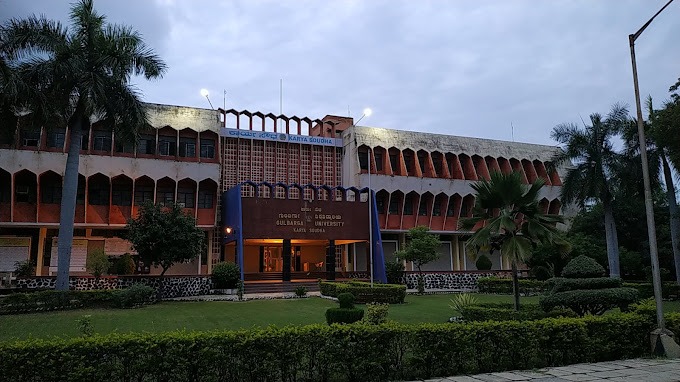
Ph.D. in Journalism and Mass Communication from Gulbarga University: Eligibility, Entrance Exam, Fee Structure, Admission Process, Subjects, Research Areas, Syllabus, Scholarship & Career Scope
Introduction about Ph.D. in Journalism and Mass Communication at Gulbarga University
Gulbarga University has emerged as a beacon for aspiring scholars who envision a future at the intersection of media, communication, and research. The Ph.D. in Journalism and Mass Communication is meticulously designed to nurture critical thinkers, innovators, and leaders capable of influencing the rapidly evolving media landscape. With a curriculum that blends theoretical foundations with cutting‑edge research, the program offers a transformative journey for professionals seeking to make a lasting impact on society.
Eligibility Criteria for Ph.D. in Journalism and Mass Communication at Gulbarga University
- Master’s degree in Journalism, Mass Communication, Media Studies or any related discipline from a recognized university.
- Minimum of 55% aggregate marks (or equivalent CGPA) in the qualifying master’s program.
- Candidates who possess a NET, SET, GATE, or UGC Junior Research Fellowship (JRF) qualification are exempted from the entrance test.
- Age limit: No upper age restriction; however, candidates must meet the academic and research eligibility standards.
- English proficiency is essential; non‑native speakers may be required to submit TOEFL/IELTS scores.
Entrance Exam for Ph.D. in Journalism and Mass Communication at Gulbarga University
The university conducts a two‑stage selection process:
- Written Test: A 60‑minute objective test covering research methodology, media theory, communication law, and contemporary issues in journalism.
- Interview & VIVA: A panel evaluates the candidate’s research proposal, academic background, and alignment with the university’s research priorities.
Candidates holding national eligibility tests (NET/SET) are directly called for the interview round.
Fee Structure for Ph.D. in Journalism and Mass Communication at Gulbarga University
| Component | Amount (INR) |
|---|---|
| Application Fee (online) | 1,500 |
| Admission Fee (once) | 10,000 |
| Annual Tuition & Examination Charges | 12,000 per year |
| Library & Lab Facility Charge | 2,000 per year |
| Miscellaneous (sports, cultural activities) | 1,500 per year |
| Total Approx. Cost for 3‑Year Programme | 57,500 |
Admission Process for Ph.D. in Journalism and Mass Communication at Gulbarga University
- Visit the official Gulbarga University website and navigate to the Ph.D. admission portal.
- Register using a valid email address and create a secure password.
- Fill in the online application form with personal, academic, and research details.
- Upload scanned copies of the following documents (see Documents Required section).
- Pay the non‑refundable application fee through the integrated payment gateway.
- Submit the application and note the generated application number for future reference.
- Await the admit card for the written test (if applicable). After successful performance, attend the interview/VIVA.
- Upon selection, download the admission letter, pay the admission fee, and complete enrollment.
Ph.D. Subjects and Specializations in Journalism and Mass Communication at Gulbarga University
Students can tailor their doctoral research across a broad spectrum of specializations, including:
- Digital Media & New Media Studies
- Media Ethics and Law
- Communication Policy & Governance
- Investigative Journalism
- Broadcast & Television Studies
- Public Relations & Corporate Communication
- Media Management & Marketing
- Socio‑Cultural Impacts of Media
Research Areas in Journalism and Mass Communication at Gulbarga University
The university encourages interdisciplinary research that addresses both local and global challenges. Prominent research domains include:
- Fake news detection and media literacy
- Impact of social media on political discourse
- Rural journalism and community development
- Gender representation in mass media
- Data journalism and visualization
- Media influence on health communication
- Artificial intelligence in content creation
- Cross‑cultural communication in multilingual societies
Documents Required for Ph.D. in Journalism and Mass Communication at Gulbarga University
| Document | Specification |
|---|---|
| Completed Application Form (online) | PDF format, signed electronically |
| Academic Transcripts & Mark Sheets | Original + self‑attested photocopy of all semesters |
| Degree Certificate (Master’s) | Original + attested copy |
| Proof of NET/SET/GATE (if applicable) | Official scorecard |
| Research Proposal (max 1500 words) | Typed, signed, and formatted as per university guidelines |
| Curriculum Vitae (CV) | Recent, concise, highlighting publications and projects |
| Passport‑size Photograph | 2 recent photos, 4×6 cm, white background |
| Identity Proof (Aadhaar / Passport) | Scanned copy of government‑issued ID |
Gulbarga University Ph.D. Syllabus for Journalism and Mass Communication
The syllabus is structured into three core phases:
- Foundation Courses (Year 1): Research Methodology, Advanced Media Theories, Quantitative & Qualitative Techniques, Ethics in Journalism.
- Specialization Modules (Year 2): Choose two electives from the list of specializations, followed by a comprehensive literature review.
- Dissertation Phase (Year 3): Original research, data collection, analysis, writing, and defense of the doctoral thesis.
Every semester includes a seminar series where candidates present ongoing work and receive feedback from faculty and industry experts.
How To Apply for Ph.D. in Journalism and Mass Communication at Gulbarga University
Applying is straightforward:
- Prepare a well‑crafted research proposal aligned with the university’s focus areas.
- Gather all required documents and ensure they meet the format specifications.
- Complete the online registration before the announced deadline (usually June 30 for the upcoming academic session).
- Pay the application fee and keep the receipt for future reference.
- Monitor your email and the university portal for admit cards, interview schedules, and result announcements.
Career Scope and Job Opportunities After Ph.D. in Journalism and Mass Communication from Gulbarga University
Graduates enjoy a broad spectrum of career pathways:
- Academic Positions: Assistant Professor, Associate Professor, or Dean in universities and research institutes.
- Research & Consultancy: Roles in think‑tanks, NGOs, media research agencies, and policy advisory bodies.
- Senior Media Roles: Executive Editor, News Director, Content Strategist, or Chief Communication Officer in leading news houses, digital platforms, and corporate communication departments.
- Public Sector & Government: Media policy formulation, public information officer, and roles in media regulation authorities.
- Entrepreneurship: Founding media startups, digital content agencies, or consultancy firms specializing in media analytics.
The doctorate also opens doors to international fellowships, post‑doctoral research, and speaking engagements at global conferences.
Scholarship for Ph.D. in Journalism and Mass Communication at Gulbarga University
Gulbarga University offers several financial aid options to deserving candidates:
- University Merit Scholarship: 50% tuition waiver for top‑ranked candidates based on entrance exam performance.
- UGC‑JRF Fellowship: Full stipend, annual contingency grant, and research support for candidates who clear the UGC JRF exam.
- State Government Scholarship: Available for candidates belonging to scheduled castes, scheduled tribes, and other backward classes.
- Industry‑Sponsored Grants: Partnerships with media houses that fund specific research projects.
FAQs Regarding Ph.D. in Journalism and Mass Communication at Gulbarga University
- 1. Can I pursue the Ph.D. part‑time while working?
- Yes, the university permits part‑time enrolment for professionals with a minimum of 20 hours per week dedicated to research.
- 2. Is there a minimum age limit for admission?
- No upper age limit is stipulated, but candidates must satisfy the academic and research criteria.
- 3. How long does the admission process take?
- From application submission to final admission, the process typically spans 6–8 weeks.
- 4. What is the minimum duration to complete the Ph.D.?
- The minimum stipulated period is three years, provided the candidate clears all milestones on schedule.
- 5. Are there any language requirements?
- Proficiency in English is mandatory. Candidates may be asked to submit TOEFL/IELTS scores if their prior education was not in English.
Explore our dedicated support services for Ph.D. candidates:
Editing and Proofreading ServicesPhD Topic Selection and Proposal Assistance
PhD Admission Assistance
Honorary Doctorate Programs
Research Publication Support
Patent Filing and Support Services




