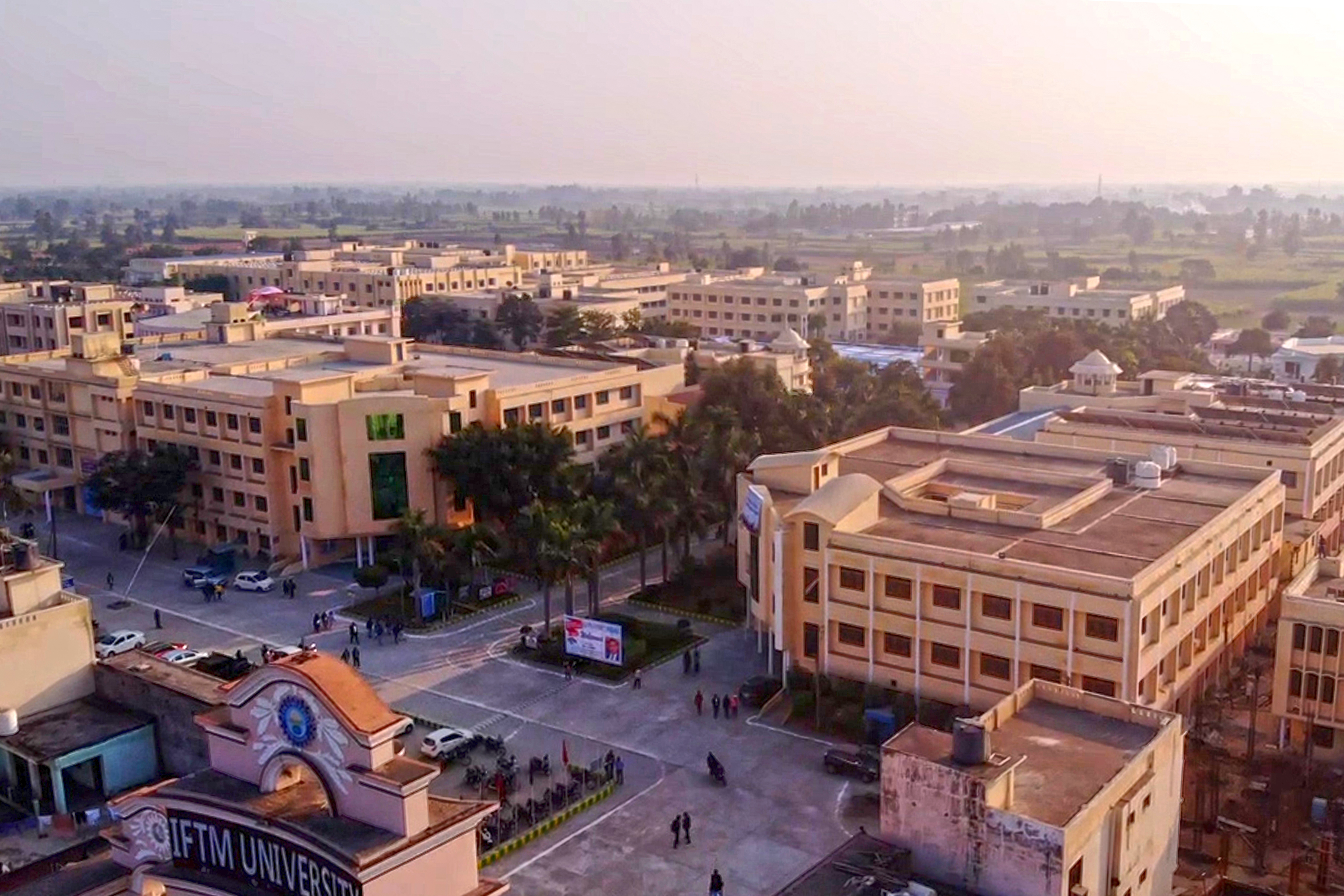
Introduction about Ph.D. in Journalism And Mass Communication at IFTM University
Embarking on a doctoral journey in Journalism and Mass Communication at IFTM University opens doors to scholarly excellence, industry relevance, and thought‑leadership opportunities. The programme nurtures professionals who aspire to reshape media landscapes, influence public discourse, and contribute original research that bridges theory and practice. With a curriculum designed by seasoned academicians and industry veterans, this Ph.D. promises an inspiring blend of rigorous research, critical inquiry, and practical application.
Eligibility Criteria for Ph.D. in Journalism And Mass Communication at IFTM University
- Master’s degree (M.A./M.Sc.) in Journalism, Mass Communication, Media Studies or any related discipline with a minimum of 55% aggregate (or equivalent CGPA).
- Candidates with a professional degree (M.Phil., M.Tech., MBA) are also considered provided they have a minimum of 50% marks.
- Valid GATE/UGC NET/CSIR NET score is preferred but not mandatory.
- Foreign nationals must possess a valid passport and meet the university’s English proficiency requirements (IELTS 6.0 or TOEFL 80).
- Age limit: No upper age restriction for candidates with a valid entrance qualification.
Entrance Exam for Ph.D. in Journalism And Mass Communication at IFTM University
The entrance examination evaluates the candidate’s research aptitude, subject knowledge, and analytical skills. It comprises three sections:
- Research Aptitude: Objective questions on research methodology, statistics, and ethics.
- Subject Knowledge: Multiple‑choice and short‑answer questions covering media theory, journalism practices, digital communication, and contemporary mass media trends.
- English Proficiency: Reading comprehension, summary writing and essay composition.
Successful candidates are invited for a personal interview and a presentation of a research proposal.
Fee Structure for Ph.D. in Journalism And Mass Communication at IFTM University
| Component | Annual Fee (INR) | Remarks |
|---|---|---|
| Tuition & Lecture Fees | 85,000 | Applicable for each academic year |
| Laboratory & Media Lab Access | 12,000 | Includes use of newsroom simulators and editing suites |
| Research & Data Collection Support | 15,000 | Can be offset by external research grants |
| Examination & Evaluation Charges | 8,000 | Per semester |
| Miscellaneous (Library, GSA, ICT) | 5,000 | Annual |
| Total Approximate Annual Cost | 125,000 |
Admission Process for Ph.D. in Journalism And Mass Communication at IFTM University
The admission workflow is streamlined to ensure transparency and efficiency:
- Online Application: Fill the digital form on the university portal and upload scanned copies of academic certificates.
- Document Verification: The admissions office verifies eligibility, academic records and entrance scores.
- Entrance Examination: Eligible candidates appear for the written test (held twice a year).
- Interview & Proposal Review: Shortlisted applicants present their research proposal before a panel of experts.
- Final Selection & Offer Letter: Successful candidates receive an admission offer outlining fee details and scholarship eligibility.
- Enrollment: Pay the first semester fee, submit the signed declaration, and commence orientation.
Ph.D. Subjects and Specializations in Journalism And Mass Communication at IFTM University
Students can tailor their doctoral research across a spectrum of contemporary domains:
- Digital Media and Emerging Technologies
- Media Ethics and Regulation
- Strategic Communication and Public Relations
- Broadcast Journalism and Podcasting
- Media Audiences and Reception Studies
- Political Communication and Campaign Strategies
- Data‑Driven Journalism and Visual Storytelling
Research Areas in Journalism And Mass Communication at IFTM University
The university encourages interdisciplinary research that addresses real‑world challenges. Current focal areas include:
- Impact of Artificial Intelligence on News Production
- Fake News Detection and Fact‑Checking Mechanisms
- Social Media Influence on Public Opinion Formation
- Media Coverage of Climate Change and Sustainability
- Audience Engagement Metrics in OTT Platforms
- Gender Representation in News Media
- Policy Analysis of Media Ownership Concentration
Documents Required for Ph.D. in Journalism And Mass Communication at IFTM University
| Document | Format | Remarks |
|---|---|---|
| Academic Transcripts (10+2, UG, PG) | PDF, scanned | Attested copies |
| Entrance Exam Scorecard (if applicable) | GATE/UGC NET/CSIR NET | |
| Research Proposal (2,000‑3,000 words) | DOCX or PDF | Include objectives, methodology, and literature review |
| Curriculum Vitae | Highlight publications, conferences, and work experience | |
| Identity Proof (Aadhaar / Passport) | Valid government ID | |
| Letter of Recommendation (2) | From academic or professional mentors |
IFTM University Ph.D. Syllabus for Journalism And Mass Communication
The syllabus is divided into three phases:
- Phase I – Foundations (Semesters 1‑2): Research Methodology, Advanced Media Theory, Ethics in Journalism, Statistical Tools for Media Research.
- Phase II – Specialization (Semesters 3‑4): Choose elective modules aligned with your research focus such as Digital Storytelling, Media Law, Audience Analytics, or International Communication.
- Phase III – Dissertation (Semesters 5‑6): Conduct original research, write the thesis, and defend before a scholarly panel.
How To Apply for Ph.D. in Journalism And Mass Communication at IFTM University
- Visit the official IFTM University admissions portal.
- Create a new user account and fill in personal details.
- Upload all required documents (refer to the Documents Required table).
- Pay the non‑refundable application fee (₹2,500) via net banking or credit card.
- Submit the application and note the generated registration number.
- Monitor email for admit card, test schedule, and further instructions.
Career Scope and Job Opportunities After Ph.D. in Journalism And Mass Communication from IFTM University
Graduates emerge as thought leaders equipped for a variety of high‑impact roles:
- Senior Research Analyst – Media Think Tanks & NGOs
- Professor / Lecturer – Universities & Business Schools
- Chief Editorial Officer – Leading Newspapers & Digital Platforms
- Strategic Communication Consultant – Corporates & Government Agencies
- Policy Advisor – Media Regulation Bodies
- Data‑Driven Storytelling Specialist – Media Analytics Firms
According to industry reports, the demand for Ph.D. qualified media scholars is growing at an annual rate of 9%, reflecting the sector’s pivot toward evidence‑based content creation and regulation.
Scholarship for Ph.D. in Journalism And Mass Communication at IFTM University
IFTM University offers merit‑based and need‑based scholarships covering up to 50% of tuition fees. Additionally, candidates can apply for external fellowships such as the Thesis and Dissertation Writing Services grant, which provides financial assistance for field‑work and data collection.
FAQs Regarding Ph.D. in Journalism And Mass Communication at IFTM University
- Q: Is work experience required?
- A: No mandatory work experience, but professional exposure in media enhances the research proposal.
- Q: Can I pursue the Ph.D. part‑time?
- A: Yes, the university offers a part‑time track for working professionals with a flexible class schedule.
- Q: How long does it take to complete the Ph.D.?
- A: Typically 3‑4 years, depending on research progress and publication requirements.
- Q: Are there opportunities for international collaborations?
- A: IFTM University has MoUs with several global media institutes, facilitating joint research and exchange programs.
- Q: What support is available for data analysis?
- A: Students can access the Research Data Analysis Services platform, which offers statistical consulting and software training.
- Q: Are there publishing assistance services?
- A: Yes, the university partners with the Research Paper Writing Services to guide students through journal submission processes.
- Q: How can I develop research questionnaires?
- A: The campus provides access to the Questionnaire Design and Development toolkit, ensuring robust survey instruments.




