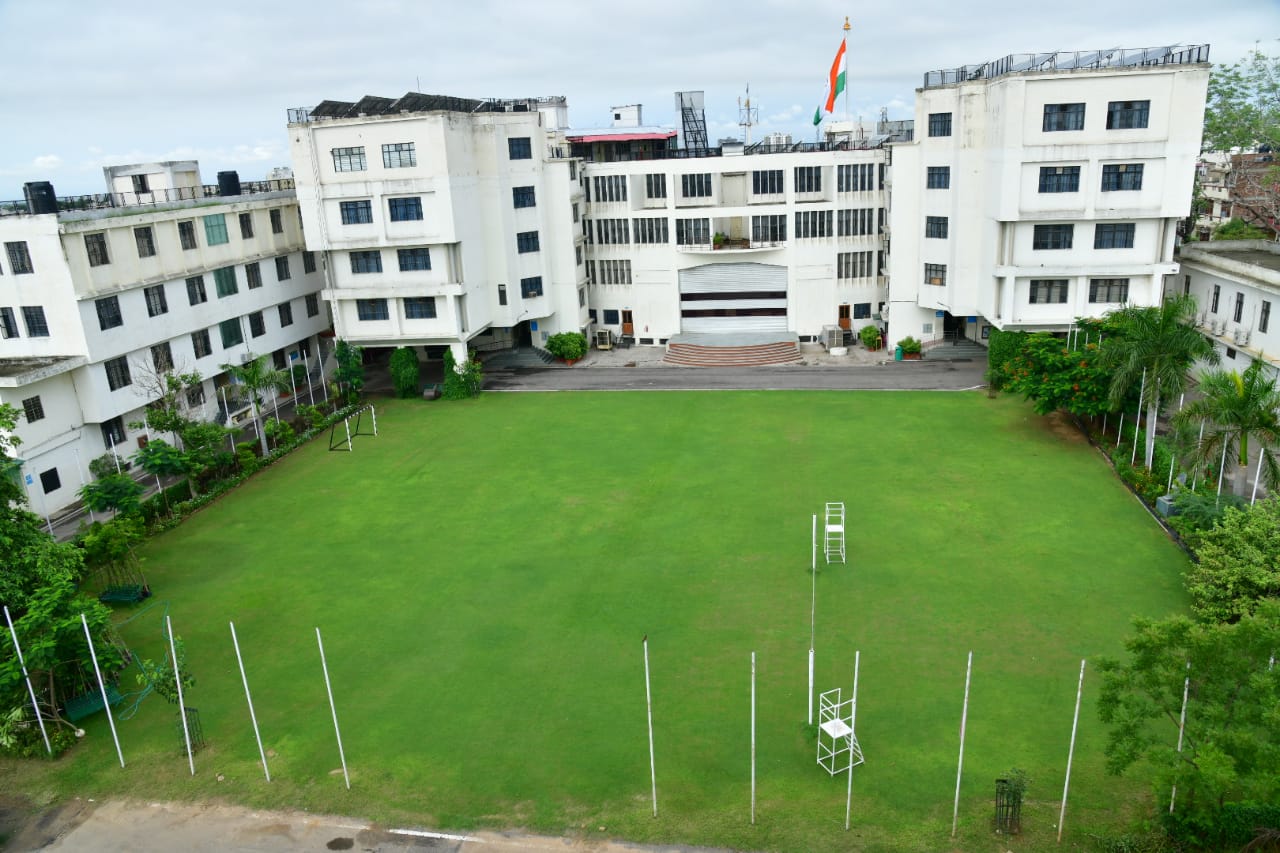
Introduction about Ph.D. in Journalism And Mass Communication at IIS University
Embarking on a Ph.D. in Journalism and Mass Communication at IIS University is more than just an academic pursuit; it is a transformative journey for professionals who aspire to become the architects of modern discourse. In an era where information is the most valuable currency, IIS University (Deemed to be University), Jaipur, offers a rigorous and intellectually stimulating environment designed to cultivate high-level analytical and research skills. This doctoral program is meticulously crafted for thinkers, storytellers, and media practitioners who wish to delve deep into the mechanics of communication, influence, and social change. By choosing IIS University, you are stepping into a community that values innovation, ethical journalism, and the pursuit of truth. Whether your interest lies in digital media evolution, political communication, or social psychology, this program serves as the ultimate platform to elevate your professional trajectory to that of a thought leader and subject matter expert.
Ph.D Admission 2026-2027 & Writing Support Services by Shiksha Research
Eligibility Criteria for Ph.D. in Journalism And Mass Communication at IIS University
To maintain the high standards of research excellence that IIS University is known for, the eligibility criteria for the Ph.D. in Journalism and Mass Communication are designed to identify candidates with strong academic backgrounds and a passion for inquiry. Prospective scholars must fulfill the following requirements:
- Master?s Degree: Candidates must hold a Master?s degree in Journalism, Mass Communication, Media Studies, or a related discipline from a recognized university.
- Minimum Percentage: A minimum of 55% marks in aggregate (or an equivalent grade in a point scale) is required. A relaxation of 5% is typically provided to SC/ST/OBC (non-creamy layer) and differently-abled candidates as per UGC norms.
- Professional Experience: While not always mandatory, candidates with significant professional experience in senior media roles are encouraged to apply, as their practical insights often contribute to more robust research outcomes.
- M.Phil. Candidates: Individuals who have successfully completed an M.Phil. degree with at least 55% marks are also eligible for admission.
Entrance Exam for Ph.D. in Journalism And Mass Communication at IIS University
Admission to the doctoral program at IIS University is highly competitive and is primarily merit-based, determined through a dedicated Research Entrance Test (RET). The examination is designed to test the candidate?s aptitude for higher-level research and their domain knowledge in Journalism and Mass Communication.
The RET usually comprises two main sections:
- Research Methodology: This section evaluates the candidate's understanding of research ethics, quantitative and qualitative methods, and logical reasoning. Many scholars find that utilizing professional Research Data Analysis Services during their preparation helps them better understand how to interpret complex data sets.
- Subject-Specific Knowledge: This part focuses on core concepts of Journalism, Media Laws, Communication Theories, and Current Affairs.
Candidates who have qualified for national-level examinations such as UGC-NET (including JRF), CSIR, or SLET are generally exempted from the written entrance test but must appear for the personal interview round.
Fee Structure for Ph.D. in Journalism And Mass Communication at IIS University
IIS University offers a transparent and competitive fee structure for its doctoral programs, ensuring that scholars receive world-class resources and mentorship. The following table provides an overview of the typical cost components involved in the program:
| Fee Component | Frequency / Type | Approximate Amount (INR) |
|---|---|---|
| Registration Fee | One-Time (Non-refundable) | INR 10,000 - 15,000 |
| Program Tuition Fee | Per Semester / Annual | INR 60,000 - 80,000 |
| Security Deposit | One-Time (Refundable) | INR 5,000 - 10,000 |
| Examination & Thesis Evaluation Fee | At the time of Submission | INR 20,000 - 30,000 |
| Course Work Fee | One-Time during Semester 1 | Included in Tuition or nominal separate charge |
Note: The fees are subject to revision by the university management. Candidates are advised to check the official IIS University brochure for the most up-to-date figures.
Admission Process for Ph.D. in Journalism And Mass Communication at IIS University
The admission process is a structured journey designed to identify visionaries who are ready to contribute new knowledge to the field of media. The steps are as follows:
- Online Application: Enthusiastic candidates must fill out the application form available on the official university portal.
- Entrance Testing: Eligible candidates appear for the Reseach Entrance Test (RET).
- Personal Interview: Shortlisted candidates are invited to an interview where they discuss their research interests and professional goals with an expert committee.
- Research Proposal: During the interview, candidates are often expected to present a preliminary research proposal. Designing a solid framework at this stage is crucial, and many professionals seek Questionnaire Design and Development assistance to ensure their proposed methodology is technically sound.
- Final Selection: The final merit list is prepared based on the combined performance in the entrance exam and the interview.
Ph.D. Subjects and Specializations in Journalism And Mass Communication at IIS University
IIS University encourages interdisciplinary research that bridges the gap between traditional media and modern technology. Specializations allow scholars to focus their expertise in areas that resonate with their career aspirations.
- Digital and Social Media Studies: Exploring the impact of algorithms and viral content on public opinion.
- Development Communication: Focusing on how media can be used as a tool for social empowerment and rural development.
- Political Communication and Media Ethics: Researching the intersection of power, policy, and journalistic responsibility.
- Public Relations and Corporate Communication: Analyzing strategic communication patterns in the global business environment.
- Film Studies and Visual Communication: Investigating the narrative and psychological power of visual media.
Research Areas in Journalism And Mass Communication at IIS University
The university provides a fertile ground for exploring diverse research areas. Scholars are encouraged to tackle contemporary issues facing the media industry today. Popular research domains include the rise of "Fake News" and misinformation, the role of Artificial Intelligence in newsroom automation, and the sustainability of independent media houses. During the course of their journey, students are expected to produce high-quality papers; utilizing professional Research Paper Writing Services can be a strategic way for scholars to learn the nuances of academic publishing in high-impact factor journals.
Documents Required for Ph.D. in Journalism And Mass Communication at IIS University
To ensure a smooth application process, candidates should have the following documents prepared:
- Post-Graduate Degree and Marksheets (Self-attested copies).
- Under-Graduate Degree and Marksheets.
- UGC-NET/JRF/SLET Certificate (if applicable).
- No Objection Certificate (NOC) from the current employer (for working professionals).
- Comprehensive Research Proposal/Synopsis.
- Proof of Birth Date (High School Certificate).
- Passport-sized photographs and valid Government ID (Aadhar Card/Passport).
IIS University Ph.D. Syllabus for Journalism And Mass Communication
The curriculum is divided into a rigorous Course Work phase followed by independent research. The syllabus is designed to equip scholars with the tools needed to conduct world-class inquiry. The core modules include:
- Research Methodology: Techniques in data collection, sampling, and statistical application.
- Computer Applications in Research: Training on SPSS, NVivo, and other digital tools for media analysis.
- Advanced Communication Theories: In-depth study of evolving media paradigms.
- Literature Review: Developing the ability to critically analyze existing research within the field of mass communication.
- Publication Ethics: Understanding the legal and moral frameworks of academic research.
How To Apply for Ph.D. in Journalism And Mass Communication at IIS University
Ready to take the next step? Follow these instructions to begin your application:
- Visit the official IIS University website and navigate to the 'Admissions' or 'Research' section.
- Register yourself as a new user to generate login credentials.
- Fill in all personal, academic, and professional details accurately.
- Upload the required scanned documents and your research synopsis.
- Pay the application fee through the integrated online payment gateway.
- Download the confirmation page and keep track of the entrance exam dates.
Career Scope and Job Opportunities After Ph.D. in Journalism And Mass Communication from IIS University
A Ph.D. unlocks the highest levels of professional and academic success. Graduates from IIS University are well-equipped to take on leadership roles such as:
- Academic Leadership: Roles like Professors, Heads of Media Departments, or Deans at prestigious universities.
- Senior Research Analysts: Working for global think tanks, policy-making bodies, and media monitoring organizations.
- Media Consultants: Providing strategic advice to multinational corporations on brand reputation and crisis management.
- Chief Content Officers: Leading large-scale digital media houses and broadcasting networks.
The journey to these roles is demanding, and many scholars find that employing Thesis and Dissertation Writing Services allows them to manage their professional responsibilities while maintaining the highest academic quality in their final submission.
Scholarship for Ph.D. in Journalism And Mass Communication at IIS University
IIS University is committed to fostering research and offers various forms of financial support. Scholarships are often available for meritorious candidates and those who have cleared national tests like JRF. Furthermore, the university may offer research assistantships or fellowships for specific projects funded by government bodies like the ICSSR (Indian Council of Social Science Research) or UGC. Candidates are encouraged to discuss these opportunities during their interview phase.
FAQs Regarding Ph.D. in Journalism And Mass Communication at IIS University
- Is the Ph.D. degree from IIS University recognized?
- Yes, IIS University is a recognized Deemed-to-be University, and its Ph.D. degrees are awarded in compliance with the University Grants Commission (UGC) regulations.
- Can I pursue this program while working?
- IIS University offers provisions for part-time and professional scholars, provided they fulfill the mandatory course work requirements and obtain an NOC from their employer.
- What is the typical duration of the program?
- The minimum duration is three years, and the maximum is six years, including course work.
- How important is the research proposal?
- The proposal is critical as it demonstrates your potential as a researcher and helps the admission committee match you with an appropriate supervisor.




