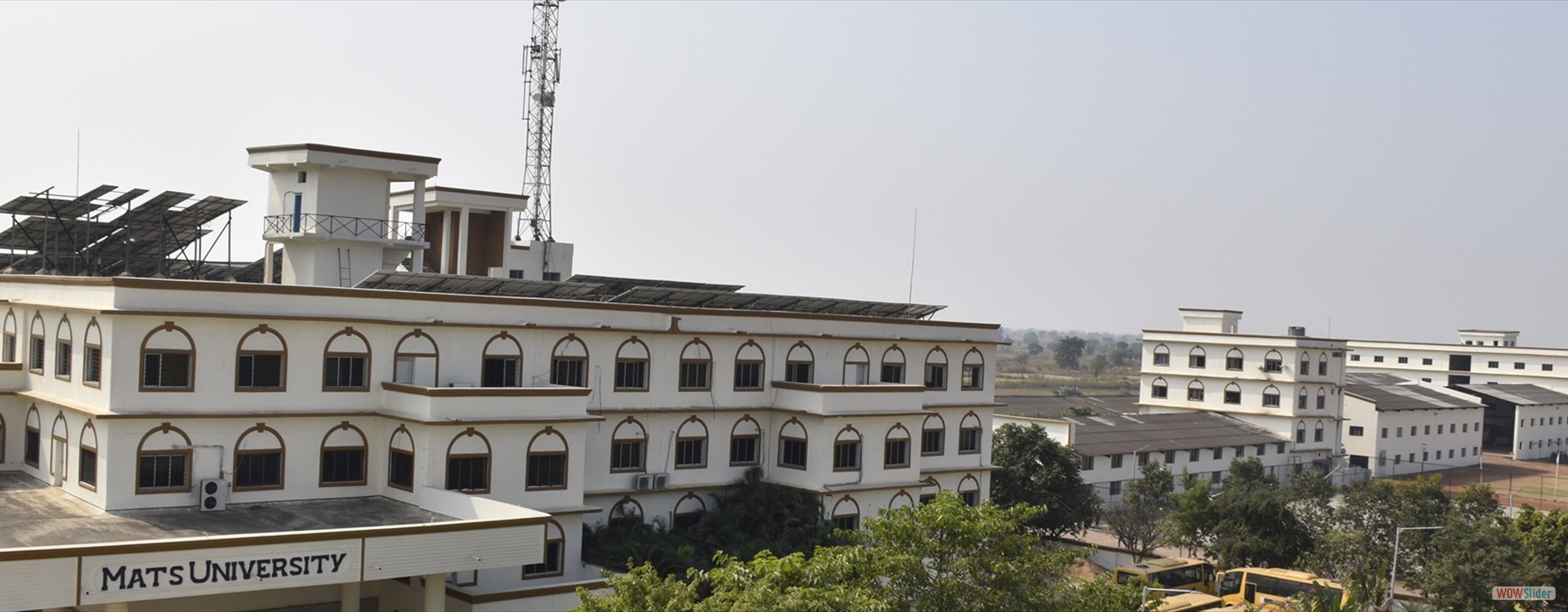
Introduction about Ph.D. in Journalism And Mass Communication at MATS University
Embarking on a Ph.D. in Journalism and Mass Communication at MATS University is a transformative journey designed for visionaries who seek to redefine the narrative of the digital age. In an era where information is the most potent currency, this doctoral program offers an unparalleled opportunity for professionals and scholars to delve deep into the mechanics of media, society, and technology. MATS University, a prestigious hub of academic excellence in Raipur, provides a robust environment where critical thinking meets creative innovation. Whether your passion lies in investigative journalism, digital media ethics, or the psychology of communication, this program empowers you to contribute original knowledge to the field, fostering leadership roles in academia and industry alike. The quest for truth and the mastery of communication are at the heart of this academic pursuit, preparing you to become a thought leader in a rapidly evolving global landscape.
Ph.D Admission 2026-2027 & Writing Support Services by Shiksha Research
Eligibility Criteria for Ph.D. in Journalism And Mass Communication at MATS University
To join the elite community of researchers at MATS University, candidates must meet specific academic benchmarks. The eligibility criteria are designed to ensure that scholars possess the foundational knowledge required for rigorous high-level research:
- Educational Qualification: Candidates must hold a Master?s Degree in Journalism, Mass Communication, or a closely related discipline from a recognized university.
- Minimum Percentage: A minimum of 55% marks in aggregate (or an equivalent grade) at the postgraduate level is mandatory.
- Relaxation: A relaxation of 5% marks is provided to candidates belonging to SC/ST/OBC (non-creamy layer) and Differently-Abled categories as per UGC guidelines.
- Professional Experience: While not mandatory, significant industry experience in media houses, advertising agencies, or public relations firms is highly valued and can provide a practical edge to your research proposal.
Entrance Exam for Ph.D. in Journalism And Mass Communication at MATS University
Securing a seat in the Ph.D. program requires clearing the MATS University Research Entrance Test (MATS-RET). This examination evaluates the candidate's aptitude for research and their depth of knowledge in the subject matter. The test typically comprises two sections: Research Methodology and Subject-Specific Knowledge. Candidates who have successfully cleared national-level examinations such as UGC-NET (including JRF), SLET, or GATE are often exempted from the entrance test, though they must still appear for the personal interview. For those feeling overwhelmed by the technicalities of the application, seeking PhD Admission Assistance can streamline the process and increase the likelihood of success.
Fee Structure for Ph.D. in Journalism And Mass Communication at MATS University
Investment in a Ph.D. is an investment in your future influence. MATS University offers a competitive fee structure that reflects its state-of-the-art facilities and expert mentorship. Below is a detailed breakdown of the approximate costs involved:
| Particulars | Estimated Amount (INR) | Frequency |
|---|---|---|
| Application & Registration Fee | ?2,500 - ?5,000 | One-time |
| Course Work Fee | ?15,000 - ?25,000 | One-time |
| Annual Tuition Fee | ?60,000 - ?80,000 | Yearly |
| Thesis Submission & Viva-Voce | ?20,000 - ?30,000 | Final Year |
| Library & Lab Charges | ?10,000 | Annual |
Note: Fees are subject to change as per university regulations. It is advised to check the official university portal for the latest updates.
Admission Process for Ph.D. in Journalism And Mass Communication at MATS University
The admission journey at MATS University is rigorous yet rewarding, ensuring that only the most dedicated scholars are selected. The process follows these stages:
- Notification: The university releases an official Ph.D. admission notification on its website.
- Application: Interested candidates submit their applications along with a preliminary research outline.
- Entrance Test (MATS-RET): Registered candidates appear for the entrance examination.
- Personal Interview: Shortlisted candidates discuss their research interests and professional goals with an expert committee.
- Selection & Enrollment: Based on the combined score of the entrance test, interview, and academic record, the final list of admitted scholars is announced.
- Registration: After fee payment, candidates are officially registered and assigned a Research Supervisor.
Ph.D. Subjects and Specializations in Journalism And Mass Communication at MATS University
MATS University offers a diverse range of specializations, allowing you to tailor your research to your career aspirations. Choosing the right niche is critical, and many students utilize PhD Topic Selection and Proposal Assistance to ensure their research is both viable and impactful. Key specializations include:
- Digital Media & Social Networking: Exploring the impact of algorithms and viral content on public opinion.
- Development Communication: Assessing how media can drive social change in rural and underdeveloped sectors.
- Media Laws & Ethics: Navigating the complex legal landscape of free speech and digital privacy.
- Film Studies & Cultural Studies: Analyzing the semiotics of cinema and its role in reflecting society.
- Public Relations & Corporate Communication: Researching brand reputation management in the age of "Cancel Culture."
Research Areas in Journalism And Mass Communication at MATS University
The scope for research at MATS University is expansive, reflecting the multi-disciplinary nature of modern communication. Scholars are encouraged to look beyond traditional boundaries and explore intersections with technology, sociology, and economics. Prominent research areas involve:
Investigating the role of Citizen Journalism in democratic processes, the evolution of Artificial Intelligence in newsrooms, and the socio-economic impact of community radio. Furthermore, scholars often focus on the representation of marginalized communities in mainstream media and the psychological effects of "Information Overload" on modern consumers. The university provides an environment where these complex themes can be dissected and understood through scientific inquiry.
Documents Required for Ph.D. in Journalism And Mass Communication at MATS University
To ensure a smooth admission process, ensure you have the following documents ready for verification:
- Postgraduate and Undergraduate Marksheets and Degree Certificates.
- Proof of Date of Birth (Secondary School Certificate).
- Valid Government ID (Aadhar Card/Passport).
- NET/JRF/SLET Qualification Certificates (if applicable).
- Comprehensive Research Proposal (Word count: 1000-2000 words).
- Character Certificate from the last attended institution.
- No Objection Certificate (NOC) from the current employer (for part-time candidates).
- Recent Passport-sized Photographs.
MATS University Ph.D. Syllabus for Journalism And Mass Communication
The Ph.D. program is divided into two major phases: Course Work and Independent Research. The course work phase is designed to sharpen your analytical tools before you embark on your thesis. The syllabus typically covers:
- Unit 1: Research Methodology: Quantitative and Qualitative research methods, Content Analysis, Ethnography, and Experimental Research.
- Unit 2: ICT and Media: The role of Information and Communication Technology in modern data collection and media dissemination.
- Unit 3: Advanced Communication Theories: Critical analysis of classic and contemporary theories like Agenda Setting, Framing, and Cultivation.
- Unit 4: Bio-Statistics & Ethical Writing: Understanding data analysis software (SPSS/R) and avoiding plagiarism.
- Unit 5: Literature Review: Systematic mapping of existing research to identify gaps.
How To Apply for Ph.D. in Journalism And Mass Communication at MATS University
Applying to MATS University is a straightforward online process:
- Visit the official MATS University website (www.matsuniversity.ac.in).
- Navigate to the 'Admissions' or 'Research' section and click on 'Ph.D. Application'.
- Register with your email and contact details to create a login.
- Fill in the personal, academic, and professional details carefully.
- Upload scanned copies of all required documents and your research proposal.
- Pay the application fee via the integrated secure payment gateway.
- Print the application form and payment receipt for future reference.
Career Scope and Job Opportunities After Ph.D. in Journalism And Mass Communication from MATS University
The completion of a Ph.D. opens doors to high-level strategic roles. You are no longer just a media practitioner; you are an expert and an authority. Career paths include:
- Academician: Become a Professor or Head of Department in leading universities.
- Media Consultant: Advise international organizations on communication strategies.
- Research Scientist: Work for think tanks focusing on media policy and social trends.
- Chief Editor/Policy Maker: Lead national media houses with a focus on ethical standards.
Professionals with extensive experience might also consider Honorary Doctorate Programs as a way to gain institutional recognition for their lifetime contributions. For those actively researching, maximizing your work's reach via Research Publication Support and protecting your unique methodologies through Patent Filing and Support Services is crucial to academic longevity.
Scholarship for Ph.D. in Journalism And Mass Communication at MATS University
MATS University believes that financial constraints should not hinder intellectual growth. Deserving candidates can avail themselves of various financial aid options:
- University Fellowships: Awarded to top-ranking candidates in the entrance examination.
- Government Scholarships: National fellowships for SC/ST and Minority students (RGNF, MANF).
- Research Grants: Provided for specific projects funded by external agencies like ICSSR or UGC.
- Tuition Fee Waivers: Available for meritorious students who show exceptional promise in their research coursework.
FAQs Regarding Ph.D. in Journalism And Mass Communication at MATS University
1. Can I pursue a Ph.D. while working?
Yes, MATS University allows for Part-Time Ph.D. options, provided you can attend essential coursework and produce an NOC from your employer.
2. How long does it take to complete the Ph.D.?
The minimum duration is 3 years (including 6 months of coursework), and the maximum is usually 6 years.
3. Is there help available for thesis formatting?
Yes, scholars are encouraged to use professional Editing and Proofreading Services to ensure their final dissertation meets international publication standards and is free from linguistic errors.
4. What is the importance of the Research Proposal during the interview?
The proposal is the most critical part of your interview; it demonstrates your ability to identify a research gap and your plan to address it using scientific methods.
5. Does the university help in publishing research papers?
The faculty provides guidance, and the university often facilitates workshops on how to get published in Scopus or UGC-CARE listed journals.




