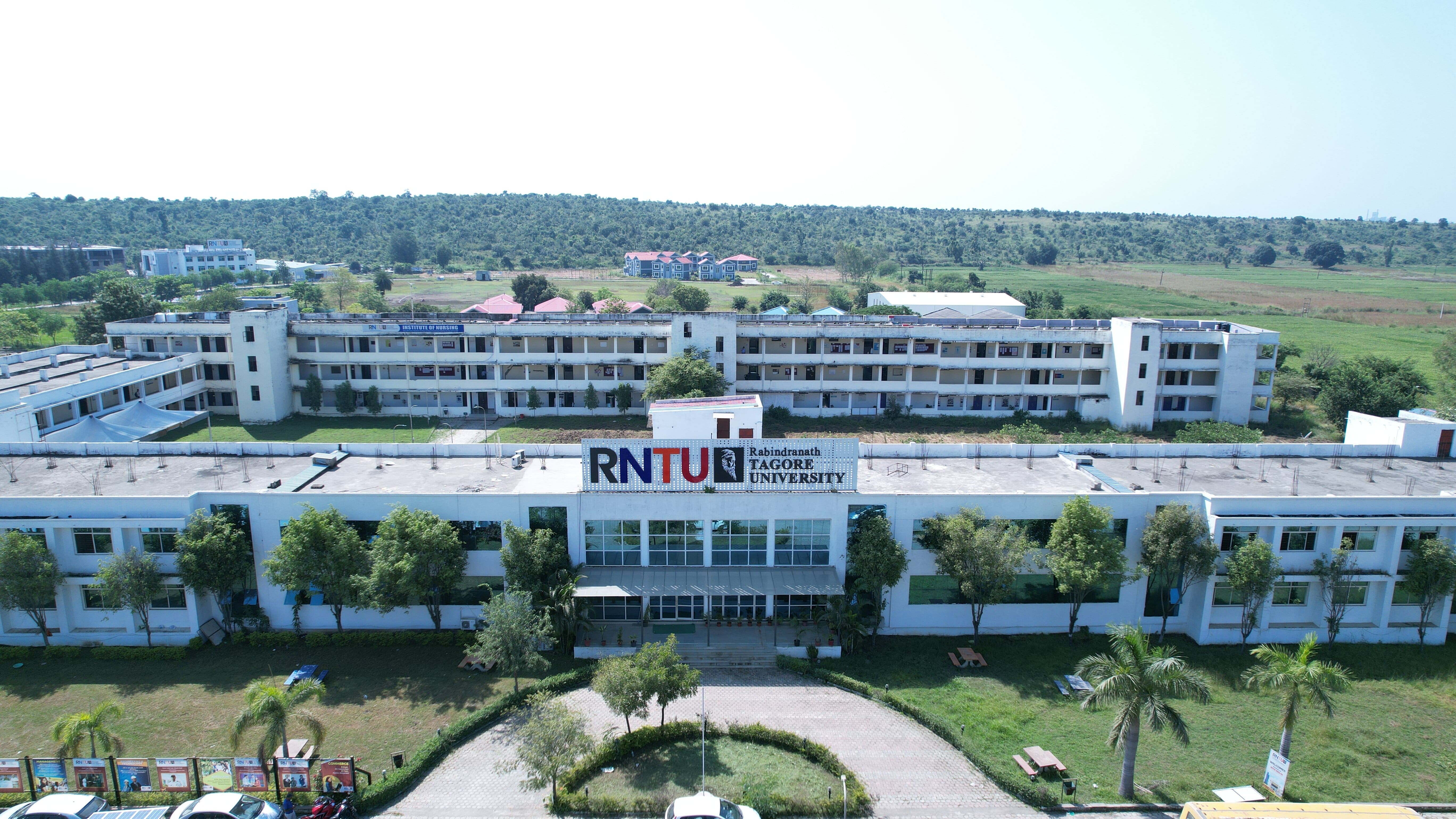
Ph.D. in Journalism And Mass Communication from Rabindranath Tagore University: Eligibility, Admission, Fee, Syllabus & Career
Introduction about Ph.D. in Journalism And Mass Communication at Rabindranath Tagore University
Rabindranath Tagore University (RTU) has emerged as a beacon for advanced research in media studies. The Ph.D. program in Journalism And Mass Communication is designed for aspiring scholars and seasoned professionals who wish to delve deep into the evolving dynamics of news media, digital storytelling, audience analytics, and communication policy. Guided by a distinguished faculty and supported by state‑of‑the‑art research facilities, candidates transform curiosity into groundbreaking scholarship that influences both academia and industry.
Eligibility Criteria for Ph.D. in Journalism And Mass Communication at Rabindranath Tagore University
- Master’s degree (M.A./M.Sc.) in Journalism, Mass Communication, Media Studies or a related discipline with a minimum of 55% aggregate (or equivalent grade).
- Nationally recognized entrance test score (RTU Ph.D. Entrance or equivalent) with a qualifying percentile.
- For candidates with a Ph.D. in a closely related field, direct admission may be considered based on research proposal and interview.
- Proficiency in English (IELTS/TOEFL not mandatory for Indian nationals but recommended for international applicants).
Entrance Exam for Ph.D. in Journalism And Mass Communication at Rabindranath Tagore University
RTU conducts a comprehensive entrance examination that evaluates candidates on:
- Research Methodology and Statistics.
- Core concepts of Journalism and Media Ethics.
- Contemporary issues in Mass Communication (digital media, fake news, media law).
- Analytical writing and critical thinking.
Applicants may also qualify through national tests such as UGC-NET, CSIR NET, or GATE (subject to university approval).
Fee Structure for Ph.D. in Journalism And Mass Communication at Rabindranath Tagore University
| Category | Amount (INR) | Remarks |
|---|---|---|
| Application Fee | 2,500 | Non‑refundable, payable online |
| Annual Tuition Fee | 45,000 | Inclusive of library, lab, and e‑resource access |
| Research Project Grant (Optional) | Up to 100,000 | Based on project proposal and availability |
| Miscellaneous (Printing, Fieldwork) | 10,000 | Estimated per year |
Admission Process for Ph.D. in Journalism And Mass Communication at Rabindranath Tagore University
- Online application submission through the university portal.
- Upload of academic transcripts, passport‑size photograph, and signed declaration.
- Payment of the application fee.
- Entrance examination (or submission of qualifying national test scores).
- Personal interview and assessment of the research proposal.
- Final merit list and admission confirmation via email.
Ph.D. Subjects and Specializations in Journalism And Mass Communication at Rabindranath Tagore University
Students can tailor their research to one of the following specializations:
- Digital Journalism & New Media
- Media Law & Policy
- Communication Theory & Practice
- Public Relations & Corporate Communication
- Audience Studies & Media Effects
- Investigative Reporting & Ethics
Research Areas in Journalism And Mass Communication at Rabindranath Tagore University
RTU encourages interdisciplinary projects that address real‑world challenges, including:
- Impact of AI and automation on news production.
- Fake news detection and media literacy.
- Role of social media in political mobilization.
- Gender representation in Indian media.
- Community radio and grassroots communication.
- Data‑driven audience segmentation.
Documents Required for Ph.D. in Journalism And Mass Communication at Rabindranath Tagore University
| Document | Details |
|---|---|
| Completed Application Form | Online submission with digital signature |
| Academic Transcripts | Original & notarized copies of Master’s degree |
| Entrance Exam Scorecard | RTU Ph.D. Test or recognized national test |
| Research Proposal (2,000‑3,000 words) | Clear objectives, methodology, and expected contribution |
| Identity Proof | Aadhaar/Passport copy |
| Curriculum Vitae | Professional experience and publications |
Rabindranath Tagore University Ph.D. Syllabus for Journalism And Mass Communication
The syllabus is structured into three phases:
- Coursework (Year 1) – Advanced research methods, media ethics, quantitative & qualitative analysis, and elective modules from the specialization list.
- Comprehensive Examination (End of Year 1) – Written and oral assessment of the proposed research framework.
- Dissertation (Years 2‑4) – Independent research, regular progress reviews, conference presentations, and final thesis submission.
How To Apply for Ph.D. in Journalism And Mass Communication at Rabindranath Tagore University
Follow these steps to submit a successful application:
- Visit the official RTU admissions portal and create a new user account.
- Fill in personal and academic details, ensuring accuracy.
- Upload scanned copies of all required documents (refer to the Documents Required section).
- Pay the non‑refundable application fee through net banking or credit card.
- Schedule your entrance test date; a provisional admit card will be emailed.
- Prepare a concise research proposal – consider consulting Thesis and Dissertation Writing Services for guidance.
- After the exam, monitor your email for interview invitations and final admission decisions.
Career Scope and Job Opportunities After Ph.D. in Journalism And Mass Communication from Rabindranath Tagore University
Graduates enjoy a broad spectrum of career paths:
- Senior Research Fellow or Lecturer in reputed universities and media institutes.
- Chief Editor, Editorial Director, or Investigative Lead in national newspapers and digital newsrooms.
- Policy Analyst or Media Consultant for government agencies and NGOs.
- Data‑driven Content Strategist for global media conglomerates.
- Founder of media startups focusing on niche journalism, fact‑checking, or audience analytics.
- Author of scholarly books and articles – many alumni publish with top journals.
Scholarship for Ph.D. in Journalism And Mass Communication at Rabindranath Tagore University
RTU offers merit‑based and need‑based scholarships:
- RTU Academic Excellence Scholarship – 50% tuition waiver for top 10% of applicants.
- Research Grant for Women Scholars – full tuition plus project funding.
- Industry‑Sponsored Fellowships – collaborations with leading media houses.
- Students may also seek external funding; the university’s Research Data Analysis Services team assists in preparing grant applications.
FAQs Regarding Ph.D. in Journalism And Mass Communication at Rabindranath Tagore University
- Q: Can I pursue the Ph.D. part‑time while working?
- A: Yes, RTU offers a flexible part‑time mode with evening seminars and online coursework.
- Q: Is a publication required for admission?
- A: While not mandatory, having at least one peer‑reviewed article strengthens your profile.
- Q: How long does the program typically take?
- A: The minimum duration is 3 years; most candidates complete it within 4‑5 years.
- Q: Are there opportunities for international collaboration?
- A: RTU has MoUs with several foreign universities; joint‑supervision and exchange visits are encouraged.
- Q: What support is available for thesis writing?
- A: The university provides dedicated supervisors, writing workshops, and access to Research Paper




