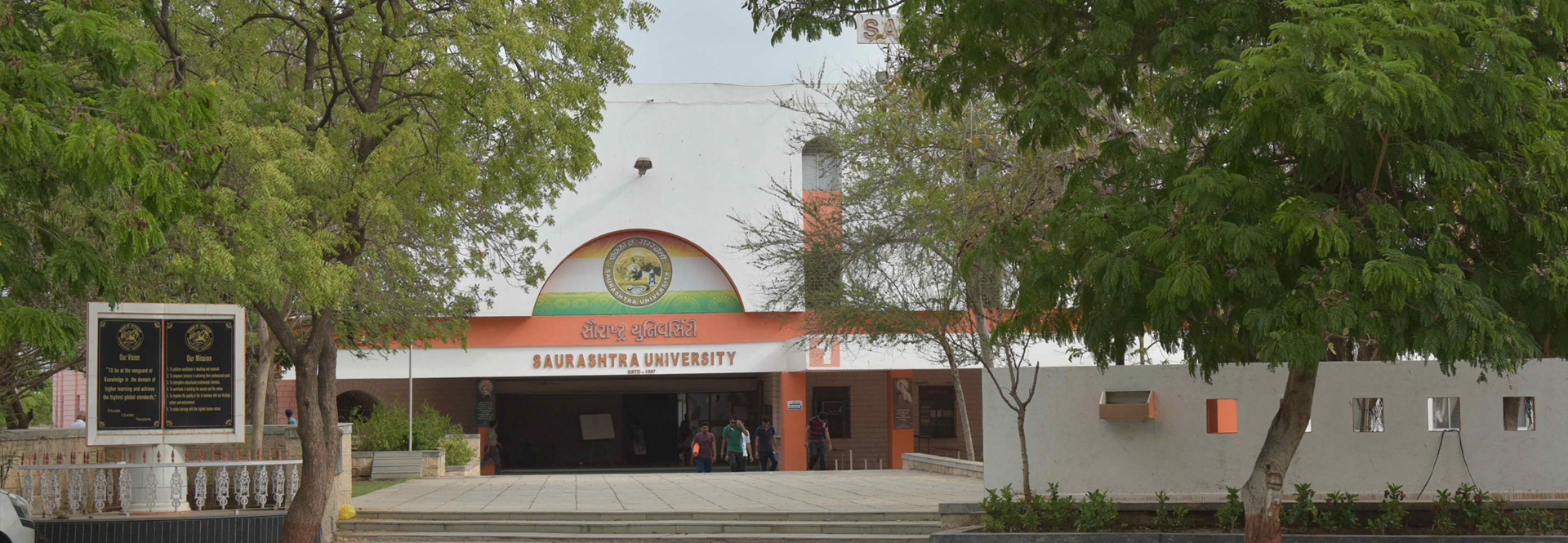
Ph.D. in Journalism and Mass Communication at Saurashtra University
Embarking on a doctoral journey in Journalism and Mass Communication at Saurashtra University offers professionals a platform to blend academic rigor with real‑world media insights. This program is crafted for scholars who aspire to lead research, shape media policies, and influence the future of communication studies. With a curriculum that balances theory, methodology, and applied projects, candidates gain the expertise needed to become thought leaders, educators, and senior analysts.
Eligibility Criteria for Ph.D. in Journalism and Mass Communication at Saurashtra University
Prospective candidates must fulfill the following academic prerequisites:
- A master’s degree in Journalism, Mass Communication, Media Studies, or a related discipline with a minimum of 55% (or equivalent CGPA).
- Candidates possessing a valid UGC-NET, CSIR NET, or any other recognized national eligibility test are exempted from the entrance examination.
- Foreign nationals must have a recognized equivalent degree and meet the university’s English proficiency requirements.
Professional experience in media houses, broadcasting agencies, or research organizations adds valuable weight to the application, especially for those without a conventional research background.
Entrance Exam for Ph.D. in Journalism and Mass Communication at Saurashtra University
The entrance assessment comprises two stages:
- Written Test: Objective and descriptive questions covering research methodology, media theory, communication models, and current trends in journalism.
- Interview: A panel interview evaluates research proposal relevance, analytical aptitude, and the candidate’s motivation for doctoral study.
Candidates who have cleared UGC‑NET or equivalent exams are directly invited for the interview stage.
Fee Structure for Ph.D. in Journalism and Mass Communication at Saurashtra University
| Component | Annual Fee (INR) | Notes |
|---|---|---|
| Tuition Fee | 45,000 | Applicable for the entire duration (3‑5 years) |
| Library & Laboratory Charges | 5,000 | Includes access to archives, digital databases, and media labs |
| Examination & Evaluation Fee | 2,500 | Per semester |
| Miscellaneous (Sports, Activities) | 1,500 | Annual |
| Total Approximate Annual Cost | 54,000 |
Scholarships, research assistantships, and fee waivers are available for meritorious candidates and those belonging to reserved categories.
Admission Process for Ph.D. in Journalism and Mass Communication at Saurashtra University
The admission workflow follows a streamlined five‑step procedure:
- Online Application: Submit the application through the university portal with personal details, academic records, and a concise research proposal.
- Document Verification: Upload scanned copies of degree certificates, mark sheets, NET qualification (if any), and identity proof.
- Entrance Test/Interview Scheduling: Eligible candidates receive an invitation for the written test or interview.
- Selection & Admission Offer: Successful candidates are issued a provisional admission letter pending final document verification.
- Enrollment & Fee Payment: Complete enrollment by paying the prescribed fees and confirming the research supervisor.
Ph.D. Subjects and Specializations in Journalism and Mass Communication at Saurashtra University
Students can tailor their doctoral research across the following specializations:
- Digital Media & New Communication Technologies
- Media Ethics and Regulation
- Audience Analysis & Media Effects
- Journalistic Practices & Investigative Reporting
- Corporate Communication & Public Relations
- Film and Television Studies
- Strategic Communication in Developmental Contexts
Research Areas in Journalism and Mass Communication at Saurashtra University
The university encourages interdisciplinary research that addresses contemporary challenges. Prominent research domains include:
- Impact of Social Media on Political Discourse
- Fake News Detection and Fact‑Checking Mechanisms
- Media Representation of Gender and Minorities
- Emerging Trends in Mobile Journalism (MoJo)
- Data‑Driven Journalism and Visual Storytelling
- Communication Strategies for Crisis Management
- Policy Analysis of Media Ownership and Concentration
Students often collaborate with the university’s Research Publication Support service to publish findings in peer‑reviewed journals.
Documents Required for Ph.D. in Journalism and Mass Communication at Saurashtra University
| Document | Format | Remarks |
|---|---|---|
| Academic Transcripts (Master’s) | PDF (Scan) | Must be attested |
| Degree Certificate (Master’s) | PDF (Scan) | Original and verified |
| Proof of NET/UGC‑NET (if applicable) | Only for exempted candidates | |
| Research Proposal (2,000‑2,500 words) | DOCX or PDF | Include objectives, methodology, and literature review |
| Curriculum Vitae | Highlight publications, media experience, and projects | |
| Identity Proof (Aadhar/Passport) | Government‑issued | |
| Passport‑Size Photograph | JPEG (300 KB) | White background |
Saurashtra University Ph.D. Syllabus for Journalism and Mass Communication
The Ph.D. syllabus is structured into three core phases:
- Coursework (Year 1‑2): Advanced research methodology, quantitative & qualitative analysis, media law, and specialized electives based on the chosen focus area.
- Comprehensive Examination (End of Year 2): Written and oral tests to evaluate grasp of theoretical foundations and research competence.
- Dissertation (Year 3‑5): Original research, data collection, analysis, and thesis submission followed by a viva‑voce.
Elective modules cover emerging topics such as AI in media, interactive journalism, and sustainable communication practices.
How To Apply for Ph.D. in Journalism and Mass Communication at Saurashtra University
Follow these steps to submit a successful application:
- Visit the official Saurashtra University website and navigate to the “Ph.D. Admissions” portal.
- Register using a valid email address and create a secure password.
- Complete the online form, upload the required documents, and draft a concise research proposal.
- Pay the non‑refundable application fee (₹ 1,000) through the integrated payment gateway.
- Submit the form and note the application reference number for future correspondence.
For personalized guidance, candidates can engage the PhD Admission Assistance service, which offers end‑to‑end support from document preparation to interview coaching.
Career Scope and Job Opportunities After Ph.D. in Journalism and Mass Communication from Saurashtra University
A doctoral degree unlocks senior roles across academia, media industry, research institutes, and governmental agencies. Typical career trajectories include:
- Assistant/Associate Professor & Research Fellow in reputable universities.
- Chief Editor, News Director, or Investigative Journalism Lead in national media houses.
- Media Policy Analyst or Communication Strategist for think‑tanks and NGOs.
- Senior Content Strategist, Digital Media Consultant, or Head of Public Relations in corporate sectors.
- Research Scientist focusing on media effects, data journalism, or communication technology.
The dynamic media landscape ensures a sustained demand for scholars who can blend theoretical insight with practical application.
Scholarship for Ph.D. in Journalism and Mass Communication at Saurashtra University
The university offers several financial aid options:
- <li




