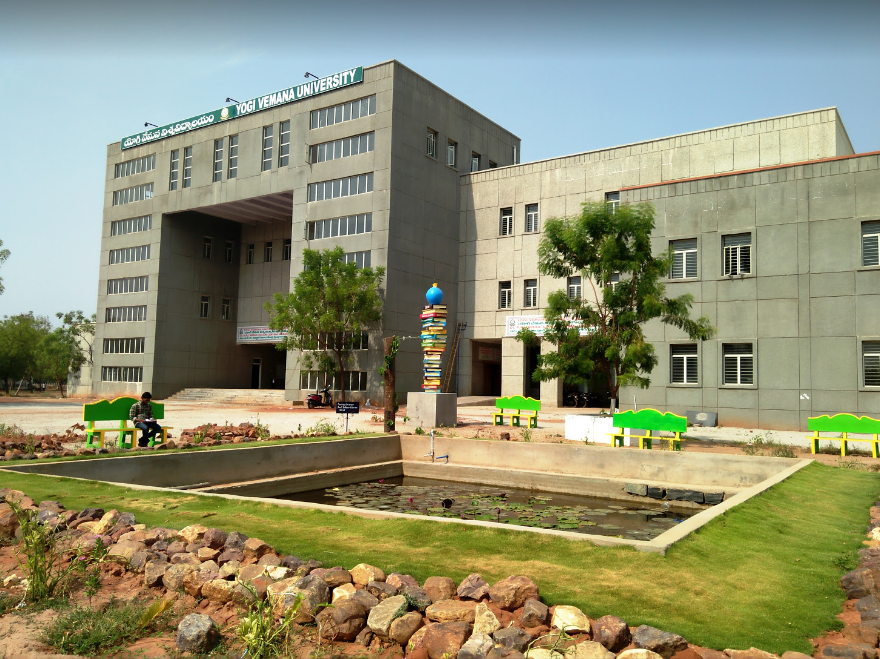
Ph.D. in Journalism And Mass Communication from Yogi Vemana University: Eligibility, Entrance Exam, Fee Structure, and Career Scope
Introduction about Ph.D. in Journalism And Mass Communication at Yogi Vemana University
Embarking on a journey toward a Ph.D. in Journalism and Mass Communication at Yogi Vemana University is more than an academic pursuit; it is a commitment to shaping the narrative of our society. In an era defined by digital transformation and the constant evolution of media ethics, this degree offers a unique platform for scholars to bridge the gap between theoretical frameworks and real-world media practices. Yogi Vemana University provides a research-centric environment where intellectual curiosity meets professional excellence, empowering candidates to contribute original insights to the field of communications. Whether you are an academic enthusiast or a media professional seeking to elevate your expertise, this program serves as a beacon for leadership, critical thinking, and innovation in the global media landscape.
Eligibility Criteria for Ph.D. in Journalism And Mass Communication at Yogi Vemana University
To qualify for the Ph.D. program, candidates must hold a Master?s degree in Journalism and Mass Communication or a closely related field from a recognized university. A minimum of 55% aggregate marks (or an equivalent grade) is typically required for General category candidates, while relaxation is provided for SC/ST and OBC candidates as per state government regulations. Candidates who have cleared UGC-NET, JRF, or SLET are often given preference during the selection process, though they may still need to participate in the departmental research committee assessment.
Entrance Exam for Ph.D. in Journalism And Mass Communication at Yogi Vemana University
Admission to the Ph.D. program is primarily facilitated through a university-level entrance examination. The test is designed to evaluate a candidate's aptitude in Research Methodology, logical reasoning, and core subject knowledge in Mass Communication. The exam typically consists of multiple-choice questions focusing on media theories, communication research, and contemporary social issues. Following the written test, qualified candidates are invited for a personal interview to present their research proposal and discuss their potential contribution to the department.
Fee Structure for Ph.D. in Journalism And Mass Communication at Yogi Vemana University
Yogi Vemana University maintains a transparent and affordable fee structure to encourage research scholars from diverse backgrounds. While fees are subject to revision based on administrative policies, the estimated annual structure is outlined below:
| Particulars | Estimated Amount (INR) |
|---|---|
| Application Fee | 1,500 - 2,500 |
| Course Work Fee | 10,000 - 15,000 |
| Annual Research Fee | 15,000 - 20,000 |
| Library & Lab Charges | 5,000 |
If you require expert assistance during your research journey, consider utilizing Thesis and Dissertation Writing Services to ensure your work meets academic standards.
Admission Process for Ph.D. in Journalism And Mass Communication at Yogi Vemana University
The admission process involves the official notification release, submission of the online application, and the entrance test. Shortlisted candidates proceed to the interview stage, where the Research Advisory Committee evaluates the candidate?s research interest and the viability of their proposed topic. Final selection is based on a cumulative score of the entrance test, interview performance, and academic credentials.
Ph.D. Subjects and Specializations in Journalism And Mass Communication at Yogi Vemana University
The course work includes subjects like Advanced Communication Theories, Qualitative and Quantitative Research Methods, and Media Ethics. Specializations often include New Media Studies, Political Communication, Development Communication, and Film and Television Studies. For those handling complex datasets, seeking help from Research Data Analysis Services can be highly beneficial.
Research Areas in Journalism And Mass Communication at Yogi Vemana University
The university focuses on contemporary issues such as the impact of social media on public opinion, regional media narratives, climate change communication, and the evolution of digital journalism. Researchers are encouraged to explore interdisciplinary subjects that bridge the gap between technology and human behavior.
Documents Required for Ph.D. in Journalism And Mass Communication at Yogi Vemana University
Candidates must ensure they have all necessary academic transcripts, migration certificates, and identity proof. Additionally, providing a well-structured research proposal is essential for your application. If you need help drafting your findings for submission, utilize professional Research Paper Writing Services to polish your work.
Yogi Vemana University Ph.D. Syllabus for Journalism And Mass Communication
The syllabus is structured to provide a deep dive into advanced media studies. It covers standard modules such as Philosophy of Communication, Advanced Research Design, and Review of Literature. Additionally, students are expected to design rigorous surveys, for which Questionnaire Design and Development support can be invaluable.
How To Apply for Ph.D. in Journalism And Mass Communication at Yogi Vemana University
Prospective students should monitor the official Yogi Vemana University website. Applications must be completed online, ensuring all academic documents are uploaded in the requested format. Paying the application fee through the designated payment portal and obtaining a receipt is the final step in the application submission.
Career Scope and Job Opportunities After Ph.D. in Journalism And Mass Communication from Yogi Vemana University
A Ph.D. opens doors to prestigious careers in academia as Professors, Assistant Professors, and Deans. Beyond the classroom, graduates find roles as Media Consultants, Research Heads in corporate firms, Lead Journalists, and Policy Analysts for non-governmental and international organizations. The critical analytical skills developed during the Ph.D. are highly valued in the rapidly changing global information landscape.
Scholarship for Ph.D. in Journalism And Mass Communication at Yogi Vemana University
Yogi Vemana University offers various merit-based scholarships and government-backed fellowships, such as the UGC-JRF, specifically for full-time research scholars. These financial aids cover tuition costs and provide a monthly stipend to support living expenses during the research duration.
FAQs Regarding Ph.D. in Journalism And Mass Communication at Yogi Vemana University
Q: Is there an age limit for the Ph.D. program?
A: No, there is generally no upper age limit for Ph.D. admissions at the university.
Q: Can working professionals pursue this Ph.D.?
A: Yes, part-time options may be available depending on current university guidelines, allowing working professionals to balance their careers with research.
Q: Is the entrance exam mandatory?
A: Candidates who have qualified for national-level fellowships (UGC-NET/JRF) may sometimes be exempted from the written test, but they must check the specific notification for the current year.




