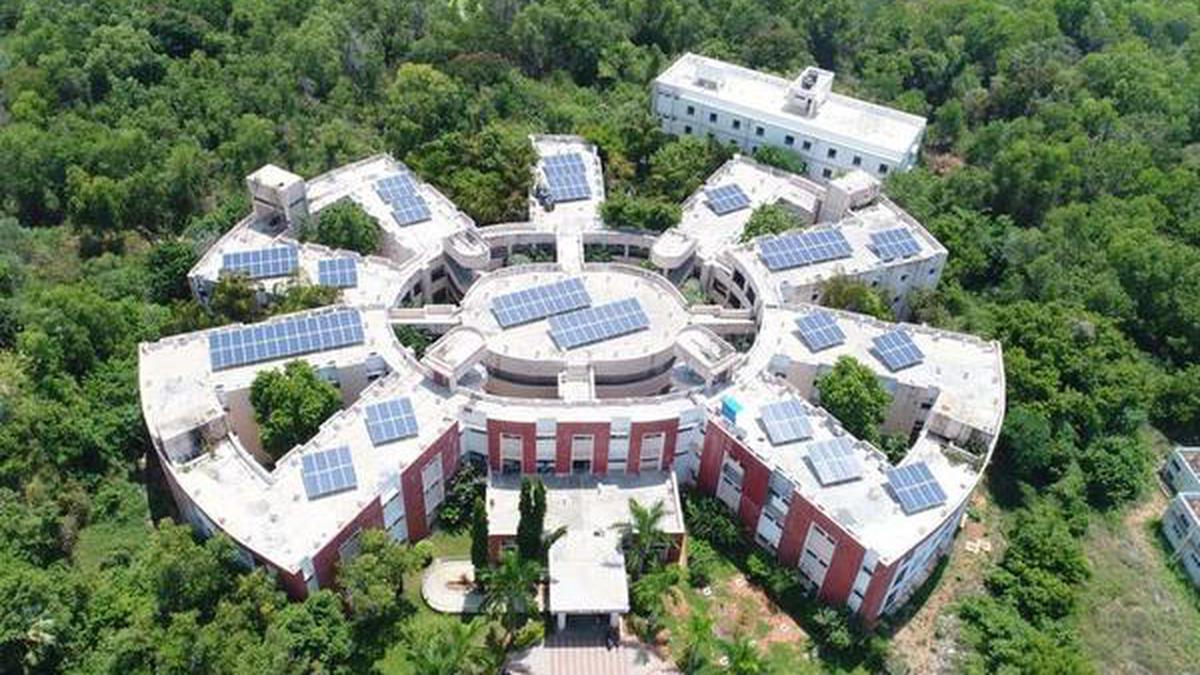
Introduction about Ph.D. in Journalism And Mass Communication at Pondicherry University
Embarking on a doctoral journey in Journalism And Mass Communication at Pondicherry University opens doors to cutting‑edge research, academic leadership, and influential roles in media industries worldwide. The program is meticulously designed for seasoned professionals who aspire to deepen their theoretical knowledge, contribute original research, and shape the future of communication studies. With a vibrant research ecosystem, seasoned faculty, and state‑of‑the‑art facilities, the university provides an inspiring environment that nurtures scholarly excellence and innovative thinking.
Eligibility Criteria for Ph.D. in Journalism And Mass Communication at Pondicherry University
Prospective candidates must satisfy the following minimum requirements:
- Possession of a Master’s degree (or equivalent) in Journalism, Mass Communication, Media Studies, or a related discipline with at least 55% aggregate (50% for SC/ST candidates).
- A valid UGC NET qualification or an equivalent national-level eligibility test (e.g., CSIR NET, JRF). Candidates exempted from the entrance exam due to NET/JRF are directly eligible for admission.
- English language proficiency (if the medium of previous education was not English) demonstrated through standardized tests or university‑approved assessments.
- For foreign nationals, a recognized Master’s degree and a minimum TOEFL/IELTS score as per university guidelines.
Entrance Exam for Ph.D. in Journalism And Mass Communication at Pondicherry University
The university conducts a two‑stage entrance procedure:
- Written Test: A 2‑hour paper assessing research aptitude, domain knowledge, and analytical skills. Topics include media theory, research methodology, ethics, and contemporary communication challenges.
- Interview & Presentation: Shortlisted candidates present a research proposal and undergo a rigorous interview with the department’s faculty panel.
Candidates who hold a UGC NET/JRF certificate are exempted from the written test but must still attend the interview.
Fee Structure for Ph.D. in Journalism And Mass Communication at Pondicherry University
| Fee Component | Amount (INR) |
|---|---|
| Application Processing Fee | 1,000 |
| Admission Fee (one‑time) | 5,000 |
| Annual Tuition & Examination Fee | 12,000 |
| Library & Laboratory Charges | 2,000 |
| Miscellaneous (Sports, Health, etc.) | 1,500 |
| Total (First Year) | 21,500 |
Fee waivers are available for meritorious candidates, ST/SC students, and those receiving university‑sponsored scholarships.
Admission Process for Ph.D. in Journalism And Mass Communication at Pondicherry University
- Online registration through the university’s official portal.
- Upload scanned copies of academic certificates, NET/JRF certificate (if any), and a provisional research proposal.
- Pay the non‑refundable application fee.
- Appear for the written test (or submit NET/JRF proof for exemption).
- Attend the interview and presentation session.
- Receive the admission offer letter and complete enrollment formalities.
Ph.D. Subjects and Specializations in Journalism And Mass Communication at Pondicherry University
The doctoral program offers flexibility to specialize in emerging and traditional domains, such as:
- Digital Media & New Media Studies
- Media Ethics and Law
- Political Communication and Public Opinion
- Advertising, Branding, and Consumer Behaviour
- Broadcast Journalism and Production
- Development Communication and Social Change
- Health Communication and Risk Reporting
Research Areas in Journalism And Mass Communication at Pondicherry University
Faculty members and research centres focus on a wide array of topics, including but not limited to:
- Impact of Social Media on Democratic Processes
- Fake News Detection and Media Literacy
- Audience Analytics and Big Data in Journalism
- Gender Representation in Indian Media
- Climate Change Communication Strategies
- Media Policy Formulation and Regulation
- Cross‑cultural Media Narratives
Documents Required for Ph.D. in Journalism And Mass Communication at Pondicherry University
| Document | Format |
|---|---|
| Completed Application Form (online) | |
| Mark sheets & Degree certificates (Master’s & Bachelor’s) | PDF (scanned) |
| NET/JRF Scorecard (if applicable) | |
| Research Proposal (500–800 words) | DOCX or PDF |
| Proof of Identity (Aadhar / Passport) | |
| Passport‑size Photograph | JPEG/PNG |
| Experience Certificate (if any) |
Pondicherry University Ph.D. Syllabus for Journalism And Mass Communication
The syllabus is divided into three phases:
- Coursework (First Year): Research methodology, quantitative & qualitative techniques, media theory, ethics, and a semester‑wise elective.
- Comprehensive Examination (End of Second Year): Written test covering core concepts and research design.
- Thesis Submission & Defense (Third Year onward): Original dissertation, published papers, and viva‑voce.
How To Apply for Ph.D. in Journalism And Mass Communication at Pondicherry University
Follow these streamlined steps to submit a successful application:
- Visit the official Pondicherry University Ph.D. admission portal and register using a valid email address.
- Complete the online application form, ensuring all mandatory fields are accurately filled.
- Upload the required documents (see the Documents Required table).
- Pay the application fee through the secured payment gateway.
- Print the acknowledgment receipt and keep it for future reference.
- Prepare for the written test (if applicable) and schedule the interview through the portal’s notification system.
Career Scope and Job Opportunities After Ph.D. in Journalism And Mass Communication from Pondicherry University
A doctorate in this field equips graduates with analytical expertise, strategic vision, and a deep understanding of media ecosystems. Potential career avenues include:
- Senior Researcher or Director at Think‑tanks, Media Research Institutes, and NGOs.
- University Professor, Dean, or Head of Department in Journalism & Mass Communication faculties.
- Chief Editor, Content Strategist, or Digital Media Manager in leading news houses and corporate communications firms.
- Policy Analyst or Media Regulator for governmental bodies and regulatory agencies.
- Consultant for international organizations (UNESCO, WHO) on communication strategies.
- Freelance author, columnist, and speaker at national and international conferences.
Scholarship for Ph.D. in Journalism And Mass Communication at Pondicherry University
The university, in collaboration with the UGC, offers several financial aids:
- UGC Junior Research Fellowship (JRF): Full stipend covering tuition, library, and living expenses.
- Merit‑Based Scholarships: Awarded to candidates with exceptional academic records.
- State Government Scholarships: Available for candidates belonging to specified categories.
- Project‑Based Funding: Grants for research aligned with funded projects.
FAQs Regarding Ph.D. in Journalism And Mass Communication at Pondicherry University
- Q: Is a NET/JRF qualification mandatory?
- A: It is not mandatory, but candidates with NET/JRF are exempted from the written test and enjoy priority in the admission process.
- Q: What is the typical duration of the Ph.D. program?
- A: The program is designed for 3‑5 years, depending on the research progress and thesis submission timeline.
- Q: Can I pursue the Ph.D. part‑time while working?
- A: Yes, the university allows part‑time enrollment for professionals, provided they meet the minimum academic criteria and obtain necessary approvals.
- Q: Are there any publishing requirements?
- A: Candidates must publish at least two research papers in peer‑reviewed journals before the final thesis submission.
- Q: How many times can I appear for the entrance test?
- A: Candidates may apply for the written test a maximum of three times, subject to university regulations.
Need assistance with your application or research? Explore our specialized services:
Editing and Proofreading Services
PhD Topic Selection and Proposal Assistance
<a href="https://shiksharesearch.com/services/ph-d




