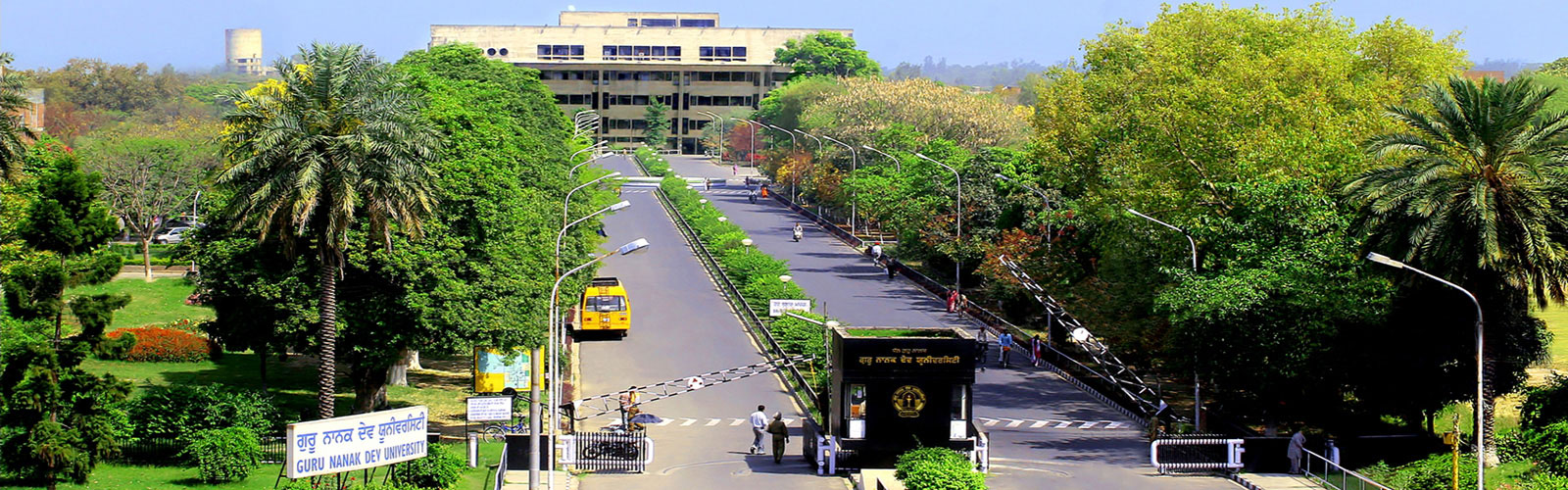
Ph.D. in Journalism And Mass Communication from Guru Nanak Dev University
Embarking on a doctoral journey in Journalism and Mass Communication at Guru Nanak Dev University (GNDU) is a transformative experience that blends rigorous research, critical thinking, and a deep passion for media studies. The program is designed for seasoned professionals, academicians, and visionary storytellers who aspire to lead the discourse on media ethics, digital transformation, and global communication trends. With a vibrant campus environment, state‑of‑the‑art facilities, and mentorship from distinguished scholars, GNDU offers a fertile ground for groundbreaking research that can shape the future of journalism and mass communication.
Eligibility Criteria for Ph.D. in Journalism And Mass Communication at Guru Nanak Dev University
Prospective candidates must meet the following requirements:
- A Master's degree (M.A., M.Sc., or M.Phil.) in Journalism, Mass Communication, Media Studies, or a closely related discipline with a minimum of 55% aggregate (or equivalent CGPA of 6.5/10).
- For candidates with a three‑year postgraduate degree, a minimum of 60% aggregate is required.
- Qualifying the GNDU Ph.D. entrance test or an equivalent national-level test (UGC‑NET, CSIR‑NET, etc.).
- Proficiency in English (both written and oral) as the medium of instruction.
- Valid registration with the University’s Research Cell.
Entrance Exam for Ph.D. in Journalism And Mass Communication at Guru Nanak Dev University
The entrance examination evaluates a candidate’s aptitude in research methodology, media theory, and analytical skills. The exam pattern typically includes:
- Written Test: 150 marks – Objective questions (50), Short answer (50), Essay/Case Study (50).
- Interview: 50 marks – Assessment of research proposal, academic background, and suitability for doctoral study.
- Duration: 2 hours for the written component; 30 minutes for the interview.
Preparation resources, past papers, and mock tests are frequently shared by the university’s Department of Media Studies.
Fee Structure for Ph.D. in Journalism And Mass Communication at Guru Nanak Dev University
| Fee Component | Amount (INR) |
|---|---|
| Admission/Registration Fee | 5,000 |
| Annual Tuition Fee (per semester) | 12,000 |
| Library & Lab Access | 2,000 |
| Research Material & Fieldwork Support | 3,000 |
| Miscellaneous (Printing, Examination) | 1,500 |
| Total Approximate Annual Cost | 35,500 |
Students with merit scholarships, government fellowships, or the university’s own research grants may receive substantial fee waivers.
Admission Process for Ph.D. in Journalism And Mass Communication at Guru Nanak Dev University
The admission cycle consists of the following steps:
- Online Application: Submit the application through the university’s official portal, attaching academic transcripts and a provisional research proposal.
- Entrance Examination: Appear for the written test followed by the interview.
- Document Verification: Present original certificates and passport‑size photographs at the campus verification counter.
- Final Selection: Merit list published on the university website after evaluating test scores, interview performance, and research proposal relevance.
- Enrollment & Fee Payment: Pay the required fees and register for the first semester.
Ph.D. Subjects and Specializations in Journalism And Mass Communication at Guru Nanak Dev University
Students can tailor their doctoral research across several interdisciplinary specializations:
- Digital Media & New Media Technologies
- Media Ethics and Policy
- International Communication & Global Media
- Journalistic Content Analysis
- Advertising, Public Relations & Corporate Communication
- Media Management & Audience Studies
Research Areas in Journalism And Mass Communication at Guru Nanak Dev University
GNDU encourages research that addresses contemporary challenges and advances scholarly knowledge. Prominent research domains include:
- Impact of Social Media on News Consumption
- Fake News Detection and Counter‑Disinformation Strategies
- Media Representation of Marginalized Communities
- Emerging Trends in Mobile Journalism (MoJo)
- Communication Strategies in Crisis Management
- Regulatory Frameworks for OTT Platforms
Documents Required for Ph.D. in Journalism And Mass Communication at Guru Nanak Dev University
| Document | Requirement |
|---|---|
| Academic Transcripts (M.A./M.Phil.) | Original & Certified Copies |
| Research Proposal (1,500–2,000 words) | Outline objectives, methodology, and expected contribution |
| Entrance Exam Hall Ticket | PDF download from university portal |
| Identity Proof (Aadhaar / Passport) | Copy with photograph |
| Work Experience Certificate (if applicable) | Letter from employer with official stamp |
| Letter of Recommendation (2) | From academic mentors or senior professionals |
Guru Nanak Dev University Ph.D. Syllabus for Journalism And Mass Communication
The syllabus is structured to develop research competence and domain expertise. Core components include:
- Research Methodology in Media Studies
- Advanced Theories of Communication
- Statistical Techniques for Content Analysis
- Qualitative Methods: Interviews, Focus Groups, Ethnography
- Digital Media Analytics
- Ethics and Professional Practices in Journalism
- Dissertation Writing & Publication Process
Students are encouraged to supplement the syllabus with workshops, seminars, and conferences organized by the department.
How To Apply for Ph.D. in Journalism And Mass Communication at Guru Nanak Dev University
Follow these precise steps for a successful application:
- Register on the official GNDU admissions portal and create a user profile.
- Fill in personal details, academic history, and upload scanned copies of required documents.
- Draft a concise research proposal (max 2,000 words) highlighting the problem statement, objectives, literature review, and methodology.
- Pay the non‑refundable application fee (INR 2,500) via net banking or UPI.
- Submit the application before the stipulated deadline and note the generated application number for future reference.
- Prepare for the entrance test by reviewing past question papers and attending the university’s pre‑test webinars.
Career Scope and Job Opportunities After Ph.D. in Journalism And Mass Communication from Guru Nanak Dev University
A doctoral degree unlocks a spectrum of high‑impact roles:
- Academic Positions: Assistant Professor, Associate Professor, Head of Department in leading universities.
- Research Fellowships: Positions at media think‑tanks, NGOs, and international research institutes.
- Senior Editorial Roles: Chief Editor, News Director, Content Strategist in major news houses.
- Policy Advisory: Media policy analyst for government agencies, regulatory bodies, and international organizations.
- Consultancy: Media consultancy, digital transformation projects, and corporate communication strategy.
- Entrepreneurship: Launching independent media platforms, content agencies, or research consultancies.
In addition to formal employment, Ph.D. graduates often author books, publish in high‑impact journals, and present at global conferences, thereby enhancing their professional brand.
Scholarship for Ph.D. in Journalism And Mass Communication at Guru Nanak Dev University
Financial assistance is available through multiple avenues:
- University Merit Scholarships: Based on academic performance and research proposal quality.
- UGC‑JRF (Junior Research Fellowship): National-level fellowship covering stipend and tuition.
- State Government Scholarships: For candidates belonging to specified categories.
- External Grants: Sponsored by media corporations, NGOs, and international bodies (e.g., UNESCO, WHO).
Applicants are encouraged to explore these options early, as many scholarships have separate application cycles.
FAQs Regarding Ph.D. in Journalism And Mass Communication at Guru Nanak Dev University
- What is the minimum duration to complete the Ph.D.?
- The program typically requires 3–4 years of full‑time research, subject to successful completion of coursework and dissertation defense.
- Can working professionals enroll part‑time?
- Yes, GNDU offers a part‑time mode for eligible candidates who can meet the research milestones while maintaining employment.
- Is there a language requirement for the research thesis?
- Theses may be submitted in English or Hindi, provided the candidate obtains prior permission from the supervisor and the department.
- How are research publications evaluated?
- At least two peer‑reviewed journal articles (indexed in Scopus/Web of Science) are mandatory for thesis submission.
- What support is available for fieldwork?
- The university’s Media Lab provides equipment, software licenses, and modest travel grants for data collection.
Professional Support Services to Strengthen Your Ph.D. Journey
To maximize your research impact, consider leveraging specialized assistance:
- Editing and Proofreading Services – Ensure your dissertation meets academic standards and publication guidelines.
- PhD Topic Selection and Proposal Assistance – Refine your research question and design a compelling proposal.
- PhD Admission Assistance – Navigate the application process with expert guidance.
- Honorary Doctorate Programs – Explore avenues for recognition of professional expertise.
- Research Publication Support – From journal selection to




