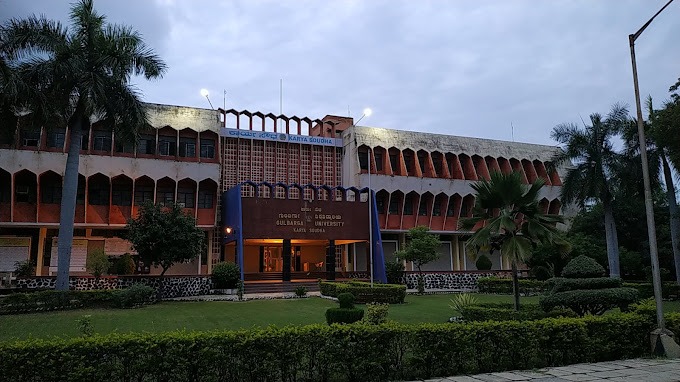
Introduction about Ph.D. in Kannada at Gulbarga University
The Doctor of Philosophy (Ph.D.) in Kannada offered by Gulbarga University stands as a beacon for scholars eager to delve deep into the linguistic, literary, and cultural heritage of Karnataka. Designed for professionals and academicians, this research‑oriented program empowers candidates to contribute original knowledge, foster critical discourse, and shape future curricula. With a robust blend of traditional scholarship and contemporary research methodologies, the Ph.D. in Kannada equips graduates to become thought leaders in academia, publishing, policy‑making, and beyond.
Ph.D Admission 2026-2027 & Writing Support Services by Shiksha Research
Eligibility Criteria for Ph.D. in Kannada at Gulbarga University
- A Master’s degree (M.A.) in Kannada or a related field with a minimum of 55% marks (or equivalent grade).
- Candidates with an M.Phil. in Kannada are also eligible, provided they have cleared the university‑approved qualifying examination.
- Age limit: No upper age restriction; however, candidates must be physically and mentally fit to pursue rigorous research.
- Foreign nationals must possess a valid study visa and meet the equivalence criteria set by the University’s International Relations Office.
Entrance Exam for Ph.D. in Kannada at Gulbarga University
Gulbarga University conducts a comprehensive entrance test to evaluate a candidate’s proficiency and research aptitude. The exam comprises three sections:
- Language & Literature: Objective questions on Kannada grammar, classic and modern literature.
- Research Methodology: Short answer questions assessing knowledge of qualitative and quantitative methods.
- General Aptitude: Logical reasoning, data interpretation, and analytical writing.
Qualified candidates are shortlisted for a personal interview and a presentation of a preliminary research proposal.
Fee Structure for Ph.D. in Kannada at Gulbarga University
| Fee Component | Amount (INR) | Notes |
|---|---|---|
| Application Processing Fee | 1,200 | Non‑refundable, payable online. |
| Entrance Examination Fee | 2,500 | Includes test centre charges. |
| Annual Tuition & Library Fee | 12,000 per year | Subject to revision each academic year. |
| Research Guidance & Lab Access | 5,000 per year | Provides mentorship, journal access, and workshop participation. |
| Miscellaneous (Printing, Stationery) | 1,500 per year | Estimated average; actual cost may vary. |
| Total Approximate Cost (4‑Year Program) | 71,200 | Excludes scholarships and external funding. |
Admission Process for Ph.D. in Kannada at Gulbarga University
- Online Application: Submit the application form through the university portal with scanned copies of academic certificates.
- Document Verification: Upload the required documents (see “Documents Required” section).
- Entrance Examination: Appear for the written test on the scheduled date.
- Interview & Proposal Review: Shortlisted candidates present a 10‑minute research proposal; the panel evaluates feasibility and originality.
- Admission Offer: Successful candidates receive an official admission letter and fee payment instructions.
- Enrollment: Complete fee payment, attend orientation, and register for the first semester of coursework.
Ph.D. Subjects and Specializations in Kannada at Gulbarga University
- Historical Development of Kannada Literature
- Modern Kannada Poetry and Drama
- Kannada Linguistics and Phonetics
- Folklore, Oral Traditions & Cultural Studies
- Translation Studies: Kannada‑English/Other Languages
- Digital Humanities: E‑textual Analysis of Kannada Works
Research Areas in Kannada at Gulbarga University
Faculty mentors guide Ph.D. scholars across diverse research corridors, including:
- Comparative literary criticism between Kannada and other Dravidian languages.
- Impact of sociopolitical movements on 20th‑century Kannada prose.
- Preservation and digitization of rare manuscripts.
- Language policy, bilingual education, and Kannada’s role in regional identity.
- Computational linguistics: Corpus building, sentiment analysis, and machine translation.
Documents Required for Ph.D. in Kannada at Gulbarga University
| Document | Details |
|---|---|
| Application Form | Completed online form with photograph. |
| Academic Transcripts | Certified copies of MA/M.Phil. certificates and mark sheets. |
| Research Proposal | 1500‑word outline including objectives, methodology, and bibliography. |
| Identity Proof | Aadhaar card, passport, or driver’s licence. |
| Experience Certificate (if any) | Proof of teaching/research experience in Kannada. |
| Affidavit | Declaration of originality and non‑plagiarism. |
Gulbarga University Ph.D. Syllabus for Kannada
The syllabus is structured into two phases – coursework and dissertation:
- Phase I (Coursework – 2 semesters):
- Advanced Kannada Grammar and Semantics
- Research Methodology & Statistics
- Contemporary Literary Theory
- Elective: Digital Humanities or Folklore Studies
- Phase II (Dissertation – 2‑3 years):
- Proposal Submission & Ethics Clearance
- Data Collection / Textual Analysis
- Progress Seminars (Bi‑annual)
- Thesis Writing & Viva‑Voce Examination
How To Apply for Ph.D. in Kannada at Gulbarga University
Follow these step‑by‑step instructions for a seamless application experience:
- Visit the official Gulbarga University website and navigate to the “Post‑Graduate Admissions” portal.
- Register using a valid email address; you will receive a confirmation link.
- Fill in personal details, academic history, and upload scanned copies of the required documents.
- Pay the non‑refundable application fee via net banking or credit/debit card.
- Submit the research proposal in PDF format (max 2 MB).
- Note the examination date; download the admit card once released.
- Prepare for the entrance test using the recommended syllabus available on the university’s “Ph.D. Resources” page.
- After the test, monitor email for interview shortlisting and subsequent steps.
Career Scope and Job Opportunities After Ph.D. in Kannada from Gulbarga University
Graduates with a Ph.D. in Kannada enjoy a wide spectrum of professional avenues:
- Academia: Lecturer, Assistant Professor, Associate Professor, or Head of Department in universities and colleges.
- Research Institutes: Senior researcher or project leader at language and cultural research centres.
- Publishing & Media: Editorial roles in literary magazines, translation houses, and digital content firms.
- Government & NGOs: Policy analyst for language preservation, cultural heritage projects, and education departments.
- Consultancy: Linguistic consultancy for software localization, AI language models, and curriculum development.
- Freelance Opportunities: Author, translator, columnist, and speaker at literary festivals.
Scholarship for Ph.D. in Kannada at Gulbarga University
To support deserving scholars, Gulbarga University offers several financial aids:
- University Merit Scholarship: Up to 50% tuition waiver for candidates with a CGPA of 8.0/10 or higher.
- UGC‑JRF (Junior Research Fellowship): National level fellowship covering stipend, contingency, and travel allowances.
- State Government Scholarship: For candidates belonging to Scheduled Castes, Scheduled Tribes, and Other Backward Classes.
- Research Grant Assistance: Faculty‑supervised projects that allocate funds for fieldwork, data acquisition, and conference participation.
FAQs Regarding Ph.D. in Kannada at Gulbarga University
- 1. How long does it take to complete the Ph.D. in Kannada?
- Typically 4–5 years, depending on the research progress and publication requirements.
- 2. Is there a provision for part‑time Ph.D. enrollment?
- Yes, professionals can opt for a part‑time mode with extended submission deadlines.
- 3. Can I transfer my research to another university?
- Transfer is allowed subject to approval from both institutions and a review of the research work already completed.
- 4. What is the minimum language proficiency required?
- Fluency in reading, writing, and critical analysis of Kannada texts is mandatory; no separate language test is conducted.
- 5. Are publications mandatory for thesis submission?
- At least two articles in refereed journals or conference proceedings are expected before the final viva‑voce.




