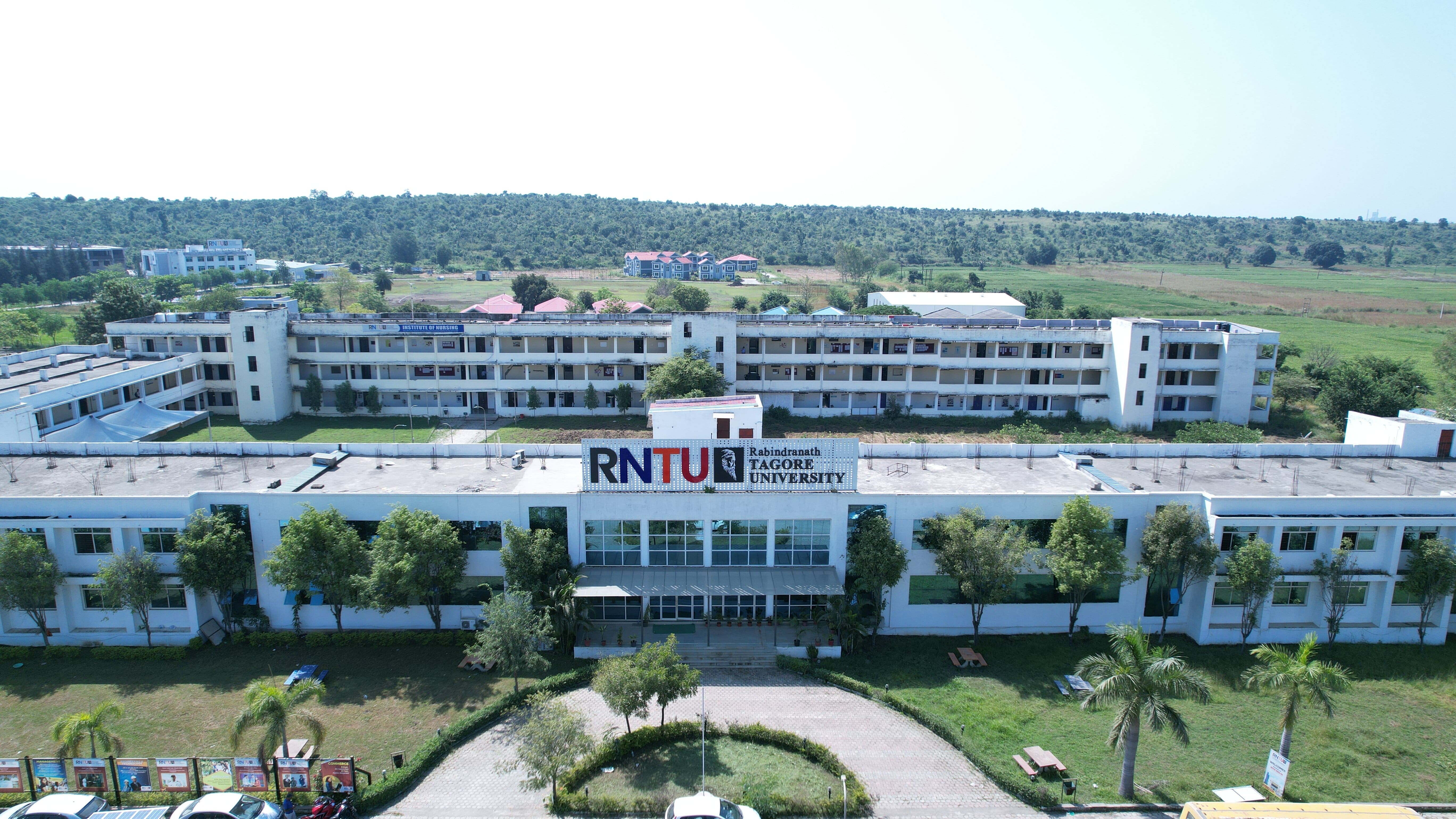
Introduction about Ph.D. in Law at Rabindranath Tagore University
Embarking on a Ph.D. in Law is not merely an academic endeavor; it is a profound journey toward becoming a visionary leader in the legal fraternity. At Rabindranath Tagore University (RNTU), this program is designed to empower professionals who seek to challenge existing legal paradigms and contribute original, impactful research to the field of jurisprudence. RNTU, located in the heart of Madhya Pradesh, has established itself as a premier destination for higher education, blending traditional academic rigor with modern research methodologies. The Ph.D. in Law program here invites thinkers, practitioners, and scholars to dive deep into contemporary legal issues, fostering an environment where innovation meets justice. Whether you are aiming to influence public policy, excel in legal academia, or master international law, Rabindranath Tagore University provides the intellectual ecosystem necessary to transform your aspirations into reality.
Ph.D Admission 2026-2027 & Writing Support Services by Shiksha Research
Eligibility Criteria for Ph.D. in Law at Rabindranath Tagore University
To join the ranks of elite researchers at Rabindranath Tagore University, candidates must meet specific academic standards that ensure they are prepared for the rigors of doctoral research. The primary requirement is a Master?s degree in Law (LL.M.) from a recognized university. Candidates are generally expected to have secured a minimum of 55% aggregate marks (50% for SC/ST/OBC and differently-abled candidates) in their postgraduate studies. This benchmark ensures that the scholar possesses a foundational understanding of complex legal frameworks before embarking on specialized research. Furthermore, professionals with substantial experience in the legal sector or those who have cleared national-level fellowships are encouraged to apply, as RNTU values the diverse perspectives that experienced practitioners bring to the academic table.
Entrance Exam for Ph.D. in Law at Rabindranath Tagore University
The gateway to the Ph.D. program at RNTU is a comprehensive entrance examination designed to test a candidate's analytical prowess and research aptitude. The university conducts its own entrance test, which typically covers two main areas: Research Methodology and Core Legal Subjects. This exam assesses the candidate's ability to approach legal problems with a scientific mindset. It is important to note that candidates who have successfully qualified for the UGC-NET (including JRF), SLET, or GATE are often exempted from the university?s written entrance test, though they must still participate in the personal interview round. This exemption honors the achievements of those who have already proven their mettle on a national stage.
Fee Structure for Ph.D. in Law at Rabindranath Tagore University
Investing in a Ph.D. is an investment in your intellectual future. Rabindranath Tagore University offers a transparent and competitive fee structure for its doctoral programs. The costs are categorized into several components, including registration fees, tuition fees, library usage, and examination fees. Below is an approximate outline of the financial commitment required:
| Fee Component | Approximate Amount (INR) | Frequency |
|---|---|---|
| Application & Registration Fee | ?2,500 - ?5,000 | One-time |
| Course Work Fee | ?15,000 - ?20,000 | One-time |
| Annual Tuition Fee | ?60,000 - ?80,000 | Yearly |
| Thesis Submission & Viva-Voce | ?15,000 - ?25,000 | At the time of submission |
| Library & Lab Charges | ?5,000 | Annual |
*Note: The fee structure is subject to change as per university norms. Candidates are advised to verify details from the official admission office.*
Admission Process for Ph.D. in Law at Rabindranath Tagore University
The admission process at RNTU is designed to identify individuals with a genuine passion for legal scholarship. It begins with the submission of an online application form, accompanied by the required academic transcripts and a preliminary research proposal. Following the entrance examination, shortlisted candidates are invited for a personal interview or viva-voce. During this interaction, the departmental research committee evaluates the candidate?s research interest, the feasibility of their proposed topic, and their potential to contribute to the university?s academic output. For those aiming for high-impact publication, seeking professional Research Paper Writing Services can be a strategic move to refine their initial research ideas before presenting them to the committee.
Ph.D. Subjects and Specializations in Law at Rabindranath Tagore University
Recognizing the vastness of the legal field, RNTU offers a wide range of specializations that allow scholars to tailor their research to their specific interests and career goals. Whether your passion lies in corporate governance, social justice, or digital rights, the university provides the expertise to guide you. Popular specializations include:
- Constitutional Law and Administrative Law
- Criminal Law and Criminology
- Corporate and Commercial Law
- Intellectual Property Rights (IPR)
- Environmental Law and Sustainable Development
- Human Rights and International Humanitarian Law
- Cyber Law and Technology Regulation
Research Areas in Law at Rabindranath Tagore University
Rabindranath Tagore University encourages interdisciplinary research that addresses real-world challenges. Research areas often intersect with socio-economic development, corporate ethics, and technological advancements. Scholars are encouraged to explore emerging fields such as Artificial Intelligence and Law, Alternative Dispute Resolution (ADR) mechanisms, and the impact of Globalization on Constitutionalism. To effectively navigate these broad areas, many scholars utilize Research Data Analysis Services to ensure their empirical findings are robust and mathematically sound, particularly when dealing with complex legal data and social surveys.
Documents Required for Ph.D. in Law at Rabindranath Tagore University
To ensure a smooth application process, candidates should keep the following documents ready:
- High School and Higher Secondary Marksheets/Certificates
- Graduation (LLB) Degree and Marksheets
- Post-Graduation (LLM) Degree and Marksheets
- UGC-NET/JRF/SLET Certificate (if applicable)
- Transfer Certificate (TC) and Migration Certificate
- Detailed Research Proposal/Synopsis
- No Objection Certificate (NOC) from the current employer (for working professionals)
- Passport-size photographs and Identity Proof (Aadhar Card/Passport)
Rabindranath Tagore University Ph.D. Syllabus for Law
The Ph.D. coursework at RNTU is structured to build a strong foundation for high-level inquiry. The first six months are typically dedicated to "Course Work," which is mandatory for all scholars. The syllabus includes:
- Research Methodology: Quantitative and qualitative research techniques, legal research tools, and philosophy of law.
- Computer Applications in Law: Training in digital libraries, legal databases (like SCC Online or Manupatra), and data management.
- Legal Theory and Jurisprudence: In-depth study of legal philosophies and their modern applications.
- Review of Published Research: Analyzing existing literature to identify research gaps.
During this phase, scholars often find that Questionnaire Design and Development is a critical skill for those conducting socio-legal empirical studies, as it determines the quality of the data collected for the final thesis.
How To Apply for Ph.D. in Law at Rabindranath Tagore University
The application journey is streamlined through the university's official portal. To apply, follow these steps:
- Visit the official Rabindranath Tagore University website and navigate to the 'Admissions' or 'Research' section.
- Register your account and fill out the Ph.D. application form with accurate personal and academic details.
- Upload scanned copies of the required documents and your research proposal.
- Pay the application fee through the integrated online payment gateway.
- Download and print the confirmation page for future reference.
- Prepare for the entrance test and interview as per the schedule provided by the university.
Career Scope and Job Opportunities After Ph.D. in Law from Rabindranath Tagore University
Earning a Ph.D. in Law from RNTU opens doors to prestigious and influential career paths. As a doctor of law, you are recognized as an expert in your field, capable of shaping the future of legal practice and theory. The career scope includes:
- Academia: Becoming a Professor or Dean at leading law schools and universities.
- Judiciary: Higher roles in judicial services or working as a judicial clerk for Supreme Court or High Court judges.
- Legal Consultancy: Providing expert advice to multinational corporations, law firms, and NGOs.
- Public Policy: Working with government bodies or think tanks to draft and analyze legislation.
- International Organizations: Roles in the UN, WTO, or International Court of Justice.
Writing a comprehensive thesis is the final hurdle in this journey. Many scholars opt for Thesis and Dissertation Writing Services to maintain the highest academic standards of language and formatting, ensuring their final submission is nothing short of exemplary.
Scholarship for Ph.D. in Law at Rabindranath Tagore University
RNTU is committed to supporting meritorious scholars and providing financial aid to deserving candidates. Scholarships are often available for students who have topped their Master?s program or those who show exceptional promise in their research proposal. Furthermore, candidates who have secured the Junior Research Fellowship (JRF) receive a monthly stipend from the UGC. The university also facilitates various state and central government scholarship schemes for students belonging to reserved categories or economically weaker sections (EWS), ensuring that financial constraints do not hinder the pursuit of knowledge.
FAQs Regarding Ph.D. in Law at Rabindranath Tagore University
Q1: Is the Ph.D. from RNTU recognized by the UGC?
Yes, Rabindranath Tagore University is recognized by the University Grants Commission (UGC), and its Ph.D. degrees are valid across India and abroad for employment and further academic pursuits.
Q2: Can I pursue a Ph.D. in Law while working?
Yes, RNTU offers flexibility for working professionals, provided they complete the mandatory coursework and obtain an NOC from their employer. Regular meetings with the supervisor are required.
Q3: How long does it take to complete the Ph.D. program?
The minimum duration is three years, while the maximum is typically six years, including the coursework.
Q4: Is there an entrance test for candidates with LLM?
Yes, all candidates with LLM must appear for the entrance test unless they have qualified for UGC-NET/JRF or similar national examinations.
Q5: Does the university provide assistance in publication?
The research supervisors at RNTU guide scholars through the publication process in indexed journals (Scopus/UGC Care), which is a mandatory requirement for the award of the degree.




