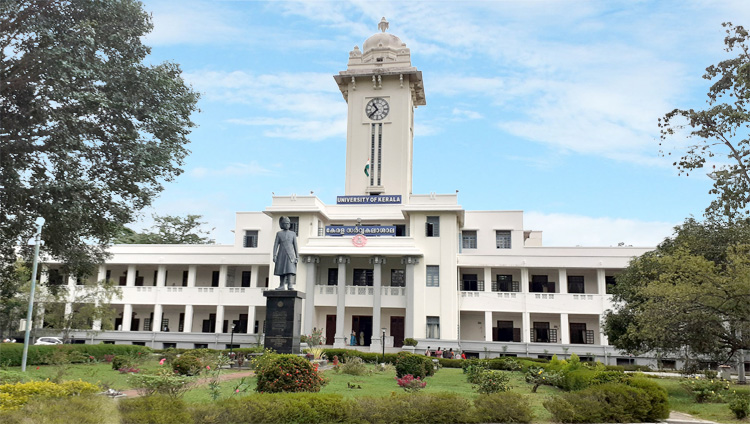
Ph.D. in Malayalam from Kerala University: Eligibility, Entrance Exam, Fee Structure, Admission Process, Subjects, Research Areas, Syllabus, Scholarship & Career Scope
Introduction about Ph.D. in Malayalam at Kerala University
Kerala University, a beacon of academic excellence in the heart of Kerala, offers a distinguished Ph.D. in Malayalam that blends rigorous research with the rich cultural tapestry of the language. Designed for scholars who aspire to deepen Malayalam literary criticism, linguistic studies, or cultural historiography, the program empowers professionals to become thought leaders, educators, and innovators in the field. With a supportive faculty, state?of?the?art resources, and a vibrant research community, your journey toward a doctorate becomes an inspiring quest for knowledge.
Eligibility Criteria for Ph.D. in Malayalam at Kerala University
Prospective candidates must satisfy the following academic benchmarks to qualify for the doctoral programme:
- Possession of a Master?s degree (M.A.) in Malayalam or a closely related discipline from a recognized university with a minimum aggregate of 55% (or 5.5 CGPA on a 10?point scale).
- Candidates holding an M.Phil. in Malayalam are exempted from the entrance examination, provided they have secured at least 50% marks.
- Candidates with a Master?s degree in another language or literature may apply, but must clear the entrance exam and obtain a minimum of 50% in the qualifying exam.
- Age limit: No upper age restriction, though candidates above 30 years may be required to provide evidence of work experience.
- Professional experience in teaching, publishing, or cultural research is considered a plus during the selection process.
Entrance Exam for Ph.D. in Malayalam at Kerala University
The entrance test evaluates both subject?specific expertise and research aptitude. The exam pattern typically includes:
- Written Test (100 marks): Two papers ? Paper I covering Malayalam literature, linguistics, and history; Paper II focusing on research methodology, statistics, and critical analysis.
- Viva?voce (30 marks): Conducted for shortlisted candidates to assess their research proposal, motivation, and communication skills.
- Duration: Each written paper lasts 2 hours; viva?voce is 20?30 minutes.
Preparation resources, past question papers, and model answers are regularly published on the university?s official portal.
Fee Structure for Ph.D. in Malayalam at Kerala University
| Component | Annual Fee (INR) | Notes |
|---|---|---|
| Admission & Registration | 5,000 | One?time payment at the time of enrollment. |
| Tuition & Laboratory Charges | 8,500 | Includes access to the language lab and digital archives. |
| Examination Fees (per semester) | 2,000 | Applicable for each internal and external assessment. |
| Library & Resource Centre | 1,200 | Annual subscription for e?journals and databases. |
| Miscellaneous (sports, cultural activities) | 1,000 | Optional but encouraged for holistic development. |
| Total Approximate Annual Cost | 17,700 | Subject to revision each academic year. |
Admission Process for Ph.D. in Malayalam at Kerala University
Follow these systematic steps to secure a seat in the Ph.D. programme:
- Online Application: Submit the application form via the university?s admission portal before the stipulated deadline.
- Upload Documents: Attach scanned copies of transcripts, degree certificates, identity proof, and passport?size photograph.
- Entrance Examination: Appear for the written test at the designated centre. Candidates clearing the exam receive a provisional merit list.
- Viva?voce & Proposal Review: Shortlisted candidates present their research proposal before the Ph.D. selection committee.
- Final Selection: Based on academic merit, research proposal quality, and interview performance, the university issues an admission letter.
- Fee Payment & Enrollment: Pay the admission and registration fees; complete the enrolment formalities at the Department of Malayalam.
Ph.D. Subjects and Specializations in Malayalam at Kerala University
The doctorate program offers a range of specializations allowing candidates to align their research with personal interests and market needs:
- Modern Malayalam Poetry and Poetics
- Classical Malayalam Literature (12th?18th Century)
- Malayalam Linguistics and Phonetics
- Folklore, Oral Traditions & Performing Arts
- Translation Studies and Comparative Literature
- Digital Humanities in Malayalam
- Media Studies & Malayalam Journalism
Research Areas in Malayalam at Kerala University
Faculty members and research centres actively explore the following domains, providing a fertile ground for doctoral scholars:
- Socio?cultural impact of Malayalam literature in diaspora communities.
- Language preservation strategies for endangered dialects of Kerala.
- Interdisciplinary studies linking Malayalam literature with environmental narratives.
- Impact of digital media on contemporary Malayalam literary forms.
- Historical evolution of Malayalam script and orthography.
- Gender representation and feminist critique in Malayalam poetry.
Documents Required for Ph.D. in Malayalam at Kerala University
| Document | Format | Remarks |
|---|---|---|
| Application Form (online) | PDF/HTML | Completed and submitted via university portal. |
| Certified copies of MA/M.Phil. certificates | PDF (scanned) | Must be attested by the issuing university. |
| Mark sheets for all qualifying exams | PDF (scanned) | Include detailed subject-wise scores. |
| Research Proposal (max 1500 words) | Word/ PDF | Should outline objectives, methodology, and expected outcomes. |
| Curriculum Vitae (CV) | Highlight academic achievements, publications, and professional experience. | |
| Identity Proof (Aadhaar/Passport) | PDF (scanned) | Government?issued photo ID. |
| Passport?size Photograph | JPEG/PNG | White background, 3.5 cm x 4.5 cm. |
Kerala University Ph.D. Syllabus for Malayalam
The syllabus is designed to build a strong theoretical foundation followed by intensive research practice:
- Core Modules (Year 1): Advanced Malayalam Literature, Linguistic Theory, Research Methodology, Statistics for Social Sciences.
- Elective Modules (Year 1?2): Digital Humanities, Folklore Studies, Translation Theory, Media and Communication.
- Seminar & Workshop Series: Academic writing, publishing ethics, conference presentation skills.
- Thesis Work (Year 2?4): Original research, data collection, analysis, and dissertation writing under the guidance of a supervising professor.
How To Apply for Ph.D. in Malayalam at Kerala University
Applying is simple when you follow these precise actions:
- Visit the official Kerala University Admissions Portal and create a new user account.
- Navigate to the ?Doctoral Programs? section and select ?Ph.D. in Malayalam?.
- Fill in personal, academic, and contact details. Upload the required documents (as listed above).
- Pay the non?refundable application fee through the integrated payment gateway.
- Submit the completed application and note the generated application number for future reference.
- Monitor your email and the portal for notifications regarding the entrance exam schedule and results.
Career Scope and Job Opportunities After Ph.D. in Malayalam from Kerala University
Holding a doctorate in Malayalam opens doors to diverse professional avenues:
- Academia: Lectureship, Associate Professor, or Professor positions in universities and colleges across India and abroad.
- Research Institutes: Senior researcher or project leader at cultural, linguistic, or literary research centres.
- Publishing & Media: Editorial roles, literary criticism, content development for newspapers, magazines, and digital platforms.
- Government & NGOs: Policy advisory roles focusing on language preservation, education, and cultural heritage.
- Consultancy & Freelance: Translation services, manuscript evaluation, and cultural consultancy for film and television.
- Entrepreneurship: Establishing language schools, literary festivals, or start?ups centred on Malayalam digital content.
Scholarship for Ph.D. in Malayalam at Kerala University
Financial assistance is available through a variety of schemes to support deserving scholars:
- Kerala University Doctoral Fellowship: Covers tuition, a monthly stipend of ?12,000, and travel allowance for conference participation.
- UGC Junior Research Fellowship (JRF): Nationwide award offering a stipend of ?31,000 per month after qualifying the UGC NET exam.
- State Government Scholarship for Language Research: Targeted at candidates working on endangered dialects and folk literature.
- Private Trusts & Foundations: Organizations such as the Editing and Proofreading Services and Research Publication Support provide one?time grants for manuscript preparation and journal submissions.




