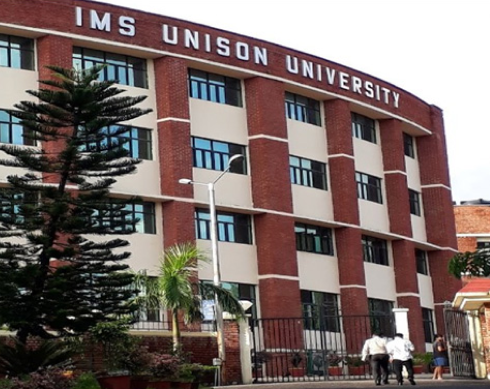
Ph.D. in Mass Communication from IMS Unison University: Eligibility, Entrance Exam, Fee Structure, Admission Process, Research Areas, Syllabus & Career Scope
Introduction about Ph.D. in Mass Communication at IMS Unison University
IMS Unison University has emerged as a beacon of advanced research and academic excellence in the field of mass communication. The Ph.D. in Mass Communication program is designed for seasoned professionals, academicians, and visionary thinkers who aspire to deepen their expertise, contribute original knowledge, and lead transformative communication initiatives. With a blend of rigorous coursework, cutting‑edge research facilities, and mentorship from internationally recognized scholars, the doctoral journey at IMS Unison University inspires students to become thought‑leaders in media, journalism, public relations, digital communication, and beyond.
Eligibility Criteria for Ph.D. in Mass Communication at IMS Unison University
Prospective candidates must meet the following minimum requirements:
- A Master’s degree (or equivalent) in Mass Communication, Journalism, Media Studies, or a related discipline with at least 55% aggregate marks (or CGPA 6.0 on a 10‑point scale).
- Alternatively, a Master’s degree in any discipline with a minimum of 60% aggregate, provided the applicant demonstrates strong research aptitude in communication studies.
- Qualifying scores in a recognized entrance examination (see section below) or a valid national-level test (e.g., UGC‑NET, CSIR‑NET, GATE).
- English language proficiency (minimum IELTS 6.0 or TOEFL 80) for candidates whose prior education was not in English.
Entrance Exam for Ph.D. in Mass Communication at IMS Unison University
The university conducts a two‑stage entrance assessment to ensure candidates possess both theoretical grounding and research potential:
- Written Test (Online) – 100 multiple‑choice questions covering research methodology, communication theories, media law, and quantitative/qualitative analysis techniques. The test lasts 2 hours.
- Personal Interview & Research Proposal Presentation – Shortlisted candidates present a concise research proposal (max 10 minutes) followed by a panel interview to evaluate clarity of thought, originality, and alignment with faculty expertise.
Candidates who have cleared UGC‑NET (Communication & Media Studies) are exempted from the written test but must appear for the interview.
Fee Structure for Ph.D. in Mass Communication at IMS Unison University
| Component | Annual Fee (INR) | Notes |
|---|---|---|
| Tuition & Academic Fees | 1,20,000 | Includes coursework, seminars, and access to digital libraries. |
| Research Lab & Resource Charges | 30,000 | Dedicated lab access, software licences, and field study costs. |
| Examination & Evaluation Fees | 15,000 | Annual progress assessments and final viva‑voce. |
| Miscellaneous (Library, Sports, Welfare) | 10,000 | Student services and campus amenities. |
| Total Approx. per Year | 1,75,000 | Subject to revision each academic year. |
Scholarships, fellowships, and research grants can significantly offset the above costs (see the Scholarship section).
Admission Process for Ph.D. in Mass Communication at IMS Unison University
The admission workflow is streamlined to provide transparency and support at every step:
- Online Application Submission – Fill out the digital application form, upload academic transcripts, a statement of purpose, and a preliminary research proposal.
- Document Verification – The Admissions Office validates certificates, marksheets, and identity proof.
- Entrance Examination (if applicable) – Candidates receive a secure login to attempt the written test.
- Interview Scheduling – Shortlisted applicants are invited for a virtual or on‑campus interview.
- Final Admission Offer – Successful candidates receive an official offer letter with fee details and enrollment instructions.
- Enrollment & Orientation – Payment of the first year’s fees, assignment of a faculty supervisor, and participation in the doctoral orientation program.
Throughout the process, the university’s PhD Admission Assistance service can help candidates navigate documentation and interview preparation.
Ph.D. Subjects and Specializations in Mass Communication at IMS Unison University
Students can tailor their doctoral research to one of the following cutting‑edge specializations:
- Digital Media & Social Networks
- Media Ethics and Regulation
- Strategic Public Relations and Corporate Communication
- Journalism Innovation & Data‑Driven Reporting
- Film Studies and Visual Storytelling
- Health Communication and Public Policy
- Political Communication and Media Influence
- Communication Technology & Emerging Platforms
Research Areas in Mass Communication at IMS Unison University
Faculty expertise and research infrastructure support a broad spectrum of investigative themes, including:
- Impact of Artificial Intelligence on News Production
- Audience Engagement Metrics in OTT Platforms
- Misinformation Spread and Fact‑Checking Mechanisms
- Cross‑Cultural Media Narratives
- Sustainable Communication Strategies for Climate Action
- Virtual Reality (VR) and Augmented Reality (AR) in Storytelling
- Media Policy Development in Emerging Democracies
- Data Analytics for Consumer Behaviour in Advertising
Prospective doctoral scholars are encouraged to discuss their ideas with potential supervisors early, leveraging the university’s PhD Topic Selection and Proposal Assistance service.
Documents Required for Ph.D. in Mass Communication at IMS Unison University
| Document | Details |
|---|---|
| Academic Transcripts | Original and photocopy of Master's degree (and Bachelor's if required). |
| Certificate of Graduation | Degree certificate with official seal. |
| Entrance Exam Scorecard | UGC‑NET / GATE / University‑conducted test score. |
| Statement of Purpose (SOP) | 500‑word essay outlining research interests and career goals. |
| Research Proposal (Draft) | 2‑page summary of proposed study, methodology, and expected contribution. |
| Identity Proof | Passport, Aadhar card, or PAN card copy. |
| English Proficiency Certificate | IELTS/TOEFL (if applicable). |
| Resume / Curriculum Vitae | Professional experience, publications, and conference participation. |
All documents must be uploaded in PDF format, each not exceeding 2 MB.
IMS Unison University Ph.D. Syllabus for Mass Communication
The doctoral curriculum is structured into three phases: Core Foundations, Research Methodology, and Dissertation Development.
- Phase I – Core Foundations (Year 1)
- Advanced Theories of Communication
- Media Law and Ethics
- Quantitative & Qualitative Research Methods
- Digital Media Analytics
- Phase II – Methodology & Literature Review (Year 2)
- Statistical Software Applications (SPSS, R)
- Content Analysis and Discourse Studies
- Grant Writing and Funding Strategies
- Seminar Series: Emerging Topics in Mass Communication
- Phase III – Dissertation (Years 3‑5)
- Research Design and Data Collection
- Publication of Journal Articles (minimum two peer‑reviewed papers)
- Conference Presentation and Networking
- Final Thesis Submission and Viva‑Voce Examination
How To Apply for Ph.D. in Mass Communication at IMS Unison University
Follow these step‑by‑step instructions to submit a successful application:
- Visit the official university admissions portal and create a user account.
- Complete the online application form, ensuring accurate personal and academic details.
- Upload all required documents (refer to the “Documents Required” table).
- Pay the non‑refundable application fee of INR 2,500 via credit/debit card or net banking.
- Schedule your entrance test (if applicable) and download the test guidelines.
- Prepare a concise research proposal and submit it with your statement of purpose.
- Track application status through the portal dashboard and respond promptly to any queries.
For additional support, the university partners with professional services such as Editing and Proofreading Services to polish academic documents before submission.
Career Scope and Job Opportunities After Ph.D. in Mass Communication from IMS Unison University
Graduates of the Ph.D. program enjoy a wide spectrum of high‑impact career pathways:
- Academic Positions – Assistant/Associate Professor, Research Fellow, Department Head in universities worldwide.




