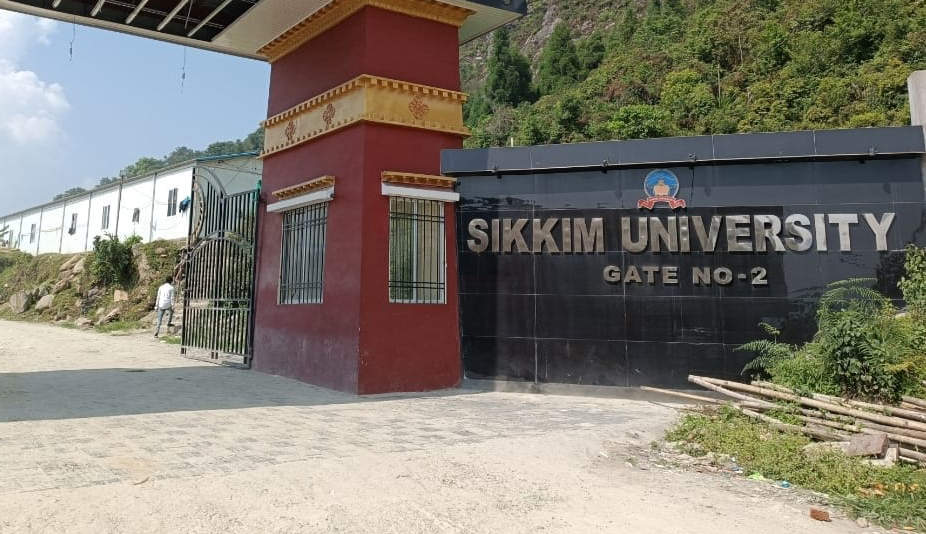
Ph.D. in Mass Communication from Sikkim University: Eligibility, Entrance Exam, Fee Structure, Admission Process, Subjects, Research Areas, Syllabus, Scholarship & Career Scope
Introduction about Ph.D. in Mass Communication at Sikkim University
The Doctor of Philosophy (Ph.D.) in Mass Communication offered by Sikkim University is a premier research programme designed for professionals who aspire to become thought leaders, academicians, and policy makers in the dynamic world of media and communication. With a curriculum that blends theoretical rigour and practical relevance, this doctoral programme empowers scholars to explore cutting‑edge topics such as digital media ethics, global communication policies, media entrepreneurship, and the impact of emerging technologies on public discourse.
Sikkim University’s Department of Mass Communication benefits from a vibrant intellectual ecosystem, seasoned faculty, state‑of‑the‑art research facilities, and collaborations with national and international media houses. The programme not only strengthens research capabilities but also opens pathways to influential positions in academia, media organisations, government agencies, and consulting firms.
Ph.D Admission 2026-2027 & Writing Support Services by Shiksha Research
Eligibility Criteria for Ph.D. in Mass Communication at Sikkim University
Prospective candidates must fulfil the following minimum requirements:
- A Master's degree (or equivalent) in Mass Communication, Journalism, Media Studies, Sociology, Political Science, or any related discipline with at least 55% aggregate (or 5.0 GPA on a 10‑point scale).
- Qualified in the University‑level Ph.D. entrance test or any national level test recognised by the University (e.g., UGC‑NET, CSIR‑NET).
- For candidates holding a Ph.D. in a different discipline, a minimum of two years of post‑doctoral research experience is required.
- English language proficiency – candidates with a medium of instruction other than English must submit TOEFL/IELTS scores as per university norms.
Entrance Exam for Ph.D. in Mass Communication at Sikkim University
The entrance examination evaluates both subject‑specific knowledge and research aptitude. The test structure includes:
- Written Examination – 100 marks: 60 marks for core Mass Communication topics, 20 marks for research methodology, 20 marks for general awareness.
- Interview & Presentation – 50 marks: assessment of research proposal, academic background, and communication skills.
Candidates can also gain eligibility by clearing UGC‑NET or CSIR‑NET, which exempts them from the university‑level written test.
Fee Structure for Ph.D. in Mass Communication at Sikkim University
| Fee Component | Amount (INR) | Remarks |
|---|---|---|
| Admission/Registration Fee | 10,000 | One‑time payable at registration |
| Annual Tuition Fee | 15,000 | Payable at the beginning of each academic year |
| Research Material & Lab Charges | 5,000 | Includes access to digital archives and software licences |
| Examination & Evaluation Fee | 3,000 | Charged per semester |
| Total Approximate Cost (3‑Year Programme) | 84,000 | Excludes scholarships, stipends, and external funding |
Admission Process for Ph.D. in Mass Communication at Sikkim University
The admission workflow is streamlined to ensure transparency and fairness:
- Online Application Submission – Fill out the application form on the university portal and upload required documents.
- Entrance Test & Eligibility Verification – Appear for the written test or submit NET/UGC‑NET scores.
- Interview & Research Proposal Review – Shortlisted candidates present their research proposal before the Ph.D. Board.
- Final Selection & Offer Letter – Candidates receive an official admission letter and are required to pay the registration fee.
- Enrollment – Complete enrollment, receive student ID, and commence coursework and research activities.
Ph.D. Subjects and Specializations in Mass Communication at Sikkim University
The programme offers a range of specializations that reflect contemporary trends and industry demands:
- Digital Media & New Communication Technologies
- Media Ethics & Regulation
- Public Relations & Corporate Communication
- Media Management & Entrepreneurship
- International & Comparative Media Studies
- Communication Policy & Governance
- Social Media Analytics & Audience Research
Research Areas in Mass Communication at Sikkim University
Faculty members and doctoral scholars are actively engaged in research across diverse domains, including:
- Impact of Social Media on Political Mobilisation
- Fake News Detection and Media Literacy
- Gender Representation in Indian Television
- Digital Divides in Rural and Urban Communities
- Media Influence on Climate Change Awareness
- Cross‑cultural Communication in South‑Asian Contexts
- Emerging Trends in Mobile Journalism (MoJo)
Documents Required for Ph.D. in Mass Communication at Sikkim University
| Document | Details / Format |
|---|---|
| Academic Transcripts | Original and certified copies of Master's degree and prior qualifications |
| Entrance Test Scorecard | UGC‑NET/CSIR‑NET or Sikkim University Ph.D. test result |
| Research Proposal | Maximum 2,500 words outlining objectives, methodology, and expected contribution |
| Curriculum Vitae (CV) | Professional and academic experience (max 3 pages) |
| Identity Proof | Aadhaar Card / Passport (valid) |
| Passport‑Size Photographs | Recent, color, 2 copies |
Sikkim University Ph.D. Syllabus for Mass Communication
The doctoral syllabus is structured into three progressive phases:
- Core Coursework (Year 1) – Research Methodology, Advanced Theories of Communication, Statistics for Social Sciences, Ethics in Media Research.
- Specialisation Modules (Year 2) – Choose two electives aligned with your research focus (e.g., Digital Media Analytics, Media Law, International Communication).
- Dissertation & Publication (Year 3) – Conduct original research, submit progress reports, and publish at least one article in a peer‑reviewed journal.
How To Apply for Ph.D. in Mass Communication at Sikkim University
Follow these practical steps to submit a successful application:
- Visit the official Sikkim University Ph.D. portal and register a new user account.
- Complete the online application form, ensuring all fields are accurately filled.
- Upload scanned copies of the required documents (as listed in the Documents Required table).
- Pay the non‑refundable application fee via the integrated payment gateway.
- Schedule your entrance test or submit NET/UGC‑NET scores for exemption.
- Prepare a concise research proposal and upload it in PDF format.
- Submit the application before the announced deadline and track its status through the portal.
Career Scope and Job Opportunities After Ph.D. in Mass Communication from Sikkim University
Graduates enjoy a broad spectrum of high‑impact career options:
- Academic Positions – Assistant/Associate Professor, Research Fellow, Department Head.
- Media Research Institutes – Senior Research Analyst, Project Leader, Policy Advisor.
- Government & Public Sector – Media Policy Analyst, Communication Strategist, Public Information Officer.
- Corporate Communications – Chief Communications Officer, Brand Strategist, Corporate Social Responsibility (CSR) Manager.
- International Organisations – UNESCO, WHO, UNDP – roles focusing on media development and communication for development.
- Consultancy & Freelance – Media consultancy, content strategy, digital transformation advisory.
Scholarship for Ph.D. in Mass Communication at Sikkim University
Merit‑based scholarships and financial assistance are available to deserving candidates:
- UGC‑JRF (Junior Research Fellowship) – Stipend of INR 31,000 per month plus contingency grant.
- University Merit Scholarships – Up to 50% waiver on tuition for top‑ranked entrants.
- External Grants – Funding from the Ministry of Information & Broadcasting, private foundations, and corporate CSR initiatives.
FAQs Regarding Ph.D. in Mass Communication at Sikkim University
- 1. Can I pursue the Ph.D. part‑time while working?
- Yes. The university offers a flexible part‑time mode for professionals, with a maximum duration of six years to complete the programme.
- 2. Is there a minimum age limit for admission?
- No age restriction is imposed. Candidates are evaluated solely on academic merit and research potential.
- 3. How many publications are required before submitting the thesis?
- At least one peer‑reviewed journal article is mandatory; however, additional conference papers strengthen the candidature.
- 4. What is the average duration to complete the Ph.D.?




