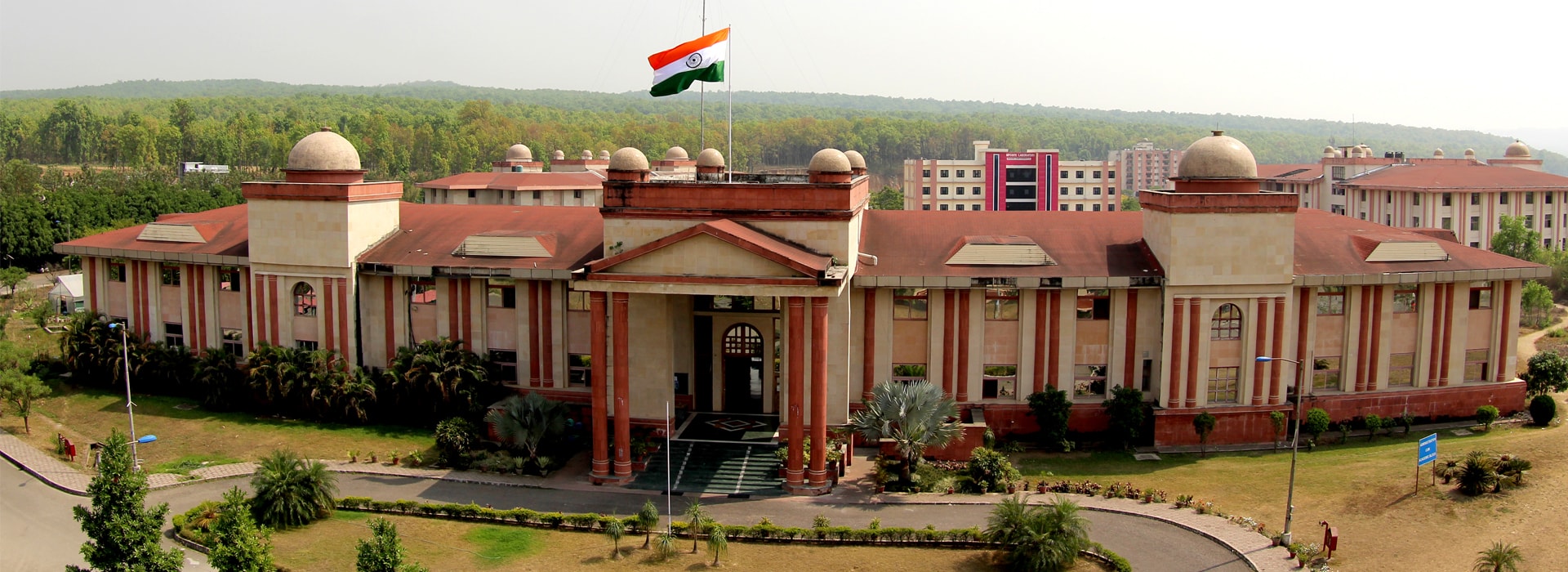
Introduction about Ph.D. in Mathematics at Doon University
A Ph.D. in Mathematics at Doon University represents the pinnacle of academic pursuit for those who seek to unravel the profound complexities of the universe through the language of numbers, logic, and patterns. Situated in the serene foothills of Dehradun, Doon University provides an intellectually stimulating environment that fosters rigorous inquiry and groundbreaking discovery. This doctoral program is not merely an academic milestone; it is a journey of transformation where scholars transition from being consumers of knowledge to creators of it. The Department of Mathematics is committed to excellence in research, offering a platform where abstract thinking meets practical application. Whether your passion lies in Pure Mathematics or Applied Mathematics, Doon University offers the mentorship and infrastructure required to elevate your research to global standards. Pursuing a doctorate here means joining a community of visionary thinkers dedicated to pushing the boundaries of mathematical science.
Ph.D Admission 2026-2027 & Writing Support Services by Shiksha Research
Eligibility Criteria for Ph.D. in Mathematics at Doon University
To embark on this prestigious research journey, candidates must meet specific academic benchmarks. The eligibility criteria are designed to ensure that applicants possess the necessary foundational knowledge to handle high-level abstract reasoning. Candidates must hold a Master?s degree in Mathematics, Statistics, or a closely related discipline from a recognized university. A minimum of 55% aggregate marks (or an equivalent grade in the point scale) is mandatory for general category candidates, while a relaxation of 5% is granted to SC/ST and OBC (non-creamy layer) candidates, as per government regulations. Professional experience and a strong background in mathematical modeling are highly regarded, especially for those looking to engage in interdisciplinary research.
Entrance Exam for Ph.D. in Mathematics at Doon University
Admission to the Ph.D. program is primarily merit-based, determined through a dedicated entrance examination conducted by the university. The entrance exam is designed to test the candidate?s depth of understanding in core mathematical concepts and their aptitude for research. The test typically consists of two sections: Research Methodology and Subject-Specific Mathematics. While the exam is rigorous, candidates who have already qualified for national-level examinations such as UGC-NET (including JRF), CSIR-NET, or GATE may be exempted from the written test and invited directly for the interview stage. Mastering the nuances of competitive mathematics is crucial for success in this phase.
Fee Structure for Ph.D. in Mathematics at Doon University
Understanding the financial commitment is essential for professional planning. Doon University offers a competitive fee structure designed to be accessible while maintaining high standards of academic resources. Below is an approximate breakdown of the fee components:
| Fee Component | Estimated Amount (INR) | Frequency |
|---|---|---|
| Admission Fee | ?5,000 - ?10,000 | One-time |
| Tuition Fee | ?15,000 - ?25,000 | Per Semester |
| Examination Fee | ?2,000 - ?5,000 | Per Year |
| Library and Lab Fees | ?3,000 - ?6,000 | Annual |
| Thesis Submission Fee | ?10,000 - ?15,000 | One-time |
Please note that these figures are subject to change based on university policy and specific administrative updates. Candidates are encouraged to check the official university bulletin for the current session.
Admission Process for Ph.D. in Mathematics at Doon University
The admission process at Doon University is systematic and transparent, reflecting its commitment to academic integrity. It begins with the release of the official admission notification, followed by an online application process. Shortlisted candidates must sit for the entrance exam. Those who clear the cutoff are invited for a personal interview/viva-voce. During the interview, candidates are expected to present their research interests and discuss their potential contribution to the field. Many scholars seek professional Research Paper Writing Services during their preparation phase to understand current publication trends and enhance their academic profile before the interview panel.
Ph.D. Subjects and Specializations in Mathematics at Doon University
The curriculum is diverse, allowing scholars to specialize in areas that resonate with their career goals. Specializations offered include, but are not limited to:
- Pure Mathematics: Focusing on Real Analysis, Abstract Algebra, and Topology.
- Applied Mathematics: Covering Mathematical Physics, Fluid Dynamics, and Biomathematics.
- Computational Mathematics: Utilizing numerical methods and algorithms to solve complex equations.
- Statistics and Probability: Deep diving into stochastic processes and predictive modeling.
These subjects are designed to build a robust theoretical framework while encouraging innovative thinking.
Research Areas in Mathematics at Doon University
The research landscape at Doon University is vibrant and multifaceted. Scholars are encouraged to pursue research that has both theoretical significance and practical relevance. Current prominent research areas include:
- Fractional Calculus and its applications in engineering.
- Graph Theory and Network Analysis.
- Differential Equations and Dynamical Systems.
- Mathematical Biology and Infectious Disease Modeling.
- Optimization Techniques in Logistics and Operations Research.
Scholars often find it beneficial to utilize specialized Research Data Analysis Services when their mathematical models involve complex empirical datasets or high-performance computing requirements.
Documents Required for Ph.D. in Mathematics at Doon University
Ensuring you have the correct documentation is vital for a smooth application process. The following documents are typically required:
- High School and Intermediate Certificates (10th & 12th).
- Undergraduate and Postgraduate Marks Sheets and Degrees.
- Valid UGC-NET/JRF/GATE Scorecard (if applicable).
- No Objection Certificate (NOC) from the current employer for working professionals.
- Migration and Transfer Certificates.
- Passport-sized photographs and Identity Proof (Aadhar, Passport, etc.).
- A detailed Research Proposal (Synopsis).
Doon University Ph.D. Syllabus for Mathematics
The first year of the Ph.D. program consists of mandatory coursework designed to prepare the scholar for independent research. The syllabus includes:
- Research Methodology: Covering ethics in research, literature review techniques, and professional writing.
- Advanced mathematical Tools: Functional Analysis, Measure Theory, and Advanced Linear Algebra.
- Computer Applications: Training in LaTeX, MATLAB, or Mathematica for mathematical documentation and computation.
- Elective Course: Specifically tailored to the scholar's chosen research area.
To navigate the complexities of drafting the final document, many candidates explore Thesis and Dissertation Writing Services to ensure their work meets high linguistic and structural standards.
How To Apply for Ph.D. in Mathematics at Doon University
The application journey is digital and user-friendly. Follow these steps to secure your spot:
- Visit the official Doon University website and navigate to the "Admissions" section.
- Register yourself with a valid email ID and mobile number.
- Fill out the online application form with accurate personal and academic details.
- Upload scanned copies of the required documents and your research proposal.
- Pay the stipulated application fee through the online payment gateway.
- Download and print the confirmation page for future reference.
Pro-tip: Spend significant time on your research proposal, as it is a critical component of your evaluation.
Career Scope and Job Opportunities After Ph.D. in Mathematics from Doon University
Holding a doctorate in Mathematics from a reputable institution like Doon University opens doors to a multitude of high-impact careers. Graduates can pursue roles such as:
- Academia: Professors or Researchers at top-tier global universities.
- Data Science: Leading roles in analytics firms, focusing on algorithm development.
- Government Research: Working with organizations like ISRO, DRDO, or National Laboratories.
- Finance and Actuarial Science: Quantitative analysts (Quants) in investment banking and insurance.
In the applied social sciences branch of mathematical research, experts often engage in Questionnaire Design and Development for sophisticated statistical surveys and market analysis projects.
Scholarship for Ph.D. in Mathematics at Doon University
Financial support is available to ensure that scholars can focus entirely on their research pursuits. Doon University facilitates several scholarship opportunities:
- University Fellowship: Limited merit-based fellowships for top-performing entrance candidates.
- UGC-JRF/SRF: Monthly stipends for candidates who have qualified for the Junior Research Fellowship.
- State Government Scholarships: Specific schemes for students belonging to Uttarakhand or reserved categories.
- Sponsored Research Projects: Opportunities to work as a Research Associate in projects funded by DST, CSIR, or SERB.
FAQs Regarding Ph.D. in Mathematics at Doon University
Q1: Is Doon University a regular or distance university?
A1: Doon University is a state government university offering regular, full-time programs.
Q2: Can I pursue a Ph.D. in Mathematics part-time?
A2: Generally, the Ph.D. program is full-time; however, working professionals may apply under specific categories provided they can fulfill the coursework and residency requirements.
Q3: What is the duration of the Ph.D. program?
A3: The program typically takes a minimum of three years and a maximum of six years, including coursework.
Q4: Do I need a paper publication before applying?
A4: While not mandatory, having a publication history can significantly strengthen your application during the interview phase.
Q5: Is there an age limit for Ph.D. admission?
A5: Typically, there is no upper age limit for Ph.D. admissions, though fellowship eligibility (like JRF) may have age restrictions.




