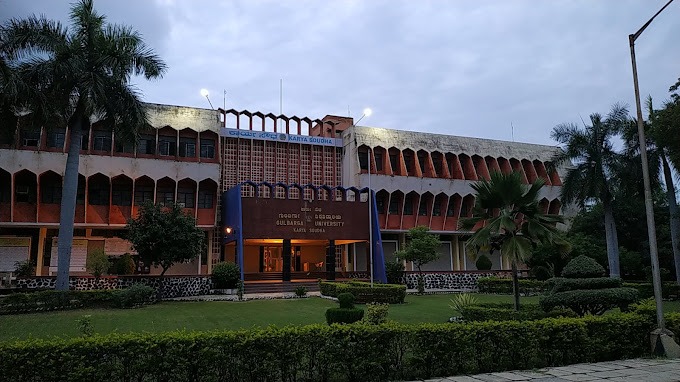
Ph.D. in Mathematics from Gulbarga University: Eligibility, Entrance Exam, Fee Structure, Admission Process, Subjects, Research Areas, Syllabus, Scholarship & Career Scope
Introduction about Ph.D. in Mathematics at Gulbarga University
Embarking on a doctoral journey in mathematics at Gulbarga University opens doors to a world where abstract theory meets real‑world problem solving. The university’s Ph.D. program nurtures analytical thinkers, equips them with rigorous research methodologies, and positions them at the forefront of scientific advancement. Whether you aspire to become a university professor, a data‑science leader, or a research analyst in a top‑tier institution, this program lays a solid foundation for an inspirational career.
Ph.D Admission 2026-2027 & Writing Support Services by Shiksha Research
Eligibility Criteria for Ph.D. in Mathematics at Gulbarga University
- Master’s degree (M.Sc.) in Mathematics or a related discipline with a minimum of 55% marks (or an equivalent CGPA) from a recognized university.
- Candidates who hold an M.Phil. in Mathematics are also eligible without the need to appear for the entrance test.
- Age limit: No upper age restriction, but candidates should meet the university’s standard age criteria for doctoral studies.
- Proficiency in English – at least IELTS 6.0 or equivalent if the medium of previous study was not English.
Entrance Exam for Ph.D. in Mathematics at Gulbarga University
The university conducts a University‑Level Entrance Examination (ULEE) specifically designed for doctoral aspirants. The exam comprises three sections:
- Core Mathematics – covering analysis, algebra, geometry, and applied mathematics.
- Research Aptitude – testing logical reasoning, critical thinking, and research methodology.
- English Language – evaluating comprehension and academic writing skills.
Eligibility for the entrance test can be demonstrated through a valid GATE score in Mathematics, but it is not mandatory.
Fee Structure for Ph.D. in Mathematics at Gulbarga University
| Fee Component | Amount (INR) | Remarks |
|---|---|---|
| Application Processing Fee | 1,500 | One‑time, non‑refundable |
| Annual Tuition & Lab Fees | 12,000 | Payable at the beginning of each academic year |
| Library & Resource Access | 2,500 | Includes digital journal subscriptions |
| Examination & Evaluation | 3,000 | Per semester |
| Miscellaneous (Student Welfare) | 1,000 | Yearly |
| Total Approximate Annual Cost | 20,000 | Subject to revision each academic session |
Admission Process for Ph.D. in Mathematics at Gulbarga University
- Online Application: Fill out the digital application form on the university portal and upload scanned copies of academic transcripts.
- Document Verification: Submit original certificates for verification at the admissions office.
- Entrance Examination: Appear for the ULEE as scheduled. Candidates with a valid GATE score may be exempted.
- Interview: Shortlisted candidates are invited for a research interview with the department faculty.
- Admission Offer: Successful candidates receive a formal admission letter and details of the fee payment schedule.
- Enrollment: Complete enrollment by paying the initial fees and registering for the first semester.
Ph.D. Subjects and Specializations in Mathematics at Gulbarga University
The doctoral program offers a breadth of specializations, allowing candidates to align their research with personal interests and market demand:
- Algebraic Structures & Group Theory
- Real and Complex Analysis
- Topology and Geometric Analysis
- Number Theory and Cryptography
- Applied Mathematics – Modeling & Simulation
- Probability Theory & Stochastic Processes
- Computational Mathematics & Numerical Methods
Research Areas in Mathematics at Gulbarga University
Faculty members are actively engaged in cutting‑edge research across diverse domains. Some prominent research clusters include:
- Mathematical Foundations of Machine Learning
- Quantum Computing and Operator Algebras
- Financial Mathematics and Risk Modelling
- Partial Differential Equations in Engineering
- Graph Theory and Network Optimization
- Mathematical Biology – Epidemiological Modelling
Documents Required for Ph.D. in Mathematics at Gulbarga University
| Document | Details | Format |
|---|---|---|
| Application Form | Completed online and signed | |
| Academic Transcripts | Mark sheets of M.Sc./M.Phil. | Original & Scanned Copy |
| Research Proposal | Brief (max 1500 words) outlining intended study | DOCX/PDF |
| Letter of Recommendation | Two academic references | |
| Proof of Identity | Aadhaar / Passport | Scanned Copy |
| GATE Score Card (optional) | Valid for Mathematics |
Gulbarga University Ph.D. Syllabus for Mathematics
The syllabus is structured into three phases – Core Coursework, Comprehensive Examination, and Dissertation Research. Core coursework includes:
- Advanced Real Analysis
- Functional Analysis and Operator Theory
- Algebraic Geometry
- Statistical Inference and Probability
- Computational Techniques in Modern Mathematics
Following the coursework, candidates must clear a comprehensive exam that tests depth of knowledge and research readiness. The final stage is the dissertation, supervised by a faculty mentor and evaluated by a panel of experts.
How To Apply for Ph.D. in Mathematics at Gulbarga University
Applying is a streamlined, digital-first process:
- Visit the official Gulbarga University Ph.D. Mathematics portal and create a user account.
- Complete the application form, attach required documents, and pay the non‑refundable processing fee.
- Upload a concise research proposal (maximum 2 pages) outlining your intended study area.
- Submit the application before the deadline (usually the first week of June).
- Monitor email for entrance exam schedule, interview invitations, and final admission decisions.
Career Scope and Job Opportunities After Ph.D. in Mathematics from Gulbarga University
A doctorate in mathematics equips you with analytical rigor, problem‑solving dexterity, and advanced computational skills—all highly valued across sectors. Potential career avenues include:
- Academic Positions: Assistant Professor, Associate Professor, or Department Head in universities and research institutes.
- Data Science & Analytics: Senior Data Scientist, Machine Learning Engineer, Quantitative Analyst in fintech and e‑commerce.
- Research & Development: Research Scientist in government labs, CSIR, DRDO, or private R&D centers.
- Finance & Insurance: Actuarial Analyst, Risk Manager, Portfolio Analyst.
- Consultancy: Mathematical Modelling Consultant for engineering firms, biotech companies, and environmental agencies.
Graduates also frequently contribute to high‑impact publications, patents, and international conferences, further enhancing their professional standing.
Scholarship for Ph.D. in Mathematics at Gulbarga University
Several financial aids are available to support deserving candidates:
- University Merit Scholarship: Covers up to 50% of tuition for students with a CGPA above 8.5.
- National Scholarship (UGC‑JRF): Provides a monthly stipend of INR 31,000 for the first two years.
- Research Grants: Department‑specific grants for projects related to national priority areas.
- External Fellowships: Opportunities through CSIR, DST, and international bodies such as the Commonwealth Scholarship.
FAQs Regarding Ph.D. in Mathematics at Gulbarga University
- What is the minimum duration to complete the Ph.D. program?
- The standard period is 3 years, extendable up to 5 years based on research progress and supervisor recommendation.
- Can I pursue the Ph.D. part‑time while working?
- Yes, Gulbarga University offers a part‑time option for working professionals, with flexible coursework scheduling and extended timelines.
- Is there a provision for international students?
- International candidates are welcome. They must meet the same academic criteria and obtain a valid study visa. English proficiency proofs (IELTS/TOEFL) are required.
- How are research supervisors assigned?
- Applicants can propose a preferred supervisor in their research proposal. Final allocation is subject to faculty availability and mutual agreement.
- Do I need to publish before submitting my thesis?
- While not mandatory, having at least one peer‑reviewed publication significantly strengthens the thesis evaluation and future career prospects.




