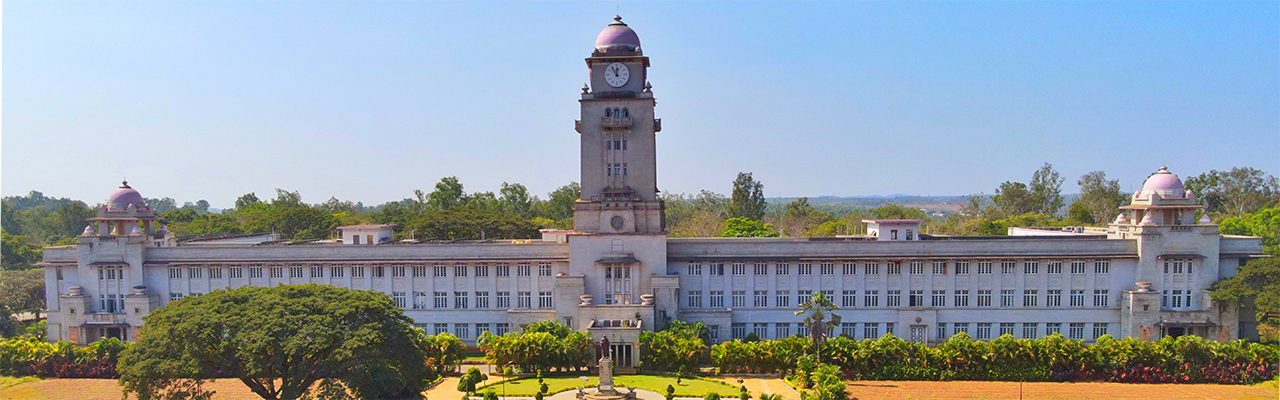
Ph.D. in Mathematics from Karnataka University: Eligibility, Entrance Exam, Fee Structure, Admission Process, Subjects, Research Areas, Syllabus, Scholarship & Career Scope
Introduction about Ph.D. in Mathematics at Karnataka University
Karnataka University has emerged as a premier destination for aspiring researchers seeking a Ph.D. in Mathematics. The university blends rigorous academic training with cutting‑edge research, offering a vibrant ecosystem that nurtures innovation and scholarly excellence. Whether you aim to become a university professor, a data‑science leader, or a specialist in applied mathematics, this program equips you with the analytical depth and methodological rigor required for high‑impact careers.
Eligibility Criteria for Ph.D. in Mathematics at Karnataka University
Prospective candidates must meet the following minimum standards:
- Master’s degree (M.Sc. or equivalent) in Mathematics or a closely related discipline with at least 55% marks (or 5.5 CGPA) for general candidates. Reserved category applicants enjoy a relaxation of 5%.
- Qualify in the university‑conducted Ph.D. entrance examination or possess a valid national‑level score (e.g., UGC‑NET, CSIR‑UGC NET, GATE) with minimum qualifying marks.
- English language proficiency is not mandatory but a good command enhances research communication.
For additional support during the application journey, consider our PhD Admission Assistance service.
Entrance Exam for Ph.D. in Mathematics at Karnataka University
The entrance exam evaluates candidates on core mathematical concepts, analytical reasoning, and research aptitude. The typical structure includes:
- Written Test (100 marks): Topics cover Algebra, Analysis, Geometry, Topology, and Applied Mathematics.
- Interview (30 marks): Assessment of research proposal, motivation, and potential contribution.
Candidates who hold a valid UGC‑NET score may be exempted from the written test and directly proceed to the interview stage.
Fee Structure for Ph.D. in Mathematics at Karnataka University
| Fee Component | Amount (INR) | Notes |
|---|---|---|
| Application Processing Fee | 2,500 | Non‑refundable |
| Annual Tuition Fee | 18,000 | Payable at the start of each academic year |
| Laboratory & Resources Charge | 3,000 | Includes access to computational labs and journals |
| Miscellaneous (Library, Sports, etc.) | 1,500 | Optional |
| Total Approximate Cost (3‑Year Program) | 66,500 | Excluding scholarships and waivers |
Financial assistance is available through university‑granted scholarships, research assistantships, and external fellowships.
Admission Process for Ph.D. in Mathematics at Karnataka University
The admission workflow is streamlined into four clear steps:
- Online Application Submission: Fill the web form, upload academic transcripts, research proposal, and pay the processing fee.
- Entrance Examination & Interview: Appear for the written test (or submit valid national qualification) followed by a personal interview.
- Document Verification: Present original certificates and a declaration of no pending disciplinary actions.
- Final Admission & Enrollment: Receive the admission letter, pay the first year’s tuition, and register for courses.
Our PhD Topic Selection and Proposal Assistance can help you craft a compelling research proposal that stands out during the interview.
Ph.D. Subjects and Specializations in Mathematics at Karnataka University
The department offers a wide range of specializations, enabling candidates to align their research with global trends and personal interests:
- Algebraic Structures & Group Theory
- Real and Complex Analysis
- Partial Differential Equations
- Numerical Analysis & Computational Mathematics
- Topology & Geometry
- Mathematical Modelling & Applied Mathematics
- Probability Theory & Stochastic Processes
Research Areas in Mathematics at Karnataka University
Faculty members are actively engaged in cutting‑edge projects across various domains. Current research thrusts include:
- Cryptographic Algorithms and Number Theory
- Quantum Computing & Operator Algebras
- Financial Mathematics and Risk Modelling
- Machine Learning Foundations – Kernel Methods & Optimization
- Non‑linear Dynamics and Chaos Theory
- Mathematical Biology – Epidemic Modelling
Students can benefit from the university’s collaborations with industry giants and research institutes, enhancing the impact of their dissertations.
Documents Required for Ph.D. in Mathematics at Karnataka University
| Document | Details |
|---|---|
| Academic Transcripts | Original mark sheets of B.Sc. and M.Sc. (or equivalent) |
| Degree Certificates | Copies of bachelor’s and master’s degrees |
| Research Proposal | 2‑3 pages outlining objectives, methodology, and expected outcomes |
| Entrance Exam Scorecard | UGC‑NET, CSIR‑NET, GATE or university‑conducted test |
| Identity Proof | Aadhar Card / Passport |
| Passport‑size Photographs | Four recent colour photographs |
Karnataka University Ph.D. Syllabus for Mathematics
The syllabus is designed to strengthen foundational knowledge while fostering research competence. Core modules include:
- Advanced Algebraic Systems
- Functional Analysis and Operator Theory
- Complex Variables and Conformal Mapping
- Statistical Theory and Stochastic Processes
- Computational Methods in Applied Mathematics
- Research Methodology, Ethics, and Publication Standards
Students are encouraged to supplement coursework with seminars, workshops, and collaboration with the Research Publication Support team.
How To Apply for Ph.D. in Mathematics at Karnataka University
Follow these actionable steps to submit a successful application:
- Visit the official Karnataka University Ph.D. portal and register with a valid email address.
- Complete the online application form, ensuring accurate personal and academic details.
- Upload scanned copies of all required documents (refer to the Documents Required table).
- Pay the non‑refundable processing fee via net banking or credit/debit card.
- Submit the research proposal and await the admit card for the entrance test.
- Prepare for the written exam; recommended study material includes previous years’ question papers and standard textbooks.
- After clearing the exam, attend the interview scheduled by the department.
- On receiving the admission letter, complete the enrollment formalities and commence your research journey.
Career Scope and Job Opportunities After Ph.D. in Mathematics from Karnataka University
A doctoral degree in Mathematics opens diverse and rewarding pathways:
- Academia: Lecturer, Assistant Professor, Associate Professor, or full Professor at universities and research institutes.
- Industry R&D: Data Science, Quantitative Analysis, Financial Modelling, and Algorithm Development for tech firms.
- Government & Public Sector: Positions in CSIR, ISRO, DRDO, and ministries dealing with statistics and planning.
- Consultancy: Independent consulting on mathematical modelling, risk assessment, and optimization.
- Publishing & Editing: Leveraging expertise for technical editing and proof‑reading – explore our Editing and Proofreading Services.
Graduates also benefit from a strong alumni network that facilitates placements, collaborative projects, and entrepreneurial ventures.
Scholarship for Ph.D. in Mathematics at Karnataka University
Karnataka University offers several financial aid schemes to merit‑based and economically disadvantaged candidates:
- University Merit Scholarship: Covers 50% of tuition fee for top 10% performers in entrance exam.
- National Fellowship (UGC‑JRF): Provides a monthly stipend of INR 31,000 plus contingency allowance.
- Research Assistantship: Stipends ranging from INR 15,000‑20,000 for assistants working on faculty‑led projects.
- External Grants: Opportunities from DST, CSIR, and private foundations.
Our Honorary Doctorate Programs team can also guide you on additional recognition and award avenues.
FAQs Regarding Ph.D. in Mathematics at Karnataka University
- 1. What is the minimum duration to complete the Ph.D.?
- The program is typically completed in 3 years, provided the candidate fulfills coursework, research milestones, and thesis submission requirements.
- 2. Can I pursue the Ph.D. part‑time while working?
- Yes. The university offers a part‑time mode with flexible coursework schedules and extended timelines for thesis submission.




