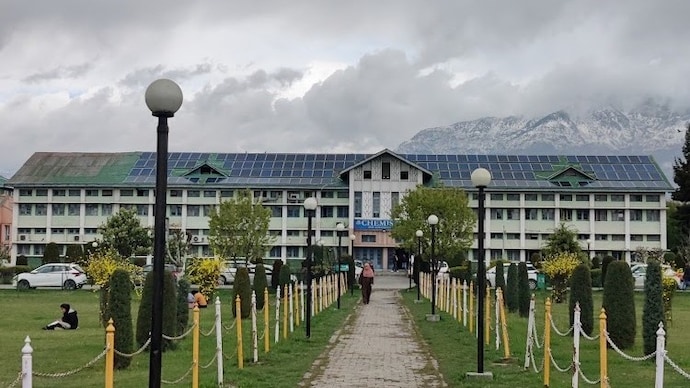
Introduction about Ph.D. in Media Science at Kashmir University
The Doctor of Philosophy (Ph.D.) in Media Science at Kashmir University stands as a beacon for scholars eager to deepen their expertise in media theory, digital communication, and cultural studies. This rigorous program blends interdisciplinary research with cutting?edge methodologies, empowering professionals to become thought leaders in the rapidly evolving media landscape. Whether you aim to influence policy, lead academic research, or innovate within the media industry, a Ph.D. from Kashmir University equips you with the scholarly rigor and practical insight needed to drive transformative change.
Eligibility Criteria for Ph.D. in Media Science at Kashmir University
- Academic Qualification: A Master?s degree (M.A., M.Sc., M.Com, M.Tech, or equivalent) in Media Studies, Journalism, Communication, Mass Communication, or a related discipline with a minimum of 55% aggregate (or 5.0 CGPA on a 10?point scale).
- Research Aptitude: Candidates must demonstrate a clear research intent through a well?structured research proposal.
- National/International Exams: Scores from national-level eligibility tests such as UGC NET, CSIR NET, or GATE are accepted as a substitute for the entrance examination in many cases.
- Age Limit: No upper age limit; however, candidates below 30 years may be eligible for certain merit?based scholarships.
Entrance Exam for Ph.D. in Media Science at Kashmir University
The university conducts a comprehensive entrance test that evaluates candidates on:
- Core concepts of Media Theory, Communication Models, and Digital Media.
- Research methodology, statistics, and data analysis techniques.
- General aptitude and analytical reasoning.
- English language proficiency.
Applicants holding a valid UGC NET, CSIR NET, or GATE score are exempted from the written test and may appear directly for an interview.
Fee Structure for Ph.D. in Media Science at Kashmir University
| Component | Annual Fee (INR) |
|---|---|
| Tuition & Registration | 12,000 |
| Laboratory & Resource Charges | 3,500 |
| Exam & Evaluation Fee | 2,000 |
| Library & Digital Access | 1,500 |
| Total Approximate Cost (per year) | 19,000 |
Note: The fee may vary slightly based on residency status (hosteller vs. day scholar) and any additional project?related expenses.
Admission Process for Ph.D. in Media Science at Kashmir University
The admission journey consists of the following streamlined steps:
- Online Application: Register on the official university portal, upload scanned copies of academic certificates, and pay the non?refundable application fee.
- Entrance Examination / Eligibility Verification: Appear for the university?conducted test or submit NET/GATE scores for exemption.
- Interview & Proposal Presentation: Shortlisted candidates present their research proposal before a panel of experts.
- Final Selection: Candidates receive an admission letter, outlining supervisory assignments and timelines.
- Enrollment & Fee Payment: Complete enrollment formalities, submit fee receipts, and obtain university identity credentials.
For personalized guidance, you may explore PhD Admission Assistance to navigate each phase confidently.
Ph.D. Subjects and Specializations in Media Science at Kashmir University
Kashmir University offers a range of thematic specializations under the Media Science umbrella, enabling scholars to tailor their research to emerging industry trends:
- Digital Media & New Media Technologies
- Mass Communication Theory and Practice
- Media Policy, Regulation, and Ethics
- Journalism Studies and Newsroom Innovation
- Advertising, Public Relations, and Branding
- Cultural Studies and Media Anthropology
- Media Psychology and Audience Behavior
Research Areas in Media Science at Kashmir University
Faculty members and research centers at Kashmir University focus on cutting?edge domains that align with global media challenges:
- Artificial Intelligence in Content Creation and Curation
- Social Media Analytics and Sentiment Mining
- Digital Literacy and Media Education
- Impact of Media on Rural Development and Social Change
- Media Law, Freedom of Speech, and Censorship
- Virtual Reality (VR) and Augmented Reality (AR) Storytelling
- Climate Communication and Sustainable Media Practices
Documents Required for Ph.D. in Media Science at Kashmir University
| Document | Purpose |
|---|---|
| Copy of Master's Degree Certificate & Mark Sheet | Proof of academic eligibility |
| Research Proposal (3,000?5,000 words) | Demonstrates research intent and feasibility |
| UGC NET / CSIR NET / GATE Score Card (if applicable) | Entrance exam exemption verification |
| Curriculum Vitae (CV) | Highlights professional experience and publications |
| Two Academic Reference Letters | Attests to scholarly competence |
| Passport?size Photographs (4) | Identification and documentation |
Kashmir University Ph.D. Syllabus for Media Science
The syllabus is structured into three core components, each designed to advance scholarly depth:
- Core Modules (Year 1): Research Methodology, Advanced Media Theory, Statistical Techniques for Social Sciences.
- Elective Modules (Year 2): Choose two from Digital Media Innovations, Media Law & Ethics, Audience Measurement, or Media Management.
- Dissertation (Years 2?4): Original research culminating in a defended thesis evaluated by an external panel.
Students are encouraged to collaborate with industry partners for applied research, ensuring that their work remains relevant to contemporary media challenges.
How To Apply for Ph.D. in Media Science at Kashmir University
Follow this step?by?step guide to submit a successful application:
- Visit the official Kashmir University admissions portal and create a new user profile.
- Complete the online application form, ensuring that all mandatory fields are accurately filled.
- Upload scanned copies of the required documents (refer to the Documents Required table).
- Pay the application fee via net banking, debit/credit card, or demand draft.
- Submit your research proposal in PDF format (maximum 5,000 words).
- Monitor your email for an acknowledgement receipt and further instructions regarding entrance examination dates or interview schedules.
If you need assistance polishing your proposal, consider leveraging PhD Topic Selection and Proposal Assistance for professional guidance.
Career Scope and Job Opportunities After Ph.D. in Media Science from Kashmir University
A doctoral degree in Media Science opens doors to a spectrum of high?impact roles:
- Academic Positions: Lecturer, Assistant Professor, Associate Professor, or Dean in universities and research institutes.
- Research Scientist: Lead media?focused research projects at think?tanks, NGOs, or corporate R&D labs.
- Strategic Communications Director: Shape brand narratives for multinational corporations or governmental agencies.
- Policy Analyst: Influence media regulation, public information policies, and digital governance.
- Content Innovation Lead: Drive AI?enabled content creation, immersive storytelling, and multi?platform distribution strategies.
- Media Consultant: Provide expert counsel to media houses, advertising agencies, and start?ups.
According to recent placement reports, Ph.D. graduates from Kashmir University command an average salary range of INR 9?15 lakhs per annum in the first five years, with significant growth potential in senior leadership roles.
Scholarship for Ph.D. in Media Science at Kashmir University
Kashmir University, in partnership with government bodies and private foundations, offers a variety of financial aid options:
- Merit?Based Scholarships: Awarded to candidates securing a rank within the top 10% of the entrance test.
- UGC?CSIR JRF Fellowship: Provides a stipend of INR 31,000 per month plus contingency.
- State Government Scholarships: Targeted at candidates from under?represented regions of Jammu & Kashmir.
- Research Grant Assistance: Up to INR 2,00,000 for fieldwork, data acquisition, and conference participation.
Applicants requiring editorial refinement of their scholarship proposals may benefit from Editing and Proofreading Services.
FAQs Regarding Ph.D. in Media Science at Kashmir University
- 1. Is a NET qualification mandatory for admission?
- No. While NET/CSIR/GATE scores provide exemption from the entrance exam, candidates without these scores can still qualify by clearing the university?conducted test and interview.
- 2. How long does it take to complete the Ph.D. program?
- The typical duration is 4 years, subject to timely submission of the dissertation and fulfillment of course credits.
- 3. Can I pursue the Ph.D. part?time while working?
- Yes. The university offers a flexible part?time track, allowing professionals to spread coursework and research over a longer period.
- 4. Are there any collaborations with industry for research projects?
- Absolutely. The Media Science department maintains MoUs with leading broadcasters, digital platforms, and advertising agencies for joint research and internships.
- 5. What support is available for publishing my research?
- You can avail Research Publication Support to navigate peer?review processes and open?access journal submissions.
- 6. Is there any assistance for filing patents based on my research?
- Yes, the university?s Innovation Cell, together with Patent Filing and Support Services, guides scholars through intellectual property protection.
- 7. How can




