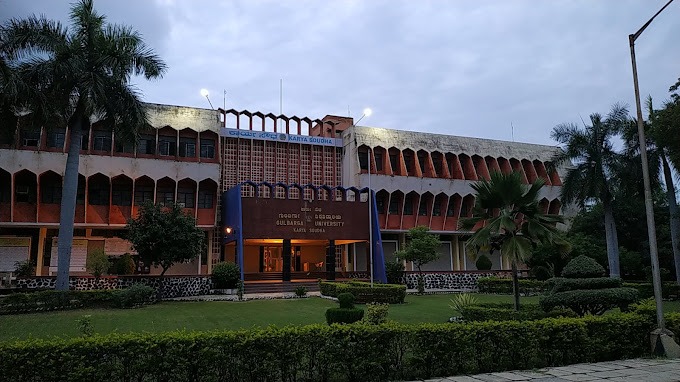
Ph.D. in Microbiology from Gulbarga University: Eligibility, Entrance Exam, Fee Structure, Admission Process, Subjects, Research Areas, Syllabus, Scholarship & Career Scope
Introduction about Ph.D. in Microbiology at Gulbarga University
Gulbarga University has emerged as a hub for cutting‑edge research in life sciences, offering a distinguished Ph.D. in Microbiology that blends rigorous scientific inquiry with real‑world applications. Designed for professionals eager to advance their expertise, the programme nurtures innovative thinking, equips candidates with advanced laboratory skills, and opens pathways to academia, industry, and public health leadership. With state‑of‑the‑art facilities, seasoned faculty, and collaborations with leading research institutes, the university ensures that every doctoral candidate can make a meaningful impact on global challenges such as antimicrobial resistance, vaccine development, and environmental biotechnology.
Eligibility Criteria for Ph.D. in Microbiology at Gulbarga University
Prospective candidates must possess a Master’s degree in Microbiology, Biotechnology, Biochemistry, or a related discipline from a recognized university with a minimum aggregate of 55% (or equivalent CGPA). Candidates holding a UGC NET qualification in a relevant subject are exempted from the entrance examination. International applicants should submit equivalent qualifications evaluated by the university’s credential assessment unit. A strong academic record, research exposure, and proficiency in English are essential to succeed in the rigorous doctoral curriculum.
Entrance Exam for Ph.D. in Microbiology at Gulbarga University
The university conducts a two‑stage entrance process: a written test followed by a personal interview. The written test evaluates knowledge in core microbiology, molecular biology, immunology, and research methodology, typically consisting of 100 multiple‑choice questions to be completed in 2 hours. The interview panel assesses the candidate’s research aptitude, problem‑solving abilities, and alignment with the university’s research priorities. Candidates who have cleared the UGC NET are directly invited for the interview phase.
Fee Structure for Ph.D. in Microbiology at Gulbarga University
| Category | Annual Fee (INR) | Additional Charges |
|---|---|---|
| General Category | 30,000 | Laboratory consumables: 5,000 |
| OBC/SC/ST Category | 20,000 | Laboratory consumables: 5,000 |
| International Students | 45,000 | Laboratory consumables: 5,000 |
| Fee Waiver (NET qualified) | 0 (full waiver) | Research stipend provided separately |
The fee covers tuition, library access, and basic research infrastructure. A monthly research stipend is awarded to eligible candidates, which can be supplemented by external scholarships and project grants.
Admission Process for Ph.D. in Microbiology at Gulbarga University
1. Online Application: Submit the application form via the university portal, uploading academic transcripts, a statement of purpose, and two recommendation letters.
2. Document Verification: Appear for a verification session at the university’s admissions office.
3. Entrance Examination: Register for the written test (if applicable) and attend the scheduled exam.
4. Interview: Qualify for the personal interview where research proposals are discussed.
5. Final Selection: Receive the admission offer letter and complete the fee payment within the stipulated deadline.
6. Enrollment: Attend the orientation program and commence your research work under the guidance of a faculty supervisor.
Ph.D. Subjects and Specializations in Microbiology at Gulbarga University
The doctoral programme offers a wide array of specializations, allowing candidates to tailor their research to emerging scientific frontiers:
- Medical Microbiology & Infectious Diseases
- Industrial Microbiology & Biotechnology
- Environmental & Agricultural Microbiology
- Molecular Genetics and Genomics
- Immunology and Vaccine Development
- Food Microbiology and Safety
Each specialization is supported by dedicated labs, field stations, and collaborative networks to foster interdisciplinary research.
Research Areas in Microbiology at Gulbarga University
Key research themes include:
- Antimicrobial resistance mechanisms and novel drug discovery.
- Microbial bioremediation of industrial waste and soil health.
- Bioinformatics-driven metagenomics for pathogen surveillance.
- Probiotic development for human and animal health.
- Enzyme engineering for sustainable bioprocesses.
- Host‑microbe interactions and immune modulation.
The university encourages collaborative projects with government agencies, biotech firms, and international research consortia.
Documents Required for Ph.D. in Microbiology at Gulbarga University
| Document | Details |
|---|---|
| Academic Transcripts | Certified copies of all semesters for Master's degree |
| Degree Certificate | Original or attested copy of the Master's degree |
| UGC NET Certificate (if applicable) | Valid NET qualification for exemption |
| Statement of Purpose | 1500‑word essay outlining research interests and career goals |
| Two Recommendation Letters | From academic supervisors or industry professionals |
| Passport Size Photograph | Recent color photograph (2×2 cm) |
| Proof of Identity | Aadhar card, passport, or driver's license |
Gulbarga University Ph.D. Syllabus for Microbiology
The syllabus is structured into three comprehensive phases:
- Core Coursework (Year 1): Advanced Microbial Physiology, Molecular Techniques, Biostatistics, Research Ethics, and Scientific Writing.
- Comprehensive Examination (End of Year 1): Written and oral tests covering all core modules.
- Research Thesis (Years 2‑4): Original research project, regular progress reviews, manuscript preparation, and defense.
Students also attend seminars, workshops, and journal clubs to stay abreast of the latest scientific developments.
How To Apply for Ph.D. in Microbiology at Gulbarga University
Visit the official university admission portal, click on “Apply for Ph.D.”, and complete the following steps:
- Register with a valid email address and create a secure password.
- Fill in personal details, academic history, and upload scanned copies of required documents.
- Pay the non‑refundable application fee (INR 1,500) via net banking or credit card.
- Submit the application and note the generated application number for future reference.
- Monitor the email for notifications regarding exam dates, interview schedules, and final results.
For personalized assistance, candidates may explore professional services such as Editing and Proofreading Services, PhD Topic Selection and Proposal Assistance, and PhD Admission Assistance. These resources can enhance application quality and improve admission prospects.
Career Scope and Job Opportunities After Ph.D. in Microbiology from Gulbarga University
Graduates are well‑positioned for high‑impact careers:
- Academic Positions: Assistant Professor, Research Fellow, Department Head.
- Industry Roles: Senior Scientist, R&D Manager, Quality Control Analyst in pharma and biotech firms.
- Government & Public Health: Epidemiologist, Policy Analyst, Consultant for health ministries.
- Entrepreneurship: Founder of microbiology‑based startups, biotech incubators, or consultancy firms.
- International Opportunities: Post‑doctoral fellowships, joint research programs, and global health initiatives.
The robust alumni network of Gulbarga University further facilitates placements and collaborative projects worldwide.
Scholarship for Ph.D. in Microbiology at Gulbarga University
Multiple financial aids are available:
- University Merit Scholarship: 50% tuition waiver for candidates with >70% in Master's.
- UGC‑CSIR JRF: Monthly stipend of INR 31,000 plus contingency grant.
- State Government Scholarships: Special provisions for OBC, SC, and ST candidates.
- Industry Sponsored Fellowships: Partnerships with biotech companies offering project‑based funding.
Applicants are encouraged to apply early and submit supporting documents such as income certificates and academic awards.
FAQs Regarding Ph.D. in Microbiology at Gulbarga University
- What is the minimum duration to complete the Ph.D.?
- The program is designed for a minimum of 4 years, but can be extended up to 6 years with justified cause.
- Can I pursue the Ph.D. part‑time while working?
- Yes, the university offers a part‑time mode for working




