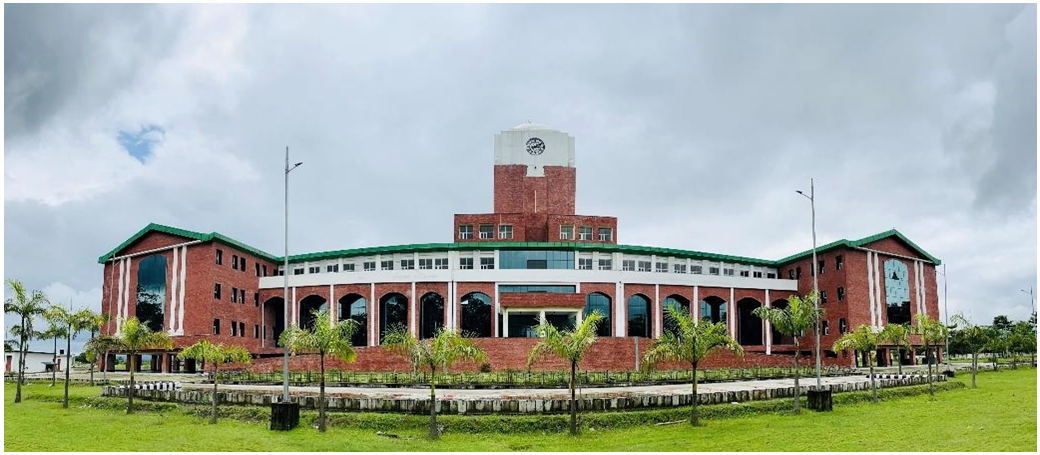
Introduction about Ph.D. in Microbiology at Indian Agricultural Research Institute
The pursuit of a Ph.D. in Microbiology at the Indian Agricultural Research Institute (IARI), popularly known as the Pusa Institute, represents the pinnacle of academic and research excellence in the field of agricultural sciences. For professionals looking to solve the complex challenges of global food security, soil health, and sustainable farming, this program offers an unparalleled platform. IARI, as a Deemed University, has been at the forefront of the Green Revolution and continues to lead innovations in microbial biotechnology. A Doctorate in Microbiology here is not just a degree; it is a commitment to pioneering research that transforms the invisible world of microbes into visible solutions for humanity. Whether it is exploring the depths of microbial ecology or developing next-generation bio-fertilizers, the IARI experience equips scholars with the rigors of high-level scientific inquiry and the inspiration to lead global agricultural transformation.
Ph.D Admission 2026-2027 & Writing Support Services by Shiksha Research
Embarking on this doctoral journey requires a blend of passion and precision. As you delve into the intricacies of microbial genetics and plant-microbe interactions, you may find the need for professional support to refine your scholarly output. Many candidates opt for specialized Thesis and Dissertation Writing Services to ensure their research findings are presented with the highest academic standards, meeting the rigorous expectations of the IARI faculty.
Eligibility Criteria for Ph.D. in Microbiology at Indian Agricultural Research Institute
To join the elite cadre of researchers at IARI, candidates must meet stringent eligibility criteria designed to identify the most promising scientific minds. The basic requirements are as follows:
- Educational Qualification: Candidates must possess a Master's degree (M.Sc. or M.Sc. Ag.) in Microbiology, Agricultural Microbiology, or an equivalent specialization from a recognized university.
- Minimum Marks: For General and OBC categories, a minimum of 60% marks or an OGPA of 6.60 out of 10.00 is required. For SC/ST/PC candidates, the requirement is 55% marks or an OGPA of 6.00 out of 10.00.
- Age Limit: The minimum age for admission is usually 21 years as of the date of admission. There is typically no upper age limit for Ph.D. scholars, making it ideal for working professionals seeking to enhance their research credentials.
- Subject Consistency: Highly preferred are candidates who have maintained a consistent academic record in biological sciences throughout their undergraduate and postgraduate studies.
Entrance Exam for Ph.D. in Microbiology at Indian Agricultural Research Institute
Admission to the Ph.D. program is strictly merit-based, determined through a national-level competitive examination. The primary gateway is the ICAR AICE-JRF/SRF (Ph.D.) conducted by the National Testing Agency (NTA) on behalf of the Indian Council of Agricultural Research.
The entrance exam evaluates candidates on three main components:
- General Knowledge: Questions related to agriculture, current affairs, and general science.
- Core Subject (Microbiology): Detailed questions covering bacteriology, mycology, virology, microbial physiology, and biotechnology.
- Analytical Ability: Testing the logical reasoning and scientific aptitude of the candidate.
Following the written examination, shortlisted candidates are called for an interview or counseling process where their research interest and previous academic contributions are evaluated by a board of eminent scientists.
Fee Structure for Ph.D. in Microbiology at Indian Agricultural Research Institute
IARI offers one of the most affordable high-quality research programs in the world. As a government-funded premiere institute, the fee structure is designed to promote merit over financial capability. Below is an approximate breakdown of the fee components:
| Fee Component | Approximate Amount (Per Semester) | Remarks |
|---|---|---|
| Registration & Tuition Fee | INR 6,000 - 10,000 | Subsidized for all students |
| Examination Fee | INR 1,000 - 2,000 | Applicable during semester exams |
| Hostel Rent | INR 2,000 - 4,000 | Subject to availability |
| Laboratory & Library Fee | INR 3,000 - 5,000 | Access to world-class facilities |
| Caution Deposit (Refundable) | INR 5,000 - 10,000 | One-time payment |
Admission Process for Ph.D. in Microbiology at Indian Agricultural Research Institute
The admission process at IARI is rigorous and transparent. It begins with the release of the official notification by ICAR/NTA. Candidates must follow these steps:
- Online Application: Register and fill out the form on the NTA/ICAR official website during the application window.
- Admit Card Download: Appear for the All India Competitive Examination (AICE).
- Result Declaration: ICAR releases a merit list based on the scores obtained in the entrance exam.
- Counseling: Successful candidates participate in the online counseling process to select their preferred major subject and institute.
- Verification: Document verification and medical examination take place at the IARI Pusa campus.
- Final Admission: Payment of admission fees and registration for the first semester.
Ph.D. Subjects and Specializations in Microbiology at Indian Agricultural Research Institute
While the primary degree is in Microbiology, IARI allows students to specialize in various cutting-edge niches within the field. These specializations are designed to address modern agricultural hurdles. Key subjects include:
- Soil Microbiology: Study of nutrient cycling, nitrogen fixation, and soil health management.
- Microbial Genetics: Engineering microbes for enhanced agricultural productivity.
- Environmental Microbiology: Bioremediation of polluted agricultural lands and waste management.
- Fermentation Technology: Producing value-added products and bio-inoculants.
- Microbial Physiology and Biochemistry: Understanding the metabolic pathways of beneficial microbes.
Research Areas in Microbiology at Indian Agricultural Research Institute
The research environment at IARI is vibrant and multi-disciplinary. Scholars are encouraged to work on projects that have direct field applications. Major research areas include:
- Bio-fertilizers and Bio-pesticides: Formulating sustainable alternatives to chemical inputs.
- Endophytic Microbiology: Exploring microbes that live inside plants to boost growth and immunity.
- Climate Resilient Agriculture: Studying microbial responses to heat, drought, and salinity.
- Metagenomics: Utilizing culture-independent techniques to explore hidden microbial diversity.
Conducting research of this magnitude requires robust methodological frameworks. Professionals often seek Questionnaire Design and Development services when their research involves socio-economic impacts of microbial technologies in the farming community.
Documents Required for Ph.D. in Microbiology at Indian Agricultural Research Institute
Ensuring you have the correct documentation is vital for a smooth admission process. The following documents are mandatory:
- Master's Degree Provisional/Final Certificate.
- Official Transcripts of Bachelor's and Master's degrees.
- ICAR Entrance Exam Scorecard and Admit Card.
- Proof of Date of Birth (High School Certificate).
- Category Certificate (if applicable: SC/ST/OBC/NCL/EWS).
- Character Certificate from the last attended institution.
- No Objection Certificate (NOC) for employed professionals.
- Passport-size photographs and valid Government ID (Aadhar/Voter ID).
Indian Agricultural Research Institute Ph.D. Syllabus for Microbiology
The syllabus for the Ph.D. program is a rigorous mix of coursework and original research. The first year is primarily dedicated to coursework designed to build a strong theoretical foundation.
- Major Courses: Advanced Bacteriology, Fungal Physiology, Microbial Biotechnology, Physiology of Microorganisms, and Soil Microbiology.
- Minor Courses: Often selected from Biochemistry, Molecular Biology, or Plant Physiology to complement the research niche.
- Supporting Courses: Experimental Design, Statistical Methods, and Bioinformatics.
- Seminar: Regular presentation of research progress and contemporary scientific literature.
- Thesis Research: The core component involving data collection, experimentation, and analysis.
Navigating through complex datasets during your Ph.D. can be daunting. To maintain accuracy and scientific integrity, many scholars utilize Research Data Analysis Services to interpret their microbial sequencing and field trial results effectively.
How To Apply for Ph.D. in Microbiology at Indian Agricultural Research Institute
Application is a structured process that usually begins in the early months of the year. Follow this guide:
- Visit Official Site: Go to the NTA ICAR portal (icar.nta.nic.in).
- Registration: Create a profile using a valid email and mobile number.
- Fill Detail: Enter academic details, choice of examination city, and personal information accurately.
- Upload Documents: Upload scanned images of photograph, signature, and thumb impression as per specified dimensions.
- Application Fee: Pay the fee through online modes (Credit/Debit Card, Net Banking, or UPI).
- Submission: Print the confirmation page for future reference during counseling.
Career Scope and Job Opportunities After Ph.D. in Microbiology from Indian Agricultural Research Institute
A Ph.D. from IARI opens doors to prestigious career paths globally. The "IARI Brand" is recognized by international agricultural organizations and top-tier biotech firms. Career paths include:
- Agricultural Scientist (ARS): Joining the Indian Council of Agricultural Research (ICAR) system.
- Academic Faculty: Professors and Lecturers in State Agricultural Universities (SAUs) and Central Universities.
- R&D Scientist: Roles in private sector industries such as seed companies, bio-fertilizer units, and pharmaceutical firms.
- International Researcher: Post-doctoral opportunities in organizations like CGIAR centers (IRRI, CIMMYT, ICRISAT).
- Policy Advisor: Technical experts for government bodies and NGOs focusing on sustainable agriculture.
In the competitive world of academia, publishing your findings is crucial. To enhance your visibility, you can leverage professional Research Paper Writing Services to help draft high-impact manuscripts for peer-reviewed international journals.
Scholarship for Ph.D. in Microbiology at Indian Agricultural Research Institute
Financial support is a cornerstone of the IARI Ph.D. program, ensuring that students can focus entirely on their research. Several scholarship opportunities exist:
- ICAR-JRF/SRF (Ph.D.): A monthly stipend of approximately INR 31,000 to INR 35,000 plus HRA is provided to qualified candidates.
- IARI Institutional Scholarship: For those who do not hold an external fellowship, IARI provides its own fellowship to support its scholars.
- CSIR/UGC-NET JRF: Candidates who have cleared the NET-JRF are eligible to draw their fellowship through the institute.
- DST-INSPIRE Fellowship: Targeted at toppers of university-level Master's programs to pursue doctoral research.
FAQs Regarding Ph.D. in Microbiology at Indian Agricultural Research Institute
1. Can I apply for Ph.D. at IARI if I have a Master's in general Microbiology?
Yes, candidates with an M.Sc. in Microbiology are eligible, provided they meet the minimum percentage criteria and clear the ICAR AICE entrance exam.
2. Is there any fellowship for every Ph.D. student at IARI?
While ICAR-SRF is the most common, almost all students admitted to IARI receive some form of financial assistance either through the institute or external funding agencies.
3. What is the duration of the Ph.D. program?
The standard duration is 3 years (6 semesters), which can be extended up to 5-6 years depending on the research requirements and progress.
4. How competitive is the admission process?
It is highly competitive, as IARI is the premier institute for agricultural research in India, attracting the top performers from across the country.
5. Does IARI provide hostel accommodation for Ph.D. scholars?
Yes, IARI has excellent hostel facilities for both male and female scholars, though they are allotted based on availability and merit.
Choosing to pursue a Ph.D. in Microbiology at the Indian Agricultural Research Institute is an investment in a future where you lead the charge against hunger and environmental degradation. With world-class mentors and state-of-the-art laboratories, your potential to innovate is limitless. Stay inspired, stay curious, and begin your journey toward scientific mastery today.




