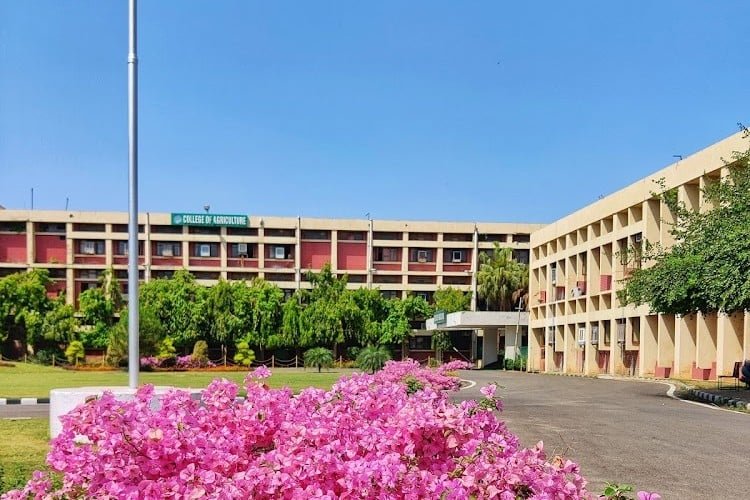
Introduction about Ph.D. in Microbiology at Punjab Agricultural University
Panjab Agricultural University (PAU) stands as a beacon of agricultural research and higher learning in India. The Doctoral programme in Microbiology is meticulously designed for professionals seeking to advance scientific knowledge, drive innovation in agricultural biotechnology, and contribute to global food security. This blog provides an exhaustive roadmap covering eligibility, entrance examinations, fee structure, admission procedures, specializations, research domains, syllabus, scholarships, and career opportunities.
Ph.D Admission 2026-2027 & Writing Support Services by Shiksha Research
Eligibility Criteria for Ph.D. in Microbiology at Punjab Agricultural University
- A Master’s degree (M.Sc., M.Tech., or equivalent) in Microbiology, Biotechnology, Agricultural Sciences, or a related discipline with a minimum of 55% marks (or 5.0 CGPA) from a recognized university.
- GATE/NET/ICAR qualified candidates are given preference.
- Candidates must possess a valid National Eligibility Test (NET) score in Biological Sciences or a related subject.
- Age limit: No upper age restriction, though candidates above 35 years may be considered on a case‑by‑case basis.
- Proficiency in English (minimum IELTS 6.0 or equivalent) for international candidates.
Entrance Exam for Ph.D. in Microbiology at Punjab Agricultural University
PAU conducts its own Ph.D. entrance test, supplemented by national level examinations.
- PAU Ph.D. Entrance Test: A written examination comprising 100 multiple‑choice questions covering Molecular Biology, Microbial Physiology, Biochemistry, and Agricultural Microbiology.
- National Eligibility Test (NET) or GATE: Candidates holding valid scores are exempted from the university‑level test and are invited directly for interview.
- Interview & Viva‑voce: Assessment of research aptitude, statement of purpose, and alignment with faculty interests.
Fee Structure for Ph.D. in Microbiology at Punjab Agricultural University
| Category | Annual Fee (INR) | Notes |
|---|---|---|
| General Category | 18,000 | Includes tuition, library, and lab maintenance. |
| SC/ST/PWD | 9,000 | 50% fee waiver as per government policy. |
| International Students | 30,000 | Higher fee for overseas candidates. |
| Scholarship/Assistantship | 0 (stipend provided) | Full stipend covers tuition and living expenses. |
Admission Process for Ph.D. in Microbiology at Punjab Agricultural University
The admission journey follows a transparent, step‑by‑step workflow:
- Online Application: Submit the application through the PAU portal with scanned copies of academic certificates.
- Verification of Eligibility: Admission committee reviews academic credentials and qualifying exam scores.
- Entrance Examination: Appear for the PAU Ph.D. entrance test or upload valid NET/GATE scores.
- Interview & Viva‑voce: Shortlisted candidates are invited for an interview with the department faculty.
- Final Selection & Offer Letter: Successful candidates receive an official admission letter and details of fee payment.
- Enrollment: Complete fee payment, register for the semester, and obtain a university ID.
Ph.D. Subjects and Specializations in Microbiology at Punjab Agricultural University
PAU offers a diverse set of research specializations to align with industry trends and scientific challenges:
- Food Microbiology & Safety
- Soil & Rhizosphere Microbiology
- Industrial Biotechnology
- Plant‑Pathogen Interactions
- Marine & Aquatic Microbiology
- Antimicrobial Resistance and Drug Development
- Environmental Microbiology & Bioremediation
Research Areas in Microbiology at Punjab Agricultural University
Researchers at PAU are engaged in cutting‑edge projects that address real‑world problems:
- Development of bio‑fertilizers and bio‑pesticides using native microbial strains.
- Genomic and metagenomic analysis of soil microbiomes for sustainable agriculture.
- Isolation and characterization of novel enzymes for industrial applications.
- Study of antimicrobial peptides from plant‑associated microbes.
- Biodegradation of agro‑chemical residues and plastic waste.
- Modeling of pathogen dynamics in crop ecosystems.
Documents Required for Ph.D. in Microbiology at Punjab Agricultural University
| Document | Format | Remarks |
|---|---|---|
| Application Form (online) | Completed and submitted via the university portal. | |
| Academic Transcripts (M.Sc./M.Tech.) | PDF/Scanned image | Must be attested by the issuing university. |
| NET/GATE Scorecard | Valid for the last 3 years. | |
| Research Proposal (2,000 words) | DOCX or PDF | Aligned with faculty interests. |
| Curriculum Vitae | Include publications, conferences, and work experience. | |
| Proof of Identity (Aadhaar/Passport) | Government‑issued ID. |
Punjab Agricultural University Ph.D. Syllabus for Microbiology
The syllabus is structured to build a strong theoretical foundation followed by advanced research methodology:
- Fundamentals of Microbial Cell Biology
- Advanced Molecular Techniques (PCR, qPCR, NGS)
- Microbial Genetics and Genomics
- Biochemistry of Microbial Metabolism
- Statistics and Bio‑informatics for Microbiology
- Research Design, Ethics, and Publication Standards
- Seminar & Thesis Writing Workshops
How To Apply for Ph.D. in Microbiology at Punjab Agricultural University
Follow these streamlined steps to submit a successful application:
- Visit the official PAU admissions portal and create a new user account.
- Fill in the personal and academic details, upload the required documents, and pay the nominal application fee of INR 1,500.
- Choose your preferred research supervisor from the faculty list. (You may contact potential supervisors before applying.)
- Submit the online form and note the application reference number for future correspondence.
- Monitor your email for notifications about entrance test dates, interview schedules, and admission decisions.
Career Scope and Job Opportunities After Ph.D. in Microbiology from Punjab Agricultural University
Graduates enjoy a versatile career trajectory across academia, industry, and government sectors:
- Academic Positions: Assistant Professor, Research Scientist, Post‑Doctoral Fellow.
- R&D in Agro‑Chemical Companies: Product development, quality control, and regulatory affairs.
- Biotechnology Start‑ups: Founder or lead scientist in microbial enzyme and bio‑fertilizer ventures.
- Public Health & Clinical Laboratories: Pathogen surveillance, antimicrobial resistance research.
- Government Agencies: ICAR, CSIR, and state agricultural departments.
- International Organizations: FAO, WHO, and NGOs focusing on food safety and sustainable agriculture.
Scholarship for Ph.D. in Microbiology at Punjab Agricultural University
PAU offers multiple financial assistance schemes to attract top talent:
- ICAR‑PG Scholarship: Fully funded stipend of INR 30,000 per month, tuition waiver, and travel allowance.
- University Teaching Assistantship: Monthly stipend plus tuition remission for candidates who assist in teaching labs.
- External Fellowships: Eligibility for UGC‑JRF, CSIR‑NET, and international scholarships like Fulbright and DAAD.
FAQs Regarding Ph.D. in Microbiology at Punjab Agricultural University
- What is the minimum duration of the Ph.D. program?
- The programme is structured for 3 years of full‑time research, extendable up to 5 years based on project milestones.
- Can I pursue the Ph.D. part‑time while working?
- Yes, PAU offers a part‑time mode for working professionals, subject to supervisor approval and a minimum of 12‑hour weekly commitment.
- Is there a language requirement for international students?
- Applicants must provide proof of English proficiency (IELTS ≥6.0 or TOEFL ≥80).
- How are supervisors assigned?
- Candidates may select a preferred supervisor from the faculty list, but final allocation depends on research fit and supervisor availability.
- What is the average stipend for Ph.D. scholars?
- Stipends range from INR 25,000 to 30,000 per month, depending on the funding source and teaching assistance responsibilities.
For additional support with your doctoral journey, consider professional services that can streamline your research and writing process:
Thesis and Dissertation Writing Services
Research Data Analysis Services
Research Paper Writing Services
Questionnaire Design and Development




