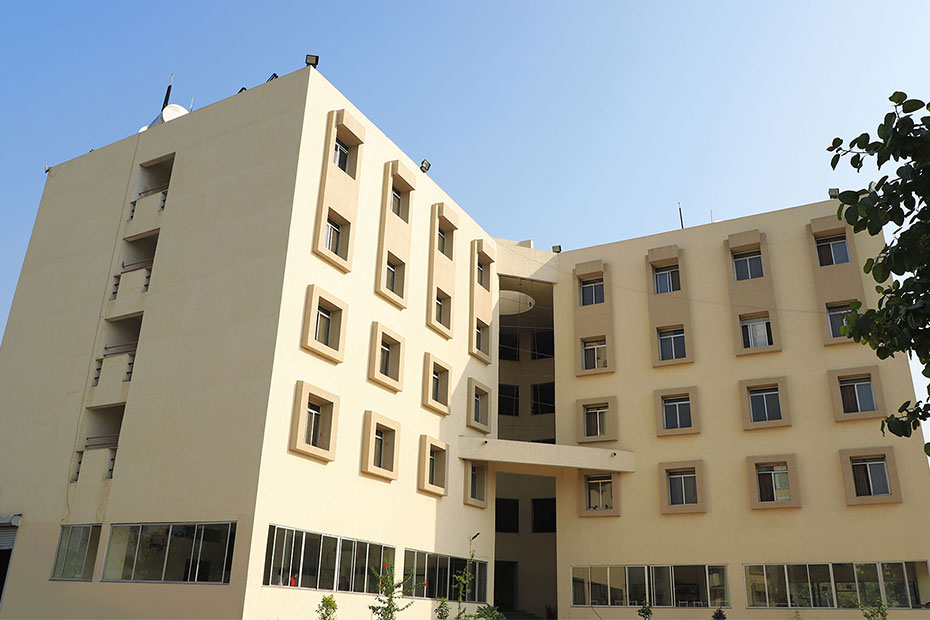
Introduction about Ph.D. in Natural Resources & Sustainable Development at Indus University
In an era where the global community faces unprecedented environmental challenges, the pursuit of a Ph.D. in Natural Resources & Sustainable Development at Indus University represents more than just academic achievement; it is a commitment to the future of our planet. Indus University, renowned for its forward-thinking approach and state-of-the-art research facilities, offers a doctoral program designed to empower professionals with the tools to balance ecological integrity with socio-economic progress. This program serves as a beacon for those who aspire to lead the transition toward a circular economy, climate resilience, and equitable resource management. By fostering a multidisciplinary environment, the university encourages scholars to explore the intricate nexus between human systems and the natural world, transforming visionary ideas into impactful solutions.
Ph.D Admission 2026-2027 & Writing Support Services by Shiksha Research
Eligibility Criteria for Ph.D. in Natural Resources & Sustainable Development at Indus University
Aspiring candidates for the doctoral program must demonstrate a strong academic background and a passion for environmental stewardship. The eligibility criteria are designed to ensure that researchers possess the prerequisite knowledge to engage in rigorous scientific inquiry. Generally, candidates must hold a Master?s degree in a relevant field such as Environmental Science, Geography, Sustainable Development, Forestry, or related engineering and social science disciplines. A minimum aggregate score of 55% (or an equivalent grade) from a recognized university is mandatory. For professionals transitioning back into academia, Indus University offers a supportive framework to bridge their industry experience with research excellence. If you are struggling to refine your initial application materials, seeking professional Editing and Proofreading Services can significantly enhance the clarity and impact of your academic transcripts and statements of purpose.
Entrance Exam for Ph.D. in Natural Resources & Sustainable Development at Indus University
Indus University maintains a high standard of academic excellence through its entrance examination process. The university typically conducts the Indus University Research Entrance Test (IURET), which assesses a candidate's aptitude for research, logical reasoning, and domain-specific knowledge in natural resources and sustainability. However, the university also honors national-level achievements. Candidates who have successfully cleared exams such as UGC-NET (including JRF), CSIR-NET, GATE, or have obtained a recognized M.Phil. degree are frequently exempted from the written entrance test, though they must still participate in the personal interview round. This interview is a crucial platform for candidates to present their research vision and demonstrate their alignment with the university's sustainability goals.
Fee Structure for Ph.D. in Natural Resources & Sustainable Development at Indus University
Investing in a Ph.D. is an investment in your career and the global community. The fee structure at Indus University is designed to be competitive while providing access to world-class resources and faculty mentorship. Below is a structured overview of the typical fee components involved in the doctoral journey.
| Fee Component | Estimated Amount (INR) | Frequency |
|---|---|---|
| Application & Registration Fee | ?2,500 - ?5,000 | One-time |
| Tuition Fee | ?60,000 - ?90,000 | Per Semester |
| Security Deposit (Refundable) | ?10,000 | One-time |
| Exam & Evaluation Fee | ?5,000 - ?10,000 | Per Year |
| Thesis Submission/Viva-Voce | ?15,000 - ?25,000 | Final Stage |
Admission Process for Ph.D. in Natural Resources & Sustainable Development at Indus University
The admission process at Indus University is holistic, aiming to identify researchers who are not only academically proficient but also ethically driven. It begins with an online application where candidates submit their credentials and a preliminary research concept. Following the entrance exam or exemption verification, shortlisted candidates are invited for a rigorous interview with the Doctoral Research Committee (DRC). To navigate this competitive landscape, many candidates utilize PhD Admission Assistance to ensure their application stands out. The final selection is based on the cumulative performance in the entrance test, the interview, and the relevance of the proposed research topic to the current global sustainability needs.
Ph.D. Subjects and Specializations in Natural Resources & Sustainable Development at Indus University
The curriculum at Indus University is both deep and broad, allowing scholars to specialize in niche areas that align with their career trajectories. Key subjects include Research Methodology, Advanced Statistics for Environmental Data, and Corporate Social Responsibility. Specializations often encompass:
- Renewable Energy Systems and Policy
- Biodiversity Conservation and Management
- Climate Change Mitigation and Adaptation
- Water Resource Management and Hydrology
- Urban Sustainability and Green Planning
- Circular Economy and Waste Transformation
Research Areas in Natural Resources & Sustainable Development at Indus University
Indus University encourages cutting-edge research that addresses real-world problems. The research areas are designed to be transdisciplinary, merging science with socio-economic policy. Finding the right niche is critical for long-term success; therefore, many scholars seek PhD Topic Selection and Proposal Assistance to align their interests with market demands and academic gaps. Current research focuses include the impact of industrialization on local ecosystems, the development of bio-based materials, and the legal frameworks governing international resource sharing. These areas provide a fertile ground for innovation and significant contributions to the field of sustainability.
Documents Required for Ph.D. in Natural Resources & Sustainable Development at Indus University
To ensure a smooth application process, candidates must prepare a comprehensive dossier of documents. These typically include:
- High School and Higher Secondary Marksheets/Certificates
- Bachelor?s and Master?s Degree Degree Certificates
- Consolidated Marksheets of Post-Graduation
- Entrance Test Scorecard (if applicable)
- Research Proposal (Preliminary)
- Experience Certificates (for working professionals)
- No Objection Certificate (NOC) from current employer
- Passport-sized Photographs and Government ID Proof
Indus University Ph.D. Syllabus for Natural Resources & Sustainable Development
The Ph.D. journey at Indus University begins with a mandatory coursework phase, typically lasting one to two semesters. This syllabus is meticulously crafted to build a strong foundation for independent research. It includes:
- Course I: Research Methodology ? Focuses on qualitative and quantitative methods, data collection, and ethical research practices.
- Course II: Computer Applications & Statistical Tools ? Mastery of software like SPSS, R, or GIS for environmental mapping.
- Course III: Core Subject Review ? Deep dive into current trends in Natural Resource Management and Sustainable Development.
- Course IV: Elective Specialty ? Specific modules related to the chosen sub-field of the researcher.
During this phase, scholars are encouraged to explore Research Publication Support to begin planning their contributions to reputable international journals, ensuring their work gains global visibility.
How To Apply for Ph.D. in Natural Resources & Sustainable Development at Indus University
Taking the first step toward a doctorate is a significant milestone. To apply, visit the official Indus University website and navigate to the 'Admissions' or 'Research' section. Fill out the comprehensive online application form and upload scanned copies of the required documents. Pay the application fee through the secure online portal. After submission, keep track of the entrance exam dates and interview schedules communicated via email. It is advisable to reach out to potential supervisors within the department beforehand to discuss your research interests, as a supportive mentor is vital for a successful doctoral journey.
Career Scope and Job Opportunities After Ph.D. in Natural Resources & Sustainable Development from Indus University
The career prospects for Ph.D. holders from Indus University are vast and diverse, spanning academia, government, and the private sector. Graduates often find themselves in leadership roles such as Sustainability Directors, Policy Analysts, Chief Scientific Officers, or Environmental Consultants. For those interested in the commercialization of sustainable technology, understanding and utilizing Patent Filing and Support Services becomes essential to protect their innovations. Furthermore, distinguished professionals who have made lifelong contributions to the field might also be recognized through Honorary Doctorate Programs, highlighting the prestige associated with expertise in sustainable development.
Scholarship for Ph.D. in Natural Resources & Sustainable Development at Indus University
Indus University is committed to ensuring that financial constraints do not hinder brilliant minds from pursuing impactful research. The university offers various scholarship schemes, including merit-based fellowships for top-ranking entrance exam candidates and research assistantships for those working on funded institutional projects. Furthermore, scholars are encouraged to apply for external fellowships such as the Maulana Azad National Fellowship, Rajiv Gandhi National Fellowship, or various international grants provided by NGOs and environmental foundations. These financial aids provide a stipend to cover living expenses and research costs, allowing the scholar to focus entirely on their scientific pursuits.
FAQs Regarding Ph.D. in Natural Resources & Sustainable Development at Indus University
Q1: Can I pursue this Ph.D. while working full-time?
A1: Yes, Indus University often provides provisions for part-time Ph.D. programs for working professionals, provided they can attend the required coursework and maintain regular contact with their supervisors.
Q2: What is the average duration of the Ph.D. program?
A2: The program typically takes a minimum of three years and a maximum of six years, including the coursework and thesis submission.
Q3: Is there a focus on field-based research?
A3: Absolutely. The program emphasizes both theoretical frameworks and practical field investigations to ensure the research is applicable to real-world ecological scenarios.
Q4: Does the university help in publishing the research?
A4: Yes, faculty members provide active mentorship in writing and submitting papers to high-impact journals, ensuring that the scholar?s research reaches the global scientific community.
Q5: Are interdisciplinary topics permitted?
A5: Yes, Indus University encourages research that intersects with Economics, Sociology, and Engineering to provide holistic solutions to sustainability challenges.




