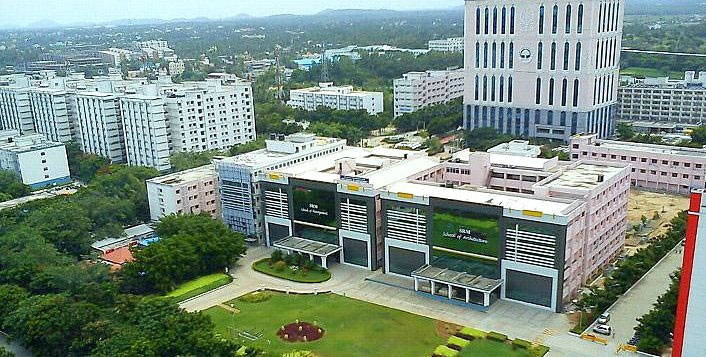
Ph.D. in Optometry from SRM University: Eligibility, Entrance Exam, Fee Structure, Admission Process, Subjects, Research Areas, Syllabus, Scholarship & Career Scope
Introduction about Ph.D. in Optometry at SRM University
SRM University has emerged as a premier hub for advanced research in optometry. The Ph.D. in Optometry program blends cutting?edge clinical practice with rigorous scientific inquiry, empowering professionals to become leaders in vision care, research, and academia. With state?of?the?art laboratories, collaborations with leading eye?care hospitals, and a faculty of internationally recognized scholars, SRM University offers a transformative environment for aspiring optometrists.
Eligibility Criteria for Ph.D. in Optometry at SRM University
- Master?s degree (M.Sc., M.Optom, M.P.T.) or equivalent in Optometry, Vision Science, or a related discipline with a minimum of 55% aggregate (or CGPA 6.0 on a 10?point scale).
- Valid GATE/NET score in a relevant subject is advantageous but not mandatory.
- Candidates must have a research background demonstrated through publications, conference presentations, or a strong research proposal.
- English language proficiency (IELTS ? 6.5 or TOEFL ? 80) for international applicants.
Entrance Exam for Ph.D. in Optometry at SRM University
SRM University conducts an SRM Ph.D. Entrance Test (SPET) specifically for optometry aspirants. The exam assesses:
- Fundamental concepts in ocular anatomy, physiology, and optics.
- Research methodology, statistics, and scientific writing.
- Critical thinking and problem?solving abilities.
Eligibility for the entrance test includes a valid master's degree and submission of a concise research proposal (max 500 words). The exam is held twice a year ? in January and July ? with online registration through the university portal.
Fee Structure for Ph.D. in Optometry at SRM University
| Component | Amount (INR) | Notes |
|---|---|---|
| Application Fee | 2,500 | Non?refundable, payable at time of online submission. |
| Tuition & Research Fees (per semester) | 45,000 | Includes lab access, library resources, and e?journal subscriptions. |
| Annual Examination & Evaluation Fee | 15,000 | Charged at the end of each academic year. |
| Miscellaneous (workshop, conference travel) | 10,000 | Estimated; actual cost varies with participation. |
| Total Approx. Cost (3?year program) | 2,55,000 | Subject to revision each academic session. |
Admission Process for Ph.D. in Optometry at SRM University
- Online registration and payment of the application fee.
- Upload academic transcripts, research proposal, and proof of English proficiency.
- Appear for the SRM Ph.D. Entrance Test or submit a valid GATE/NET score.
- Shortlist candidates are invited for a personal interview (virtual or on?campus).
- Final selection is based on academic merit, research proposal quality, and interview performance.
- Admission offer letter is issued, followed by enrollment and fee payment.
Ph.D. Subjects and Specializations in Optometry at SRM University
Students may tailor their doctorate to one of the following cutting?edge specializations:
- Clinical Optometry & Vision Therapy
- Contact Lens Technology and Management
- Low Vision Rehabilitation
- Ocular Diseases and Public Health Optometry
- Advanced Imaging and Diagnostics in Vision Science
- Optometric Education and Curriculum Development
Research Areas in Optometry at SRM University
SRM University?s research ecosystem encourages interdisciplinary projects such as:
- Myopia control strategies and novel orthokeratology lenses.
- Artificial intelligence applications in retinal imaging.
- Nanotechnology?based drug delivery for ocular surface disorders.
- Impact of digital screen exposure on visual ergonomics.
- Community?based vision screening and tele?optometry.
- Genetic markers for age?related macular degeneration.
Documents Required for Ph.D. in Optometry at SRM University
| # | Document | Format |
|---|---|---|
| 1 | Completed Application Form (online) | |
| 2 | Academic Transcripts (10?12, UG, PG) | Original + PDF copy |
| 3 | Research Proposal (max 1,500 words) | Word document |
| 4 | Proof of GATE/NET Score (if applicable) | |
| 5 | English Proficiency Certificate | |
| 6 | Curriculum Vitae (updated) | |
| 7 | Two Academic Reference Letters |
SRM University Ph.D. Syllabus for Optometry
The doctoral curriculum spans three years, organized into semesters that combine coursework, research, and teaching responsibilities:
- Semester?1?2: Advanced Ocular Anatomy, Vision Science, Research Methodology, Statistics for Health Sciences.
- Semester?3?4: Specialized electives (e.g., Contact Lens Science, Low Vision Rehabilitation), Ethics in Optometric Research, Academic Writing.
- Semester?5?6: Full?time research project, manuscript preparation, conference presentation, and teaching assistantship.
All courses are designed to equip scholars with a robust theoretical foundation and practical expertise required for independent research.
How To Apply for Ph.D. in Optometry at SRM University
Follow these steps for a seamless application:
- Visit the official SRM University admissions portal and create a user account.
- Complete the online application form, upload required documents, and pay the Rs.?2,500 application fee.
- Schedule and sit for the SRM Ph.D. Entrance Test (or submit a valid GATE/NET score).
- After the preliminary result, book an interview slot.
- Receive the admission offer, pay the first semester tuition, and enroll in the university?s student portal.
For personalized assistance, consider professional services:
Editing and Proofreading Services
PhD Topic Selection and Proposal Assistance
PhD Admission Assistance
Honorary Doctorate Programs
Research Publication Support
Patent Filing and Support Services
Career Scope and Job Opportunities After Ph.D. in Optometry from SRM University
Graduates enjoy a wide spectrum of career pathways, including:
- University faculty positions (Assistant/Associate Professor)
- Lead researcher in ophthalmic hospitals and research institutes
- Clinical director or senior optometrist in multi?specialty eye?care centers
- Product development scientist in contact lens or ocular device companies
- Policy advisor for vision health programs in governmental and NGOs
- Entrepreneur ? start?up ventures focusing on tele?optometry, AI diagnostics, or vision rehabilitation technologies.
According to industry reports, the demand for doctorate?level optometrists in India is projected to grow at an annual rate of 12% over the next five years, driven by increasing prevalence of refractive errors and aging populations.
Scholarship for Ph.D. in Optometry at SRM University
SRM University offers merit?based and need?based scholarships to eligible Ph.D. candidates:
- SRM Academic Excellence Scholarship: 50% tuition waiver for candidates with a CGPA ? 8.5.
- Research Grant Fellowship: Up to Rs.?1,00,000 per annum for projects aligned with university research priorities.
- Industry Sponsored Scholarships: Partnerships with leading eye?care firms provide stipends and research equipment.
- Women in Vision Science Scholarship: Dedicated support for female scholars pursuing optometric research.
Application for scholarships is concurrent with the admission process; applicants must submit a separate scholarship form and supporting statements.
FAQs Regarding Ph.D. in Optometry at SRM University
- Q: How long does the Ph.D. program typically take?
- A: The full?time program is designed for completion within three years, subject to satisfactory research progress.
- Q: Is there a part?time option for working professionals?
- A: Yes, SRM University offers a flexible part?time mode with extended timelines and weekend seminars.
- Q: Can I transfer credits from a related doctoral program?




