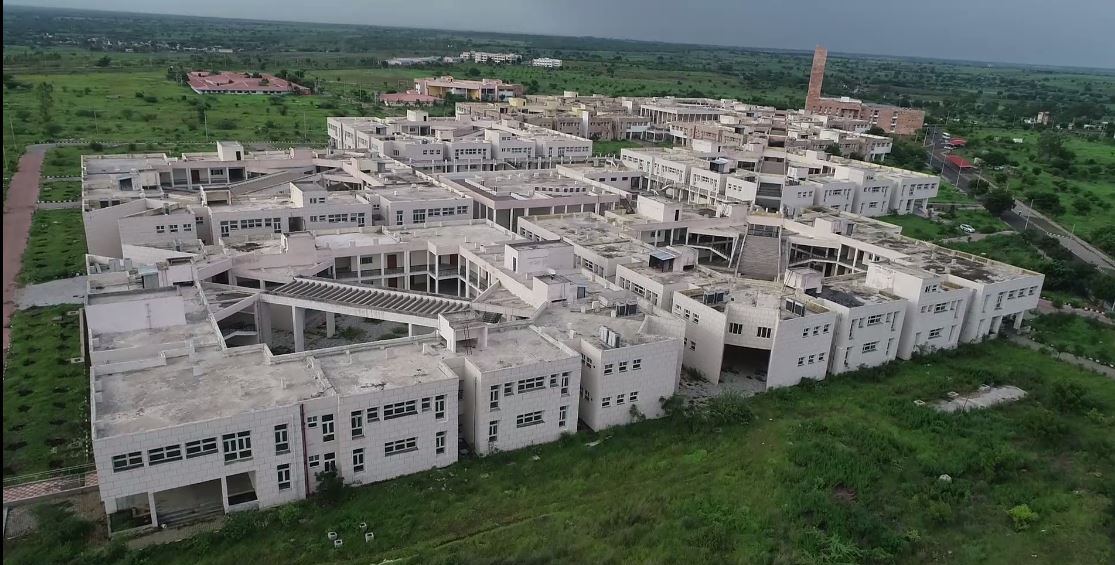
Introduction about Ph.D. in Physics at Central University of Karnataka
Embarking on a doctoral journey in physics at the Central University of Karnataka (CUK) opens doors to cutting?edge research, world?class mentorship, and a vibrant academic community. Whether you aspire to unravel the mysteries of quantum mechanics, develop sustainable energy solutions, or pioneer advanced materials, CUK?s Ph.D. programme equips you with the expertise, resources, and professional network required to become a leader in scientific discovery.
Eligibility Criteria for Ph.D. in Physics at Central University of Karnataka
- Candidate must hold a Master?s degree in Physics or a closely related discipline with a minimum of 55% marks (or equivalent CGPA) from a recognized university.
- Nationally qualifying postgraduate degree holders (e.g., M.Sc., M.Tech, M.Phil) are also considered.
- Candidates who have cleared the National Eligibility Test (NET) or UGC-CSIR are exempted from the university?level entrance test.
- For foreign nationals, the equivalent of a 3?year postgraduate degree with a minimum of 60% is required.
Entrance Exam for Ph.D. in Physics at Central University of Karnataka
The university conducts a comprehensive written test followed by a personal interview. The written test evaluates:
- Core physics concepts (Classical Mechanics, Electrodynamics, Quantum Physics, Statistical Mechanics)
- Mathematical proficiency (Linear Algebra, Differential Equations, Complex Analysis)
- Analytical reasoning and problem?solving abilities.
Candidates with NET/UGC?CSIR qualifications are directly shortlisted for the interview based on their research proposal and academic record.
Fee Structure for Ph.D. in Physics at Central University of Karnataka
| Category | Annual Fee (INR) | Notes |
|---|---|---|
| General Category | 12,000 | Includes tuition, library, and lab usage |
| OBC Category | 9,000 | 30% fee concession as per government policy |
| SC/ST Category | 6,000 | 50% fee concession; additional scholarships may apply |
| International Students | 25,000 | Higher fee to cover additional administrative costs |
Annual research assistance and stipends are disbursed to eligible candidates, reducing the effective financial burden.
Admission Process for Ph.D. in Physics at Central University of Karnataka
- Online Application: Submit the application form through the university portal with scanned copies of academic certificates.
- Entrance Test & Interview: Appear for the written test (unless exempted) and attend the personal interview.
- Document Verification: Upload the required documents (listed below) for verification.
- Admission Offer: Receive the admission letter via email, followed by fee payment through the portal.
- Enrollment: Register for the first semester and attend the orientation programme.
Ph.D. Subjects and Specializations in Physics at Central University of Karnataka
CUK offers a broad spectrum of specializations, allowing candidates to align their research with personal interests and industry demands:
- Quantum Optics and Photonics
- Condensed Matter Physics
- Computational Physics & Modeling
- High Energy Particle Physics
- Astrophysics and Cosmology
- Materials Science and Nanotechnology
- Biophysics and Medical Physics
Research Areas in Physics at Central University of Karnataka
The university?s research labs are equipped for pioneering work in:
- Quantum Computing and Information Processing
- Renewable Energy Materials (solar cells, thermoelectrics)
- Nanostructured Devices and Sensors
- Gravitational Wave Detection
- Plasma Physics for Fusion Energy
- Advanced Spectroscopy and Imaging Techniques
Documents Required for Ph.D. in Physics at Central University of Karnataka
| Document | Purpose |
|---|---|
| Academic Transcripts & Degree Certificates | Proof of eligibility and academic standing |
| NET/UGC?CSIR Qualification Certificate (if applicable) | Exemption from entrance exam & eligibility for stipends |
| Research Proposal (2,000?3,000 words) | Demonstrates research intent and feasibility |
| Curriculum Vitae (CV) | Highlights professional and research experience |
| Two Academic Reference Letters | Attests to candidate?s scholarly competence |
| Passport?size Photograph | Identification for university records |
| Proof of Identity (Aadhaar / Passport) | Verification of citizenship/residency |
Central University of Karnataka Ph.D. Syllabus for Physics
The syllabus is designed to reinforce foundational knowledge while encouraging interdisciplinary exploration:
- Core Modules: Advanced Classical Mechanics, Electrodynamics, Quantum Theory, Statistical Physics, Mathematical Methods.
- Elective Modules: Topics such as Non?linear Dynamics, Computational Techniques, Particle Physics, Optical Communications, and Energy Materials.
- Research Methodology: Scientific writing, ethics, data analysis, and presentation skills.
How To Apply for Ph.D. in Physics at Central University of Karnataka
Follow these step?by?step instructions to submit a successful application:
- Visit the official CUK Ph.D. Physics Admissions page and click ?Apply Online?.
- Create a user account using your email address.
- Fill in personal details, academic history, and upload scanned documents (refer to the Documents Required table).
- Enter a concise research proposal (maximum 3,000 words) outlining objectives, methodology, and expected outcomes.
- Pay the non?refundable application fee (INR 1,500) via net banking or credit card.
- Submit the form and note the application reference number for future correspondence.
Career Scope and Job Opportunities After Ph.D. in Physics from Central University of Karnataka
A doctorate in physics from CUK positions you for a diverse range of high?impact careers:
- Academic Path: Assistant Professor, Research Scientist, Department Head in reputed universities and institutes.
- Industry Roles: R&D Engineer, Data Scientist, Materials Development Specialist, Quantum Technology Engineer.
- Government & Public Sector: Positions in ISRO, DRDO, BARC, CSIR labs, and national research councils.
- Entrepreneurship: Founding start?ups focused on nanotech, renewable energy, or scientific instrumentation.
- Consultancy & Policy: Scientific advisor to governmental bodies or international organizations.
Continuous professional development is supported through workshops, conferences, and collaborations with industry partners.
Scholarship for Ph.D. in Physics at Central University of Karnataka
CUK offers multiple financial aid schemes to attract top talent:
- University Merit Scholarship: Covers tuition and provides a monthly stipend of INR 12,000 for eligible candidates.
- National Fellowship (UGC?CSIR): Competitive national award offering INR 31,000 per month.
- Industry Sponsored Fellowships: Partnerships with leading firms such as Tata Consultancy Services and ISRO provide project?based stipends.
Visit the CUK Scholarships portal for detailed eligibility and application deadlines.
FAQs Regarding Ph.D. in Physics at Central University of Karnataka
- What is the typical duration of the Ph.D. programme?
- Full?time candidates normally complete the doctorate in 3?4 years, subject to research progress and publication requirements.
- Can I pursue the Ph.D. part?time while working?
- Yes, the university offers a part?time mode for professionals, with a flexible schedule and extended duration of up to 6 years.
- Is there a language requirement?
- English is the medium of instruction. Proficiency in scientific writing is essential, but no formal language test is mandatory.
- How many publications are required for thesis submission?
- At least two peer?reviewed journal articles or one journal article and one conference paper are recommended.
- Are there collaborative opportunities with other institutes?
- CUK has MoUs with IISc, IITs, and international universities, facilitating joint research projects and exchange programmes.
Need assistance with your Ph.D. journey?




