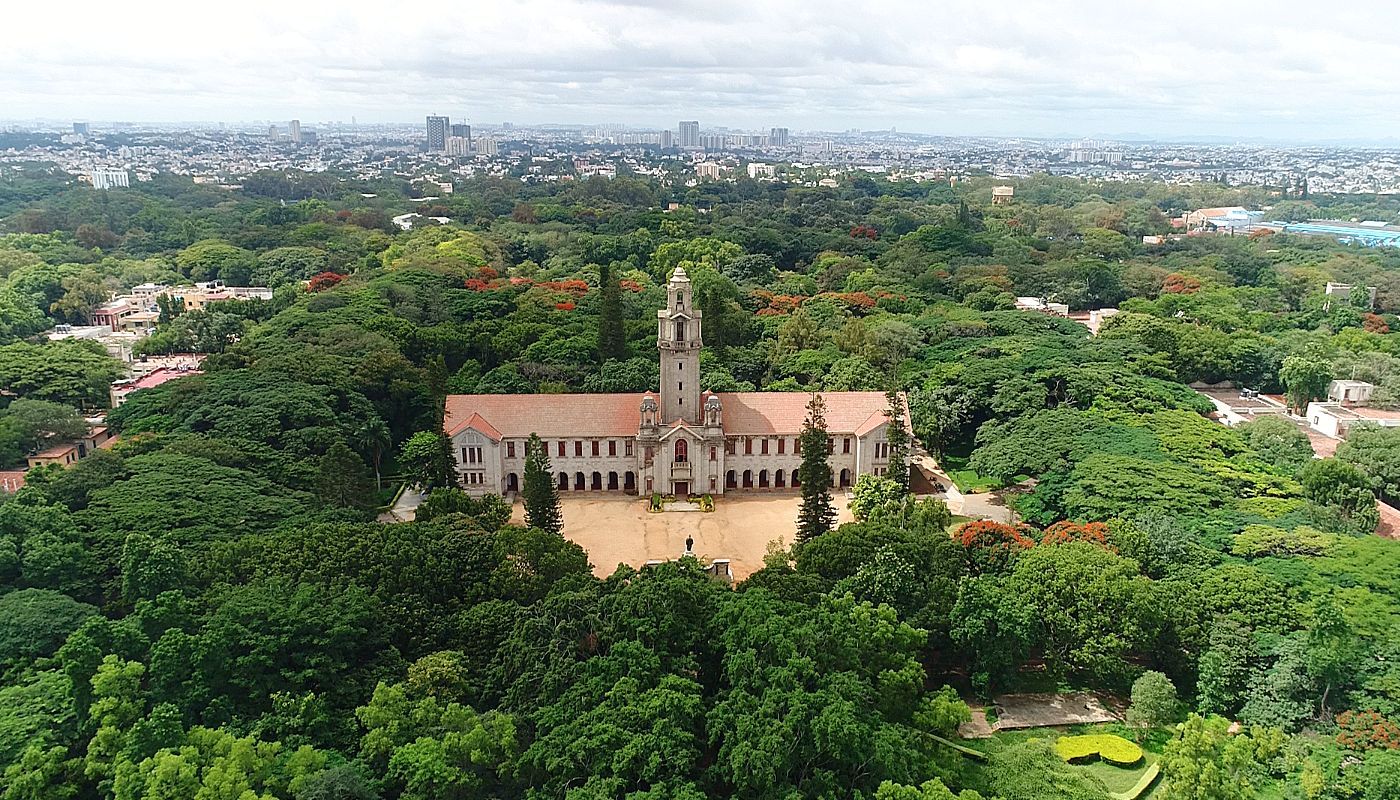
Ph.D. in Physics from Indian Institute of Science: Eligibility, Admission, Fee, Syllabus & Career
Introduction about Ph.D. in Physics at Indian Institute of Science
The Indian Institute of Science (IISc) stands as a beacon of research excellence in India. Its Ph.D. in Physics programme attracts bright minds who aspire to push the boundaries of fundamental science and innovative technology. With state‑of‑the‑art laboratories, interdisciplinary collaboration, and mentorship from world‑renowned faculty, IISc offers a nurturing environment for scholars seeking to become tomorrow’s scientific leaders.
Graduates of the IISc physics doctoral programme have gone on to secure prestigious fellowships, faculty positions in top universities, and influential roles in industry R&D. This blog provides a comprehensive roadmap for professionals aiming to embark on this transformative journey.
Ph.D Admission 2026-2027 & Writing Support Services by Shiksha Research
Eligibility Criteria for Ph.D. in Physics at Indian Institute of Science
- Master’s degree (M.Sc., M.Tech., M.S.) in Physics or a closely related discipline with at least 55% aggregate (or equivalent CGPA of 6.5/10).
- Candidates with a Bachelor’s degree (B.E./B.Tech) of 4 years duration and a valid GATE score in Physics or related engineering streams.
- Minimum age of 21 years at the time of admission (no upper age limit).
- Proficiency in English – TOEFL/IELTS is optional for Indian nationals but required for foreign applicants.
- Strong academic record, research exposure, and publication record (if any) are highly valued.
Entrance Exam for Ph.D. in Physics at Indian Institute of Science
IISc conducts its own entrance test, the IISc Ph.D. Entrance Examination, twice a year (January and July). The exam assesses:
- Core Physics concepts (Classical Mechanics, Quantum Mechanics, Electrodynamics, Statistical Physics).
- Mathematical proficiency (Advanced Calculus, Linear Algebra, Complex Analysis).
- Analytical reasoning and problem‑solving abilities.
Qualified candidates are shortlisted for a personal interview where research interests, technical competence, and alignment with faculty expertise are evaluated.
Fee Structure for Ph.D. in Physics at Indian Institute of Science
| Component | Annual Amount (INR) | Notes |
|---|---|---|
| Tuition & Examination Fee | ₹12,000 | Payable at the start of each academic year. |
| Laboratory & Facility Charges | ₹8,000 | Includes access to high‑end instrumentation. |
| Library & Digital Resources | ₹2,500 | Unlimited access to journals and e‑books. |
| Student Welfare & Insurance | ₹3,500 | Covers health insurance and extracurricular activities. |
| Total Approx. per Year | ₹26,000 | Subject to annual revision by the Institute. |
Most Ph.D. candidates receive a fully funded stipend (currently ₹31,000 per month) along with a research grant, making the programme financially sustainable for dedicated scholars.
Admission Process for Ph.D. in Physics at Indian Institute of Science
- Online Application: Submit the application through the IISc portal, upload academic transcripts, statement of purpose, and research proposal.
- Entrance Examination: Appear for the IISc Ph.D. Entrance Exam or present a valid GATE/NET score (minimum qualifying percentile).
- Interview: Shortlisted candidates are invited for a virtual or on‑campus interview with the prospective supervisor.
- Final Selection & Admission Offer: The Admissions Committee issues an official offer letter with details of stipend, fee waiver, and start date.
- Enrollment: Complete the enrollment formalities, pay the nominal fee, and commence research under the guidance of the assigned faculty.
Ph.D. Subjects and Specializations in Physics at Indian Institute of Science
IISc offers a broad spectrum of research domains. Prospective candidates can choose from:
- Condensed Matter Physics & Materials Science
- Quantum Optics & Photonics
- High Energy Physics & Particle Physics
- Astrophysics & Cosmology
- Plasma Physics & Fusion Energy
- Computational Physics & Data‑Intensive Modelling
- Biophysics & Soft Matter
Research Areas in Physics at Indian Institute of Science
The Institute’s research ecosystem encourages interdisciplinary collaboration. Current thrust areas include:
- Topological Materials and Quantum Information Processing
- Nanofabrication and 2‑D Materials for Energy Applications
- Gravitational Wave Detection and Black‑Hole Physics
- Laser‑Plasma Interaction for Inertial Confinement Fusion
- Machine Learning‑Driven Physics Simulations
- Environmental and Atmospheric Physics
- Advanced Spectroscopy for Molecular Dynamics
Students often collaborate with industry partners and national laboratories, gaining exposure to real‑world challenges. For assistance with thesis writing, many scholars turn to Thesis and Dissertation Writing Services for professional guidance.
Documents Required for Ph.D. in Physics at Indian Institute of Science
| Document | Details |
|---|---|
| Academic Transcripts | Original mark sheets and degree certificates (M.Sc./M.Tech.) |
| GATE/NET Score Card | Valid score (if applicable) |
| Research Proposal | 2‑3 page document outlining objectives, methodology, and expected outcomes |
| Curriculum Vitae (CV) | Highlight research experience, publications, and projects |
| Letters of Recommendation | At least two academic references |
| Photographs & ID Proof | Passport‑size photos and a government‑issued ID |
Indian Institute of Science Ph.D. Syllabus for Physics
The doctoral syllabus is designed to build a strong theoretical foundation while fostering independent research. Core components include:
- Advanced Quantum Mechanics and Field Theory
- Statistical Mechanics and Thermodynamics of Complex Systems
- Computational Techniques – Monte Carlo, Molecular Dynamics, and DFT
- Specialized Laboratory Courses aligned with the chosen research group
- Seminars, Journal Clubs, and Teaching Assistantship duties
- Thesis writing and defense (including a public viva)
To ensure high‑quality output, many candidates utilise Research Data Analysis Services for sophisticated data handling and interpretation.
How To Apply for Ph.D. in Physics at Indian Institute of Science
Follow these step‑by‑step instructions:
- Visit the official IISc Admissions Portal and create a user account.
- Fill in the application form, selecting “Physics – Ph.D.” as the program.
- Upload scanned copies of all required documents (see the Documents table above).
- Pay the non‑refundable application fee (₹1,500) via net banking or credit card.
- Submit the research proposal and select a preferred faculty advisor from the list of available supervisors.
- Monitor email for confirmation of exam slot and subsequent interview schedule.
- After admission, register with the Department of Physics and complete the induction program.
Students seeking assistance with manuscript preparation often rely on Research Paper Writing Services to polish their early publications.
Career Scope and Job Opportunities After Ph.D. in Physics from Indian Institute of Science
A doctorate from IISc opens doors across academia, industry, and government research. Typical career trajectories include:
- Assistant/Associate Professor in premier universities (IITs, IISc, abroad).
- Senior Research Scientist at DRDO, ISRO, BARC, or CSIR labs.
- Data Scientist / Machine Learning Engineer in technology firms leveraging physics‑based models.
- R&D Lead in semiconductor, aerospace, and renewable energy companies.
- Entrepreneurial ventures – founding start‑ups focused on quantum technologies or advanced materials.
The Institute’s alumni network, coupled with its strong industry linkages, ensures a high placement rate and attractive remuneration packages.
Scholarship for Ph.D. in Physics at Indian Institute of Science
All admitted Ph.D. candidates receive a monthly stipend funded by the Institute, the Department of Science & Technology (DST), and various external grants (e.g., INSPIRE, CSIR). Additional financial support includes:
- Travel grants for conferences and workshops.
- Research grants for equipment and consumables.
- Housing assistance through on‑campus hostels (first‑come, first‑served).
Prospective scholars often benefit from Questionnaire Design and Development services when preparing grant applications that require detailed project questionnaires.
FAQs Regarding Ph.D. in Physics at Indian Institute of Science
- Q: Is a GATE score mandatory for admission?</dt




