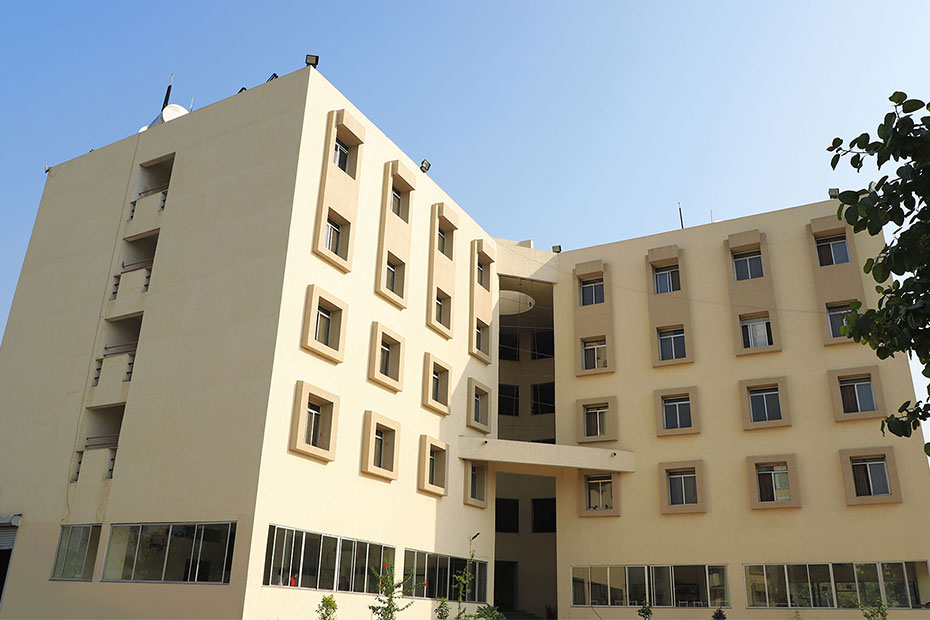
Introduction about Ph.D. in Physics at Indus University
Embarking on a Ph.D. in Physics at Indus University opens the door to cutting‑edge research, world‑class mentorship, and a thriving academic community. Designed for ambitious professionals who aspire to become thought leaders, the program blends rigorous coursework with independent investigation across fundamental and applied physics domains. Whether your passion lies in quantum optics, condensed matter, or computational modeling, Indus University equips you with the tools, infrastructure, and industry connections to transform curiosity into breakthrough discoveries.
Eligibility Criteria for Ph.D. in Physics at Indus University
- Master’s degree (M.Sc. or M.Tech) in Physics or a closely related discipline with a minimum aggregate of 55% (or CGPA 6.0/10).
- Valid GATE (Physics) score is preferred but not mandatory; candidates with outstanding academic records may be considered without GATE.
- English language proficiency (IELTS ≥ 6.0 or TOEFL ≥ 80) for international applicants.
- Applicants must demonstrate research aptitude through a statement of purpose, letters of recommendation, and a research proposal.
Entrance Exam for Ph.D. in Physics at Indus University
Indus University conducts a comprehensive entrance examination to assess candidates’ depth of knowledge and analytical abilities. The exam consists of three sections:
- Core Physics – Classical mechanics, electrodynamics, quantum mechanics, statistical physics.
- Mathematical Methods – Differential equations, complex analysis, linear algebra.
- Research Aptitude – Critical reasoning, research methodology, literature review skills.
The test is followed by a personal interview where faculty members evaluate the candidate’s research proposal, motivation, and compatibility with ongoing projects.
Fee Structure for Ph.D. in Physics at Indus University
| Component | Annual Cost (INR) | Notes |
|---|---|---|
| Tuition Fee | ₹ 85,000 | Applicable for the first three years; reduced after successful progress review. |
| Laboratory & Facility Charges | ₹ 30,000 | Includes access to high‑performance computing clusters, cryogenic labs, and material synthesis units. |
| Library & Digital Resources | ₹ 10,000 | Unlimited access to journals, IEEE, APS, and Springer databases. |
| Miscellaneous (Administrative, Student Services) | ₹ 15,000 | Includes student counseling, health services, and campus activities. |
| Total Approximate Annual Fee | ₹ 1,40,000 | Subject to revision each academic year. |
Admission Process for Ph.D. in Physics at Indus University
- Online Application: Fill the web‑based form, upload academic transcripts, research proposal, and CV.
- Document Verification: Upload scanned copies of certificates, GATE score (if any), and language proficiency proof.
- Entrance Test & Interview: Appear for the written exam; shortlisted candidates are invited for a faculty interview.
- Selection & Offer Letter: Successful candidates receive an official admission offer with fee details.
- Enrollment: Pay the initial fee, complete registration, and begin orientation.
Ph.D. Subjects and Specializations in Physics at Indus University
Indus University offers a spectrum of specializations that reflect emerging trends and industry demand:
- Quantum Mechanics & Quantum Information
- Condensed Matter Physics & Nanostructures
- Photonics & Laser Technology
- Computational Physics & Numerical Modelling
- Plasma Physics & Fusion Energy
- Astrophysics & Cosmology
- Medical Physics & Radiation Dosimetry
Research Areas in Physics at Indus University
Current research thrusts are aligned with national priorities and global scientific challenges:
- Quantum Computing: Development of qubit architectures, decoherence mitigation, and quantum algorithms.
- Energy Materials: Synthesis and characterization of perovskites, 2‑D materials, and solid‑state electrolytes for next‑generation batteries.
- High‑Energy Particle Physics: Collaboration with CERN‑affiliated experiments, detector development, and data analysis.
- Advanced Imaging: X‑ray diffraction, electron microscopy, and ultrafast spectroscopy for material diagnostics.
- Biomedical Applications: Radiation therapy planning, MRI physics, and bio‑nanophotonics.
Documents Required for Ph.D. in Physics at Indus University
| Document | Format | Remarks |
|---|---|---|
| Academic Transcripts (M.Sc./M.Tech) | PDF, scanned copy | Official seal required. |
| Degree Certificate | PDF, scanned copy | Original not mandatory at application stage. |
| GATE Score Card (optional) | Valid for the current admission cycle. | |
| Statement of Purpose (SOP) | Word or PDF | Maximum 1,500 words. |
| Letters of Recommendation (2) | PDF, uploaded by referees | Preferably from academic supervisors. |
| English Proficiency Proof | IELTS/TOEFL for non‑native speakers. |
Indus University Ph.D. Syllabus for Physics
The curriculum balances theoretical depth with practical expertise:
- Year 1: Advanced Quantum Theory, Statistical Mechanics, Research Methodology, and Core Lab Techniques.
- Year 2: Elective Modules (e.g., Nonlinear Dynamics, Computational Electrodynamics), Proposal Development, and Publication Workshops.
- Year 3–5: Full‑time research, conference participation, and dissertation writing under faculty supervision.
How To Apply for Ph.D. in Physics at Indus University
Follow these streamlined steps to submit a successful application:
- Visit the official Indus University admissions portal.
- Create an account and fill out the personal information section.
- Upload the required documents listed above.
- Pay the non‑refundable application fee (₹ 1,500) via secure gateway.
- Schedule the entrance test date and confirm attendance.
- Track application status through the portal dashboard.
Career Scope and Job Opportunities After Ph.D. in Physics from Indus University
Graduates are highly sought after in both academia and industry. Typical career trajectories include:
- Assistant/Associate Professor at leading universities.
- Research Scientist in national laboratories (e.g., DRDO, ISRO, BARC).
- R&D Engineer in high‑tech firms (semiconductors, aerospace, renewable energy).
- Data Scientist / Quantum Algorithm Developer in emerging tech startups.
- Science Policy Analyst or Technical Consultant for government agencies.
According to recent placement reports, Ph.D. alumni secure roles with average starting salaries ranging from ₹ 12 Lakhs to ₹ 25 Lakhs per annum, depending on specialization and sector.
Scholarship for Ph.D. in Physics at Indus University
Financial support is available through multiple avenues:
- Indus University Merit Scholarship – Full tuition waiver for candidates with a CGPA ≥ 9.0.
- National Fellowship (UGC‑JRF, CSIR‑NET) – Stipend of ₹ 31,000 per month plus contingency.
- Industry‑Sponsored Projects – Research assistantships funded by partner corporations.
- External Grants – Applications to DST, SERB, and international bodies such as the Fulbright Program.
FAQs Regarding Ph.D. in Physics at Indus University
- What is the typical duration of the Ph.D. program?
- Four to five years, depending on research progress and publication requirements.
- Can I pursue the Ph.D. part‑time while working?
- Yes, Indus University offers a flexible part‑time mode for industry professionals with a minimum of three years of relevant work experience.
- Is prior teaching experience required?
- No, but teaching assistantships are offered to eligible candidates to enhance pedagogical skills.
- Are there opportunities for international collaboration?
- Indus University has MoUs with several overseas institutions, enabling joint supervision and exchange visits.
- How many publications are needed for graduation?
- At least two articles in peer‑reviewed journals (or one journal article and one conference paper) are mandatory.
For additional academic assistance, consider exploring professional services such as Thesis and Dissertation Writing Services, Research Data Analysis Services, Research Paper Writing Services, and Questionnaire Design and Development</a




