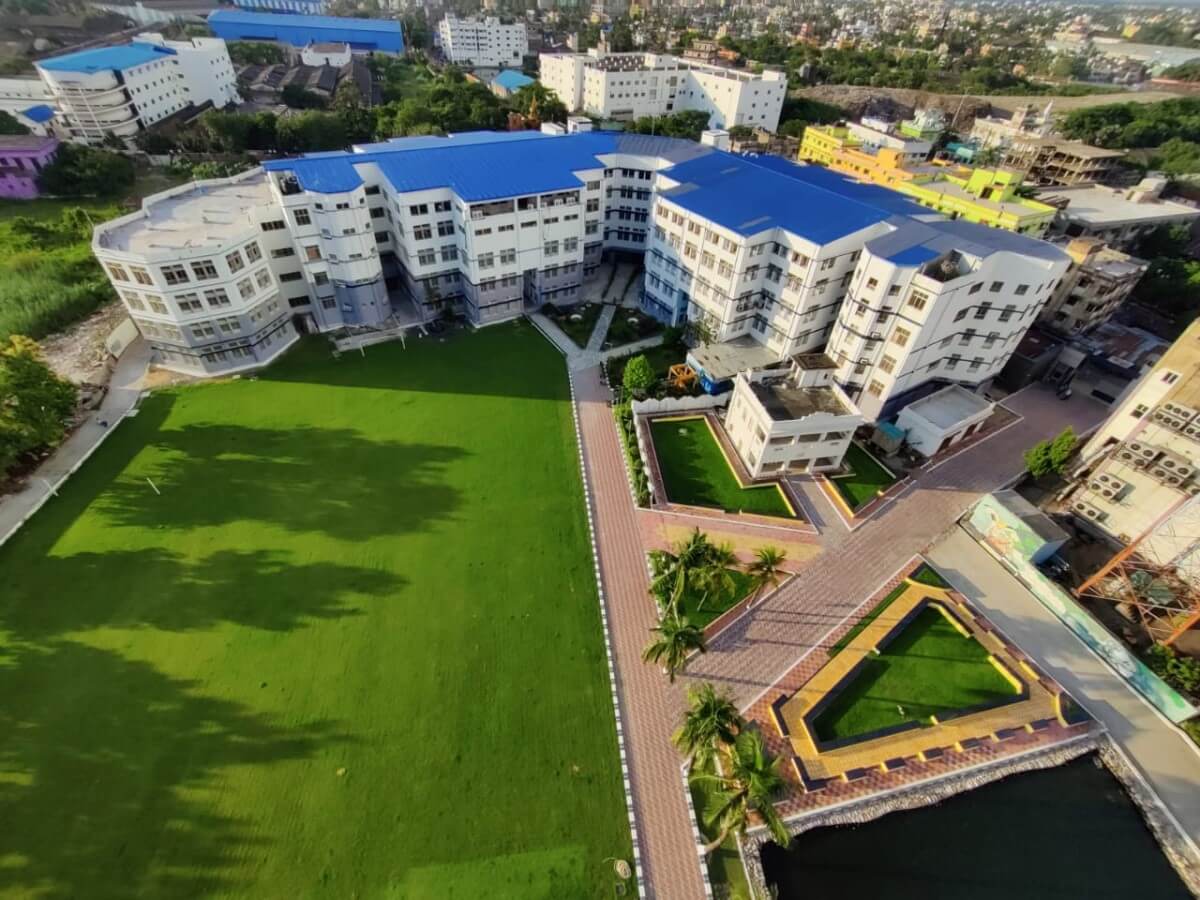
Ph.D. in Physics from JIS University: Eligibility, Entrance Exam, Fee Structure, Admission Process, Subjects, Research Areas, Syllabus, Scholarship & Career Scope
Introduction about Ph.D. in Physics at JIS University
JIS University has emerged as a premier hub for advanced research in the physical sciences. The Doctor of Philosophy (Ph.D.) in Physics program is designed for scholars who aspire to push the boundaries of knowledge, contribute to cutting‑edge discoveries, and lead innovative projects in academia, industry, and government laboratories. With state‑of‑the‑art laboratories, interdisciplinary collaborations, and a robust mentorship model, the university equips candidates with the expertise required to excel in high‑impact research.
Eligibility Criteria for Ph.D. in Physics at JIS University
Prospective candidates must satisfy the following academic and professional benchmarks:
- Master’s degree (or equivalent) in Physics, Applied Physics, or a closely related discipline with a minimum aggregate of 55% (or CGPA 5.5/10).
- Valid GATE score (Physics) or a university‑conducted entrance test. Candidates with a Ph.D. Physics eligibility based on national examinations are also considered.
- For candidates holding a B.Sc. (Hons) in Physics, a minimum of 5 years of research experience or publications in reputed journals can be accepted under a “Direct Entry” provision.
- English language proficiency (IELTS ≥ 6.5 or TOEFL ≥ 80) for international applicants.
Entrance Exam for Ph.D. in Physics at JIS University
The entrance assessment evaluates theoretical depth, analytical skills, and research aptitude. The structure includes:
- Written Test (100 marks): Topics cover Classical Mechanics, Quantum Mechanics, Electrodynamics, Statistical Physics, and Mathematical Methods.
- Interview / Viva Voce (50 marks): A panel of senior faculty members discusses the candidate’s research proposal, past projects, and future objectives.
- Eligibility for the JIS University Ph.D. entrance exam can also be obtained through a valid GATE score, waiving the written component.
Fee Structure for Ph.D. in Physics at JIS University
| Component | Indian Residents (INR) | International Residents (USD) |
|---|---|---|
| Admission & Registration Fee | ₹12,000 | $250 |
| Annual Tuition & Lab Charges | ₹55,000 per annum | $1,100 per annum |
| Research Project Stipend (Optional) | ₹10,000 per month | $200 per month |
| Library & Resource Access | ₹5,000 | $80 |
| Total (3‑year program) | ≈ ₹2,01,000 | ≈ $3,800 |
Note: The university offers fee waivers and scholarships based on merit and research potential.
Admission Process for Ph.D. in Physics at JIS University
The admission timeline follows a streamlined three‑stage procedure:
- Online Application: Submit the digital form with academic transcripts, research statement, and letters of recommendation via the university portal.
- Entrance Evaluation: Appear for the written test or submit a valid GATE score. Qualified candidates are invited for the interview.
- Final Selection & Offer Letter: Successful applicants receive an admission letter, after which fee payment and enrollment are completed.
For detailed guidance on each step, consult the Thesis and Dissertation Writing Services page for assistance in preparing a compelling research proposal.
Ph.D. Subjects and Specializations in Physics at JIS University
Students can tailor their research across a spectrum of sub‑disciplines:
- Condensed Matter Physics
- Quantum Optics & Photonics
- High Energy & Particle Physics
- Astrophysics & Cosmology
- Computational & Theoretical Physics
- Nanomaterials & Surface Science
- Plasma Physics
Research Areas in Physics at JIS University
The university’s research ecosystem is anchored in collaboration with national laboratories and industry partners. Key focus areas include:
| Research Cluster | Core Projects |
|---|---|
| Quantum Information Science | Quantum computing algorithms, entanglement dynamics, quantum error correction. |
| Materials for Energy Storage | Battery electrode design, solid‑state electrolytes, perovskite solar cells. |
| Particle Physics Experiments | Detector development for neutrino observatories, data analysis for LHC collaborations. |
| Astrophysical Simulations | Galaxy formation models, dark matter mapping, gravitational wave signal processing. |
| Plasma Fusion Research | Tokamak plasma confinement studies, laser‑induced plasma diagnostics. |
To enhance data handling capabilities, candidates may leverage the university’s partnership with Research Data Analysis Services.
Documents Required for Ph.D. in Physics at JIS University
| Document | Details |
|---|---|
| Application Form | Completed online with payment receipt. |
| Academic Transcripts | Certified copies of Bachelor’s and Master’s records. |
| GATE Score Card (or equivalent) | Original score report for Physics. |
| Research Proposal | 2‑page document outlining objectives, methodology, and expected outcomes. |
| Letters of Recommendation | Minimum two, from academic supervisors or industry mentors. |
| English Proficiency Proof | IELTS/TOEFL score (if applicable). |
| Curriculum Vitae | Up‑to‑date CV highlighting publications and projects. |
JIS University Ph.D. Syllabus for Physics
The comprehensive syllabus balances coursework with research milestones:
- Core Modules (Year 1): Advanced Quantum Mechanics, Statistical Mechanics, Electrodynamics, Computational Physics, Research Methodology.
- Elective Modules (Year 1‑2): Choose two from Condensed Matter Theory, Non‑linear Dynamics, Relativistic Field Theory, Nano‑photonics, Plasma Diagnostics.
- Research Phase (Year 2‑3): Conduct original research, publish at least two peer‑reviewed articles, and submit a dissertation.
Students can access writing assistance through Research Paper Writing Services to ensure high‑quality publications.
How To Apply for Ph.D. in Physics at JIS University
Follow these step‑by‑step instructions to submit a successful application:
- Visit the official JIS University admissions portal and create a user account.
- Fill in personal details, academic history, and upload scanned copies of required documents.
- Pay the non‑refundable registration fee using the integrated payment gateway.
- Upload your research proposal and indicate your preferred specialization.
- Schedule the entrance test (or upload GATE score) and confirm the interview slot.
- Track application status through the portal dashboard; upon selection, accept the offer and complete fee payment.
Need help designing a questionnaire for your research? Explore the Questionnaire Design and Development service.
Career Scope and Job Opportunities After Ph.D. in Physics from JIS University
A doctorate in Physics from JIS University opens doors to diverse, high‑impact roles:
- Academic Positions: Assistant/Associate Professor, Post‑doctoral Fellow, Research Scientist.
- Industrial R&D: Senior Scientist in semiconductor, aerospace, renewable energy, or defense sectors.
- Government & National Labs: Research Engineer, Project Lead, Policy Analyst for scientific programs.
- Data Science & Analytics: Quantitative Analyst, Machine Learning Engineer, Computational Physicist.
- Entrepreneurship: Founder of tech start‑ups focusing on quantum technologies, nanomaterials, or scientific instrumentation.
Graduates consistently secure positions with attractive remuneration, with many reporting salary packages exceeding INR 12 Lakhs per annum in the first post‑doctoral year.




