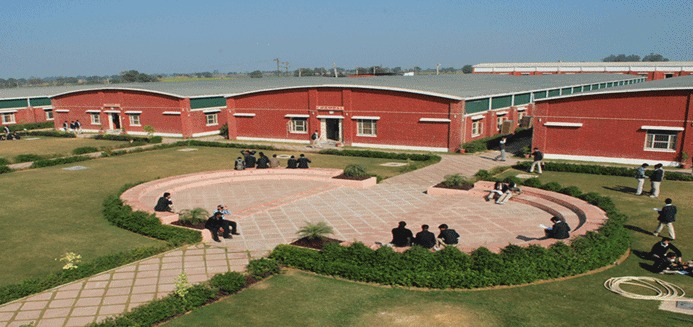
Ph.D. in Physics from Mangalayatan University: Eligibility, Entrance Exam, Fee Structure, Admission Process, Subjects, Research Areas, Syllabus, Scholarship & Career Scope
Introduction about Ph.D. in Physics at Mangalayatan University
Embarking on a Ph.D. in Physics at Mangalayatan University opens the door to pioneering research, cutting?edge laboratory work, and a vibrant academic community dedicated to scientific discovery. This inspirational programme blends rigorous coursework with mentorship from distinguished faculty, empowering professionals to push the boundaries of modern physics and become leaders in academia, industry, and government research.
Ph.D Admission 2026-2027 & Writing Support Services by Shiksha Research
Eligibility Criteria for Ph.D. in Physics at Mangalayatan University
- Master?s degree (M.Sc.) in Physics or a closely related discipline with a minimum of 55% aggregate (or equivalent CGPA).
- Qualified national or state level research entrance test (e.g., UGC NET, CSIR NET, GATE) ? score must meet the university?s cut?off.
- For candidates with a B.Tech/M.Tech in Applied Physics or Engineering Physics, a minimum of 60% is required.
- English language proficiency (IELTS/TOEFL) is not mandatory for Indian residents, but may be considered for overseas applicants.
- Strong research aptitude demonstrated through project work, publications, or conference presentations.
Entrance Exam for Ph.D. in Physics at Mangalayatan University
The university conducts its own Ph.D. entrance examination to assess the candidate?s depth of knowledge and analytical skills. The exam consists of:
- Written Test (120 marks): Topics include Classical Mechanics, Quantum Mechanics, Electrodynamics, Statistical Physics, and Mathematical Methods.
- Viva?Voce (30 marks): A personal interview to evaluate research interests, communication skills, and alignment with faculty expertise.
- Applicants who have cleared UGC NET, CSIR NET, or GATE with qualifying scores are exempted from the written test but must appear for the viva?voce.
Fee Structure for Ph.D. in Physics at Mangalayatan University
| Component | Annual Fee (INR) | Notes |
|---|---|---|
| Tuition Fee | 45,000 | Applicable for the first two years of coursework. |
| Laboratory & Resource Charges | 12,000 | Includes access to advanced instrumentation. |
| Examination & Evaluation Fee | 5,000 | Paid each semester. |
| Annual Student Services Fee | 3,000 | Covers library, sports, and health facilities. |
| Total Approx. Annual Cost | 65,000 | Subject to revision each academic year. |
Scholarships, research assistantships, and merit?based waivers can significantly reduce the financial burden.
Admission Process for Ph.D. in Physics at Mangalayatan University
- Online Application: Submit the application form through the university portal along with scanned copies of academic certificates.
- Upload Supporting Documents: Include mark sheets, entrance test scorecards, research proposal, and two letters of recommendation.
- Entrance Exam & Interview: Appear for the university?conducted test or present qualifying national exam scores, followed by a viva?voce.
- Selection & Offer Letter: Successful candidates receive an admission letter with fee details and enrollment instructions.
- Enrollment & Fee Payment: Complete the enrollment formalities within the stipulated timeline.
Ph.D. Subjects and Specializations in Physics at Mangalayatan University
- Quantum Optics and Photonics
- Condensed Matter Physics
- High Energy Particle Physics
- Computational & Theoretical Physics
- Plasma Physics and Fusion Energy
- Nanostructured Materials
- Astrophysics and Cosmology
Research Areas in Physics at Mangalayatan University
The university?s state?of?the?art research facilities enable exploration in:
- Laser?based spectroscopy and ultrafast dynamics.
- Topological insulators and quantum Hall effect.
- Dark matter detection and neutrino physics.
- Computational modeling of complex systems.
- Renewable energy materials, including perovskite solar cells.
- Space?based instrumentation for satellite communication.
Documents Required for Ph.D. in Physics at Mangalayatan University
| Document | Format | Remarks |
|---|---|---|
| Application Form (online) | Filled and signed electronically. | |
| Academic Transcripts (M.Sc./M.Tech) | PDF/Scanned copy | Must be attested. |
| Entrance Test Scorecard | UGC NET, CSIR NET, GATE or university test. | |
| Research Proposal (2,000?3,000 words) | DOCX/PDF | Outline objectives, methodology, and expected outcomes. |
| Two Letters of Recommendation | From academicians or industry experts. | |
| Identity Proof (Aadhaar/Passport) | Valid government issued ID. |
Mangalayatan University Ph.D. Syllabus for Physics
The syllabus is divided into two phases: Coursework and Research.
- Year 1 ? Core Courses (30 credits):
- Advanced Quantum Mechanics
- Statistical Mechanics & Thermodynamics
- Mathematical Methods for Physicists
- Computational Physics
- Research Ethics & Scientific Writing
- Year 2 ? Elective Courses (15 credits): Choose based on specialization (e.g., Nanophotonics, Particle Physics, Condensed Matter Theory).
- Year 3 & 4 ? Thesis Research (60 credits): Original research culminating in a dissertation and viva?voce.
How To Apply for Ph.D. in Physics at Mangalayatan University
- Visit the official Mangalayatan University Ph.D. portal and click ?Apply Now?.
- Register using your email address and create a secure password.
- Fill in personal details, academic background, and upload the required documents.
- Pay the non?refundable application fee (INR 2,000) through net banking or credit card.
- Submit the application and note the acknowledgment number for future correspondence.
- Prepare for the entrance examination or arrange for your qualifying national test scorecard.
- Attend the scheduled viva?voce; bring original certificates for verification.
Career Scope and Job Opportunities After Ph.D. in Physics from Mangalayatan University
A doctorate in physics unlocks diverse pathways:
- Academic Positions: Assistant Professor, Research Fellow, Department Head.
- Industry Roles: R&D Scientist (semiconductor, aerospace, renewable energy), Data Scientist, Quantum Computing Engineer.
- Government & Public Sector: Scientist?G at ISRO, DRDO, Bhabha Atomic Research Centre, or national laboratories.
- Entrepreneurship: Start?ups in photonics, nanotech, or scientific instrumentation.
- Consultancy & Policy Making: Science policy advisor, technical consultant for international agencies.
The average salary for Ph.D. physicists in India ranges from INR 8?12 lakhs per annum in academia to INR 15?30 lakhs in high?tech industry roles.
Scholarship for Ph.D. in Physics at Mangalayatan University
The university offers multiple merit?based and need?based scholarships:
- UGC?CSIR JRF Fellowship: Full tuition waiver and monthly stipend of INR 31,000.
- Mangalayatan Merit Scholarship: 50% fee reduction for top 10% of applicants.
- Research Assistantship (RA): Stipends ranging from INR 20,000?25,000 based on project funding.
- External Grants: Opportunities to apply for DST, ICMR, and private foundation grants.
Students are encouraged to explore Editing and Proofreading Services to polish grant proposals and research manuscripts, enhancing their chances of securing funding.
Additional support includes PhD Topic Selection and Proposal Assistance, PhD Admission Assistance, Honorary Doctorate Programs, Research Publication Support, and Patent Filing and Support Services.
FAQs Regarding Ph.D. in Physics at Mangalayatan University
- Q1: Can I pursue the Ph.D. part?time while working?
- Yes, the university offers a flexible part?time option for professionals, with extended timelines for coursework and thesis submission.
- Q2: Is there a provision for international students?
- International candidates are welcomed; they must meet the same academic




