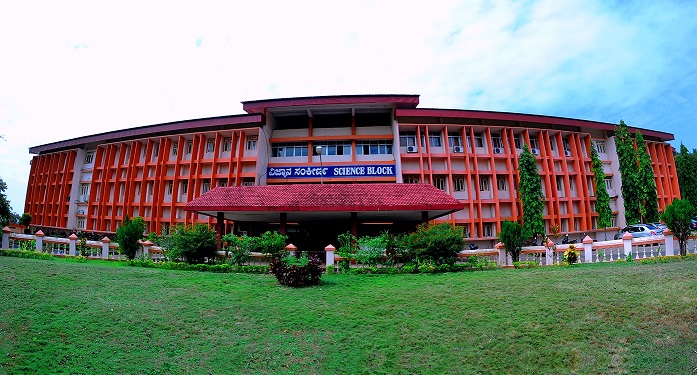
Ph.D. in Physics from Mangalore University: Eligibility, Entrance Exam, Fee Structure, Admission Process, Subjects, Research Areas, Syllabus, Scholarship & Career Scope
Introduction about Ph.D. in Physics at Mangalore University
The Ph.D. in Physics offered by Mangalore University is a gateway to cutting?edge research and academic excellence. Nestled in the vibrant educational hub of Karnataka, the university provides a collaborative environment where scholars can explore fundamental and applied physics, contribute to scientific breakthroughs, and shape the future of technology. Whether you aim to become a university professor, lead R&D teams, or pioneer innovations in quantum technologies, this doctoral program equips you with the analytical rigor and experimental expertise needed to thrive.
Eligibility Criteria for Ph.D. in Physics at Mangalore University
Prospective candidates must fulfill the following eligibility standards:
- A Master's degree (M.Sc.) in Physics or a related discipline with a minimum of 55% aggregate (or equivalent CGPA).
- For candidates holding a B.E./B.Tech. in Engineering Physics, a minimum of 60% aggregate is required.
- Candidates who have cleared the National Eligibility Test (NET) or GATE in Physics are exempted from the entrance examination.
- English language proficiency is essential; a minimum TOEFL/IELTS score is not mandatory for Indian nationals but may be required for overseas applicants.
These criteria ensure that only motivated scholars with a strong academic foundation embark on this rigorous research journey.
Entrance Exam for Ph.D. in Physics at Mangalore University
The university conducts its own entrance test, known as the Mangalore University Ph.D. Entrance Examination (MUPEE). The exam assesses:
- Core concepts in Classical Mechanics, Electromagnetism, Quantum Mechanics, and Statistical Physics.
- Analytical reasoning and problem?solving abilities.
- Research aptitude through a short essay on a chosen physics topic.
Qualified NET/GATE candidates receive direct admission without appearing for MUPEE. The exam is typically scheduled in the months of June and December.
Fee Structure for Ph.D. in Physics at Mangalore University
The fee structure is designed to be affordable while covering essential academic services. The table below outlines the latest cost components (as of 2026):
| Category | Fee (INR) | Remarks |
|---|---|---|
| Application & Registration | 2,500 | One?time non?refundable charge |
| Annual Tuition & Laboratory Fees | 12,000 | Payable at the start of each academic year |
| Thesis Submission & Evaluation | 4,000 | One?time fee incurred at the final stage |
| Library & Digital Resources | 1,500 | Inclusive of all e?journals and databases |
| Total Approximate Cost (3?Year Program) | 45,500 | Excluding scholarships and stipends |
Financial assistance through university scholarships, research grants, and teaching assistantships can substantially reduce the out?of?pocket expense.
Admission Process for Ph.D. in Physics at Mangalore University
- Online Application: Complete the portal registration, upload academic transcripts, and pay the application fee.
- Submission of Research Proposal: A concise 2?page proposal outlining your intended research area must be uploaded.
- Entrance Examination / NET/GATE Verification: Appear for MUPEE or submit NET/GATE scorecards.
- Personal Interview: Shortlisted candidates are invited for an interview with the Physics Department faculty.
- Final Admission Letter: Upon successful evaluation, an official offer letter is issued.
- Enrollment & Orientation: Register for courses, attend the induction program, and begin your research.
Guidance is available through the university?s PhD Admission Assistance service to ensure a smooth application experience.
Ph.D. Subjects and Specializations in Physics at Mangalore University
The doctoral program offers a spectrum of specializations, allowing candidates to tailor their research to emerging scientific frontiers:
- Condensed Matter Physics
- Quantum Optics and Photonics
- Particle & High?Energy Physics
- Computational & Theoretical Physics
- Astrophysics and Cosmology
- Nanomaterials and Nano?electronics
- Biophysics and Medical Physics
- Plasma Physics and Fusion Energy
Each specialization is supported by dedicated laboratories, high?performance computing clusters, and collaborations with national research institutes.
Research Areas in Physics at Mangalore University
Faculty members lead pioneering projects in the following research domains:
- Quantum Information Science: Entanglement, quantum cryptography, and quantum computing architectures.
- Renewable Energy Materials: Photovoltaic materials, perovskite solar cells, and thermoelectric converters.
- Advanced Spectroscopy: Time?resolved spectroscopy for ultrafast phenomena.
- Gravitational Wave Detection: Data analysis techniques for LIGO?type observatories.
- Medical Imaging Physics: Development of low?dose CT and MRI contrast agents.
Prospective scholars can also benefit from the Research Publication Support service to disseminate their findings in high?impact journals.
Documents Required for Ph.D. in Physics at Mangalore University
| Document | Details / Format |
|---|---|
| Academic Transcripts | Original mark sheets and degree certificates (M.Sc./B.E.) |
| NET / GATE Scorecard | PDF copy; mandatory for exemption from entrance exam |
| Research Proposal | Maximum 2 pages, PDF format |
| Identity Proof | Aadhaar / Passport (scanned copy) |
| Photographs | 2 recent passport?size color photos |
| Reservation Certificate (if applicable) | SC/ST/OBC/PH certificate |
All documents must be uploaded in PDF or JPEG format, adhering to the size limits indicated on the application portal.
Mangalore University Ph.D. Syllabus for Physics
The structured syllabus ensures a solid foundation before advancing to independent research:
- Core Coursework (Year 1): Advanced Classical Mechanics, Quantum Theory, Statistical Physics, Electrodynamics, and Computational Methods.
- Methodology Workshops: Scientific writing, data analysis, and ethics in research.
- Laboratory Rotation: Hands?on training in experimental setups and simulation environments.
- Proposal Defense: Presentation and evaluation of the detailed research plan.
- Thesis Research (Years 2?3): Original investigation, periodic progress reports, and final defense.
Additional guidance is provided through the PhD Topic Selection and Proposal Assistance service, helping candidates refine their research questions.
How To Apply for Ph.D. in Physics at Mangalore University
Follow these step?by?step instructions to submit a successful application:
- Visit the official Mangalore University Admissions portal and create a new user account.
- Enter personal and academic details, then upload the required documents (see Documents Required section).
- Pay the non?refundable registration fee using net banking or credit card.
- Upload your 2?page research proposal; if you need expert help, consider the Editing and Proofreading Services to polish your document.
- Submit the application and note the generated application ID for future correspondence.
- Monitor email alerts for entrance exam dates or interview invitations.




