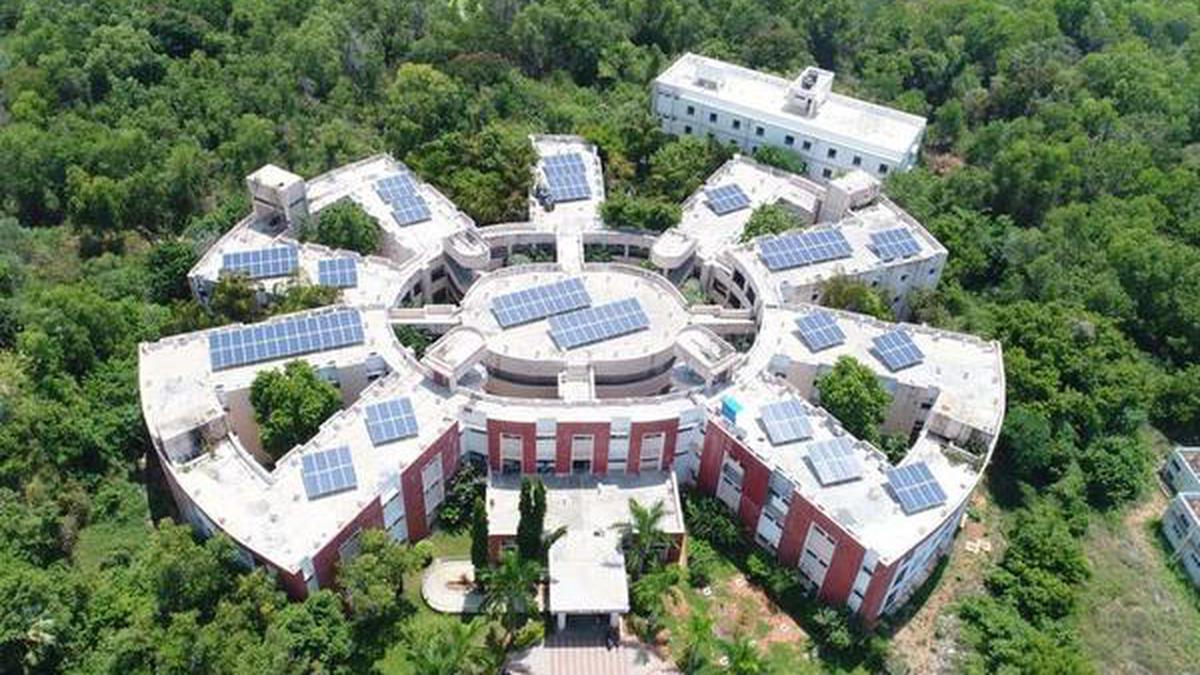
Introduction about Ph.D. in Physics at Pondicherry University
Pondicherry University, a premier Central University in India, stands as a beacon of academic excellence and research innovation. Embarking on a Ph.D. in Physics at this esteemed institution is not merely an academic pursuit; it is a transformative journey into the fundamental laws that govern our universe. The Department of Physics at Pondicherry University is renowned for its state-of-the-art laboratory facilities, a rich intellectual environment, and a curriculum designed to foster critical thinking and groundbreaking discovery. For professionals and aspiring scientists, this program offers a platform to bridge the gap between theoretical knowledge and practical application under the mentorship of internationally acclaimed faculty members. Whether your interest lies in the nano-scale world or the vast expanses of cosmology, Pondicherry University provides the resources and the inspiration to push the boundaries of human understanding.
Ph.D Admission 2026-2027 & Writing Support Services by Shiksha Research
Eligibility Criteria for Ph.D. in Physics at Pondicherry University
To maintain high standards of research, Pondicherry University follows a stringent eligibility framework for its doctoral programs. Candidates aspiring to join the Ph.D. in Physics must have a Master?s degree (M.Sc.) in Physics or a closely related discipline from a recognized university. A minimum of 55% marks in the aggregate (50% for SC/ST/OBC/PWD candidates) is typically required. Furthermore, professional experience in research or industry can be a significant advantage during the selection process. It is essential for candidates to demonstrate a strong foundation in core physics subjects such as classical mechanics, electromagnetism, and quantum theory. For those looking to refine their academic portfolio before applying, utilizing professional Editing and Proofreading Services can ensure that your previous research summaries and statements of purpose are polished to perfection.
Entrance Exam for Ph.D. in Physics at Pondicherry University
Admission to the Ph.D. program is primarily determined through a competitive entrance examination. Pondicherry University often utilizes the Common University Entrance Test (CUET) or conducts its own specific entrance test to evaluate the analytical and subject-specific capabilities of the applicants. The exam generally covers various segments of Physics, including mathematical methods, thermodynamics, and electronics. Candidates who have already qualified for National Level Tests such as UGC-NET (including JRF), CSIR-NET, GATE, or JEST are often exempted from the written entrance exam, though they must still participate in the personal interview phase. Success in these exams requires rigorous preparation and a deep conceptual clarity of the postgraduate syllabus.
Fee Structure for Ph.D. in Physics at Pondicherry University
The fee structure at Pondicherry University is designed to be affordable while supporting extensive research activities. As a Central University, the costs are significantly lower than private institutions, making it an attractive destination for dedicated researchers. Below is an approximate breakdown of the fee components for the Ph.D. program:
| Fee Component | Estimated Amount (INR) | Frequency |
|---|---|---|
| Admission Fee | ?1,000 - ?2,500 | One-time |
| Tuition Fee | ?5,000 - ?10,000 | Per Annum |
| Laboratory Fee | ?2,000 - ?4,000 | Per Annum |
| Library & Computer Fee | ?1,500 - ?3,000 | Per Annum |
| Caution Deposit (Refundable) | ?3,000 - ?5,000 | One-time |
| Thesis Valuation Fee | ?5,000 - ?8,000 | At the time of submission |
Note: The exact fees may vary based on the specific academic year and university notifications. Candidates are encouraged to check the official prospectus for the most current figures.
Admission Process for Ph.D. in Physics at Pondicherry University
The journey toward a doctorate begins with a meticulous admission process. After the announcement of the admission notification, candidates must register online. The selection is usually a two-tier process: the Entrance Test followed by a Personal Interview. During the interview, the candidate?s research aptitude, subject knowledge, and the feasibility of their proposed research topic are evaluated by a Departmental Research Committee. For many professionals, navigating this process can be daunting; seeking PhD Admission Assistance can provide the necessary guidance to navigate administrative hurdles and prepare effectively for the interview stage. The final merit list is prepared by combining the scores of the entrance exam and the interview performance.
Ph.D. Subjects and Specializations in Physics at Pondicherry University
Pondicherry University offers a diverse range of specializations within the Physics department, allowing researchers to delve into niche areas of modern science. Some of the prominent subjects and specializations include:
- Condensed Matter Physics: Focusing on the physical properties of solid and liquid matter.
- Nonlinear Dynamics and Chaos: Exploring complex systems and mathematical physics.
- Optics and Photonics: Studying the behavior and properties of light and its interaction with matter.
- Astrophysics and Cosmology: Investigating the origins and evolution of the universe.
- Materials Science: Designing and discovering new materials for technological applications.
- High Energy Physics: Understanding the fundamental particles and forces of nature.
Research Areas in Physics at Pondicherry University
The research landscape at Pondicherry University is vibrant and multi-disciplinary. The faculty is involved in cutting-edge research ranging from theoretical computational physics to experimental thin-film technology. Scholars have the opportunity to work on projects funded by national agencies like DST, ISRO, and DRDO. Choosing the right research area is critical for long-term career success. If you are struggling to define your specific area of inquiry, professional PhD Topic Selection and Proposal Assistance can help you align your personal interests with current scientific trends and university expertise.
Documents Required for Ph.D. in Physics at Pondicherry University
Candidates must ensure they have the following documents ready during the application and admission phase to avoid last-minute complications:
- SSLC/Matriculation Certificate for age proof.
- Higher Secondary (12th) Marksheet.
- Undergraduate Degree Certificate and Marksheets (B.Sc.).
- Postgraduate Degree Certificate and Marksheets (M.Sc.).
- Entrance Exam Scorecard (CUET/NET/GATE/JEST).
- Transfer Certificate (TC) and Conduct Certificate from the last studied institution.
- Community Certificate (if applicable for reservation).
- Passport-size photographs and valid Photo ID (Aadhar/Voter ID).
- Migration Certificate (for students coming from other universities).
- A well-drafted Research Proposal or Statement of Purpose (SOP).
Pondicherry University Ph.D. Syllabus for Physics
The Ph.D. program commences with a mandatory "Coursework" period, usually spanning the first one or two semesters. The syllabus for this coursework is designed to equip scholars with the tools necessary for advanced research. It typically includes:
- Research Methodology: Covering scientific writing, statistical analysis, and ethical practices in research.
- Advanced Physics Topics: Mastery over Quantum Mechanics, Advanced Electrodynamics, and Statistical Mechanics.
- Elective Subjects: Tailored to the student's research area, such as Nanoscience, Computational Physics, or Laser Spectroscopy.
- Review of Literature: A detailed study of existing research in the chosen field to identify gaps and define the research problem.
How To Apply for Ph.D. in Physics at Pondicherry University
Applying for a Ph.D. at Pondicherry University is a streamlined online process. Candidates need to visit the university?s official admission portal and create an account. Fill in all personal and academic details accurately. Upload the scanned copies of required documents and the research proposal. After paying the application fee online through the integrated payment gateway, submit the application. It is advisable to keep a printed copy of the application form and fee receipt for future reference. For those who have reached the pinnacle of their careers and seek recognition for their contributions without traditional coursework, investigating Honorary Doctorate Programs might be an alternative pathway to gaining a doctoral title.
Career Scope and Job Opportunities After Ph.D. in Physics from Pondicherry University
A Ph.D. in Physics from a prestigious institution like Pondicherry University opens doors to a multitude of high-level career paths. Academically, graduates are eligible for Assistant Professor positions in top-tier universities and IITs. In the research sector, one can join national laboratories like Bhabha Atomic Research Centre (BARC) or the Indian Space Research Organisation (ISRO) as a Scientist. Furthermore, the private sector?particularly in electronics, renewable energy, and data science?values the analytical and problem-solving skills of a Physics PhD. To enhance your profile for these global opportunities, obtaining Research Publication Support is vital for getting your work noticed in high-impact journals. Additionally, if your research leads to an invention, utilizing Patent Filing and Support Services can help secure your intellectual property and boost your commercial viability.
Scholarship for Ph.D. in Physics at Pondicherry University
Pondicherry University provides various financial aids to support its doctoral scholars. Full-time Ph.D. students who do not have any other fellowship are eligible for the University Fellowship. Candidates who have cleared national tests like JRF (Junior Research Fellowship) receive substantial monthly stipends from organizations like UGC or CSIR. Additionally, specialized scholarships for minority students, single girl children, and economically weaker sections are available as per Government of India norms. These scholarships ensure that financial constraints do not hinder the progress of talented researchers, allowing them to focus entirely on their scientific investigations.
FAQs Regarding Ph.D. in Physics at Pondicherry University
1. Can I apply for Ph.D. in Physics if I have an M.Tech degree?
Yes, candidates with an M.Tech in relevant engineering branches (like Nanotechnology, Applied Physics, or Electronics) are often eligible to apply for a Ph.D. in the Department of Physics, provided they meet the minimum mark requirements.
2. Is the Ph.D. program at Pondicherry University full-time or part-time?
Pondicherry University offers both Full-time and Part-time Ph.D. programs. However, part-time options are usually reserved for internal faculty members and professionals working in recognized research organizations or educational institutions.
3. How long does it take to complete a Ph.D. in Physics?
The standard duration for a Ph.D. program is three to five years. The minimum period is three years inclusive of coursework, and extensions are granted based on the progress of the research work and university regulations.
4. Does the university provide hostel facilities for Ph.D. scholars?
Yes, Pondicherry University has extensive hostel facilities for both male and female scholars. Ph.D. students are usually given preference in hostel allotment to facilitate late-night lab work and research activities.
5. What is the importance of the Research Proposal in the application?
The research proposal is a critical document that demonstrates your ability to identify a research gap and formulate a plan of study. It is a key component assessed during the interview to determine your compatibility with the department's research focus.




