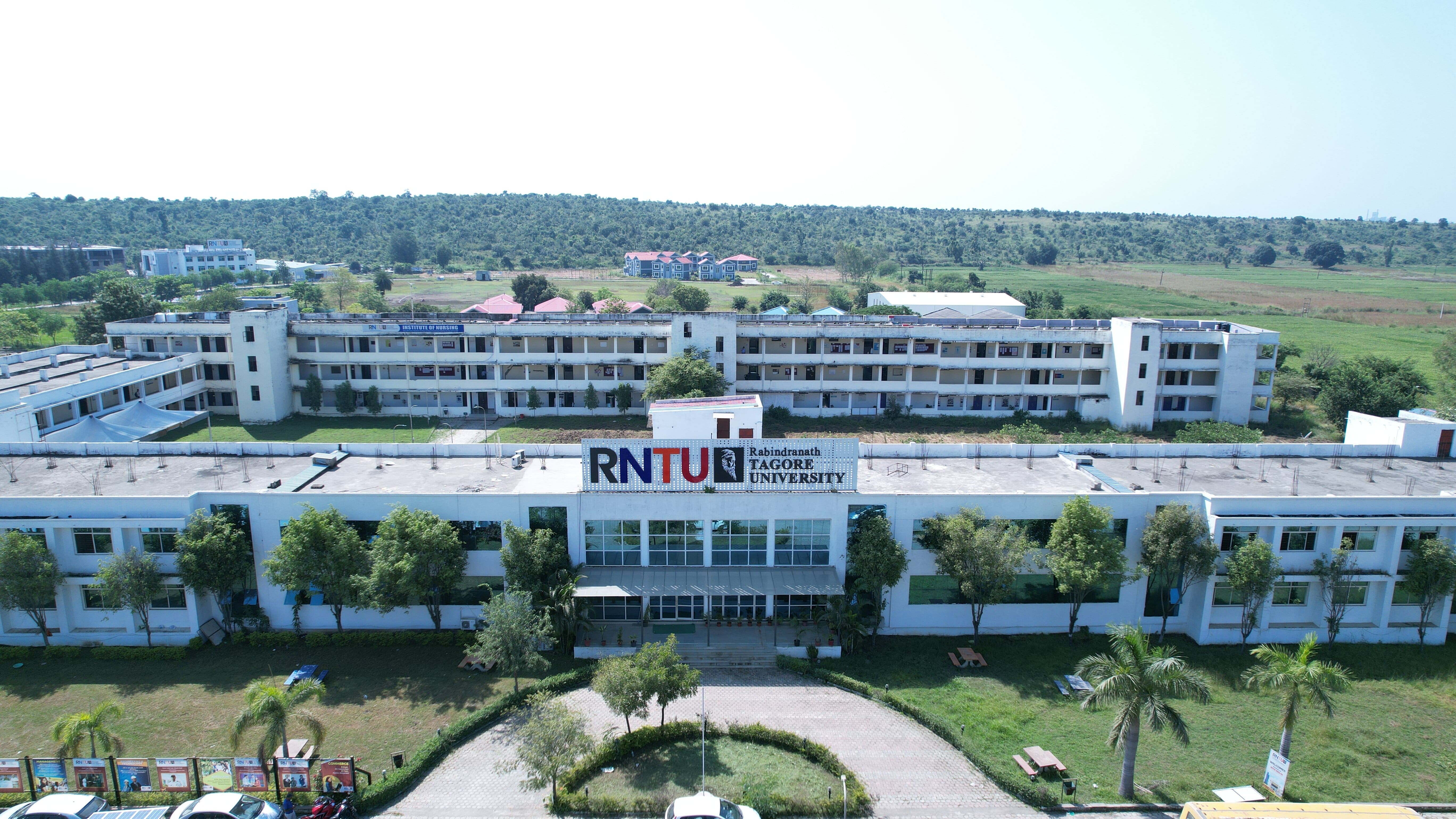
Ph.D. in Physics from Rabindranath Tagore University: Eligibility, Admission, Fee, Syllabus & Career
Introduction about Ph.D. in Physics at Rabindranath Tagore University
Rabindranath Tagore University (RTU) stands at the forefront of scientific research in India, offering a rigorous Ph.D. in Physics program designed for scholars who aspire to push the boundaries of knowledge. The university’s state‑of‑the‑art laboratories, interdisciplinary collaborations, and a vibrant academic community provide an ideal environment for groundbreaking research that can shape future technologies and scientific understanding.
Eligibility Criteria for Ph.D. in Physics at Rabindranath Tagore University
- Master’s degree (M.Sc.) in Physics or a closely related discipline with a minimum of 55% aggregate marks.
- Valid GATE score in Physics (or equivalent national level exam) is preferred but not mandatory.
- Candidates must possess a strong foundation in core physics subjects such as Quantum Mechanics, Statistical Mechanics, Electrodynamics, and Solid State Physics.
- Eligibility for foreign nationals: A recognized bachelor’s degree (minimum 3‑year program) followed by a master’s degree (minimum 2‑year program) in Physics from a reputable institution.
Entrance Exam for Ph.D. in Physics at Rabindranath Tagore University
RTU conducts its own entrance examination for candidates without a valid GATE score. The exam evaluates:
- Fundamental concepts in Classical Mechanics, Thermodynamics, and Optics.
- Analytical skills through problem‑solving questions.
- Research aptitude via a written statement of purpose (SOP) and a personal interview.
Prospective students are encouraged to review previous year papers available on the university’s official portal.
Fee Structure for Ph.D. in Physics at Rabindranath Tagore University
| Category | Annual Fee (INR) | Total for 3‑Year Programme |
|---|---|---|
| General Category (Indian Residents) | 45,000 | 135,000 |
| SC/ST/PWD Category | 30,000 | 90,000 |
| International Students | 80,000 | 240,000 |
| Additional Laboratory & Resource Charges | 10,000 (per annum) | 30,000 |
All fees are subject to annual revision by the university finance committee. Scholarships and waivers may be applicable for meritorious candidates.
Admission Process for Ph.D. in Physics at Rabindranath Tagore University
- Online Application: Fill the application form on the RTU admissions portal and upload required documents.
- Entrance Examination: Appear for the RTU Ph.D. entrance test or submit a valid GATE score.
- Interview & SOP Review: Shortlisted candidates are invited for a personal interview and their Statement of Purpose is evaluated.
- Selection & Offer Letter: Successful candidates receive an admission offer with fee details and enrollment instructions.
- Registration & Fee Payment: Complete registration, pay the first installment, and obtain your university ID.
Ph.D. Subjects and Specializations in Physics at Rabindranath Tagore University
RTU offers a wide range of research specializations, allowing candidates to tailor their doctoral work according to personal interests and global scientific trends:
- Quantum Information & Computation
- Condensed Matter Physics
- Nanophotonics and Plasmonics
- Astrophysics and Cosmology
- High Energy Particle Physics
- Biophysics and Medical Physics
- Computational Physics and Modelling
Research Areas in Physics at Rabindranath Tagore University
The university’s research clusters are backed by collaborations with national labs such as ISRO, DRDO, and the Indian Institute of Science. Current focus areas include:
- Development of quantum sensors for precision measurement.
- Exploration of topological insulators and emergent phenomena.
- Simulation of early-universe conditions using high‑performance computing.
- Design of low‑dose radiation therapy techniques.
- Integration of AI in data‑driven physics experiments.
Documents Required for Ph.D. in Physics at Rabindranath Tagore University
- Completed online application form.
- Scanned copies of academic transcripts (B.Sc. & M.Sc.).
- GATE scorecard (if applicable) or RTU entrance exam admit card.
- Curriculum Vitae (CV) highlighting research experience.
- Statement of Purpose (SOP) – 800–1000 words.
- Two academic reference letters.
- Proof of identity (Aadhaar / Passport).
- Passport‑size photograph (digital, 2 MB).
Rabindranath Tagore University Ph.D. Syllabus for Physics
The doctoral syllabus is structured to develop both depth and breadth of knowledge:
- Core Courses (Year 1): Advanced Quantum Mechanics, Statistical Physics, Electrodynamics, Research Methodology.
- Electives (Year 1‑2): Choose any two from Quantum Field Theory, Computational Materials Science, Non‑linear Dynamics, Laser Physics.
- Seminars & Workshops: Mandatory participation in at least three national/international conferences.
- Thesis Work (Year 2‑3): Original research under the guidance of a faculty supervisor, culminating in a publishable dissertation.
Students are encouraged to make use of the university’s Thesis and Dissertation Writing Services for professional guidance on structuring and presenting their research findings.
How To Apply for Ph.D. in Physics at Rabindranath Tagore University
Follow these step‑by‑step instructions to submit a successful application:
- Visit the official RTU admissions portal and create a new user account.
- Complete the personal information section and upload scanned documents.
- Select “Ph.D. – Physics” as your desired program and pay the nominal application fee (INR 1,200).
- Submit the application before the announced deadline (usually end of June for the fall intake).
- Monitor your email for the entrance exam schedule or direct GATE waiver notification.
For data‑intensive research projects, students often rely on the university’s Research Data Analysis Services to streamline statistical processing and visualization.
Career Scope and Job Opportunities After Ph.D. in Physics from Rabindranath Tagore University
A doctorate from RTU opens doors to diverse career paths:
- Academic Positions: Assistant Professor, Lecturer, or post‑doctoral researcher at premier institutions.
- Research & Development: Roles in national laboratories, aerospace, and defence research agencies.
- Industry: Product development in semiconductor firms, renewable energy companies, and tech startups focused on quantum computing.
- Entrepreneurship: Founding spin‑off companies leveraging patented physical technologies.
- Science Communication: Writing for scientific journals, policy advisory, and public outreach.
Many graduates also choose to publish their findings with the assistance of the university’s Research Paper Writing Services, enhancing their visibility in high‑impact journals.
Scholarship for Ph.D. in Physics at Rabindranath Tagore University
RTU offers merit‑based scholarships and financial assistance schemes:
- RTU Excellence Scholarship: Covers 100% tuition for top 10% of applicants based on GATE/Entrance scores.
- National Fellowship (CSIR/UGC): Eligible candidates can apply for central government fellowships.
- Industry‑Sponsored Grants: Collaborative projects with ISRO, DRDO, and private firms may provide stipends.
- Need‑Based Assistance: Waivers for economically disadvantaged candidates.
FAQs Regarding Ph.D. in Physics at Rabindranath Tagore University
- Q1: What is the minimum duration to complete a Ph.D. in Physics?
- A: The standard duration is three years, extendable up to five years based on research progress and supervisor approval.
- Q2: Can working professionals enroll in the Ph.D. program?
- A: Yes, RTU offers a part‑time mode for qualified professionals, with flexible scheduling for coursework and lab work.
- Q3: Is there a provision for publishing my thesis as a book?
- A: The university encourages publication and provides support through the Questionnaire Design and Development team to design surveys for empirical studies, a common requirement for book




