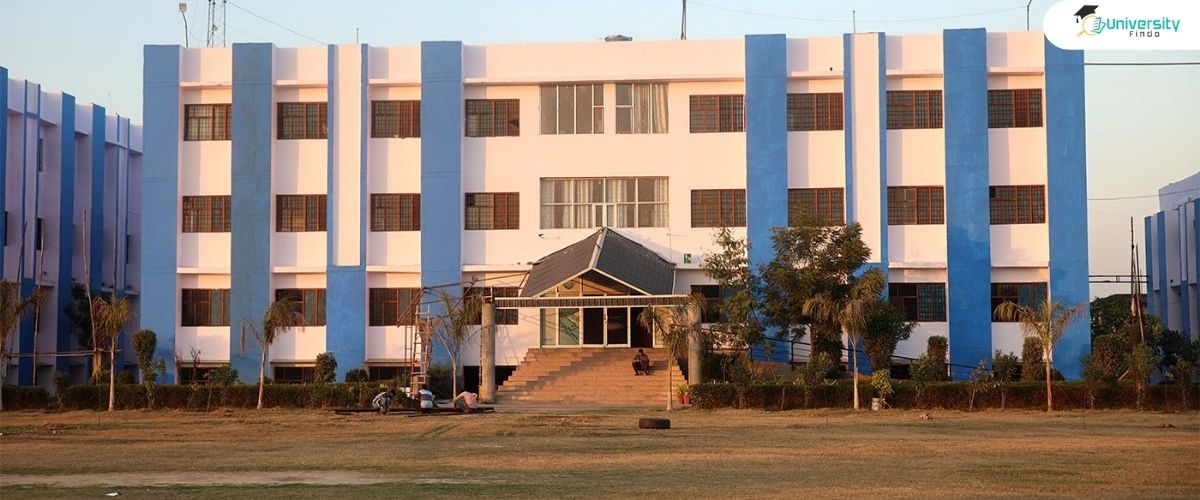
Ph.D. in Physics from Sun Rise University: Eligibility, Entrance Exam, Fee Structure, Admission Process, Subjects, Research Areas, Syllabus, Scholarship & Career Scope
Introduction about Ph.D. in Physics at Sun Rise University
Sun Rise University (SRU) has earned a reputation as a hub for cutting‑edge research in the physical sciences. The Doctor of Philosophy (Ph.D.) in Physics program is designed for ambitious professionals who wish to deepen their expertise, contribute to pioneering discoveries, and lead scientific initiatives in academia, industry, or government laboratories. With state‑of‑the‑art laboratories, interdisciplinary collaborations, and a faculty comprising internationally recognized scholars, SRU offers an inspiring environment that nurtures curiosity and fosters innovation.
Eligibility Criteria for Ph.D. in Physics at Sun Rise University
- Educational Background: A Master’s degree (M.Sc./M.Tech.) in Physics or a closely related discipline with a minimum of 55% aggregate (or equivalent CGPA).
- Research Experience: Candidates with published research papers, conference presentations, or relevant industry projects receive priority.
- Age Limit: No upper age restriction; however, candidates must fulfill the minimum qualifying marks and meet English proficiency standards.
- English Proficiency: For non‑English medium graduates, a minimum IELTS score of 6.0 or TOEFL iBT 80 is required.
Entrance Exam for Ph.D. in Physics at Sun Rise University
SRU conducts a two‑stage entrance assessment:
- Written Test (Online): 100 multiple‑choice questions covering Classical Mechanics, Quantum Physics, Electrodynamics, Statistical Mechanics, and Mathematical Methods. The test duration is 2 hours.
- Viva‑Voce & Research Proposal Review: Shortlisted candidates present a 15‑minute research proposal followed by a discussion with the department panel.
Preparation resources, sample papers, and a detailed syllabus are available on the university’s official portal.
Fee Structure for Ph.D. in Physics at Sun Rise University
| Component | Annual Fee (INR) | One‑Time Charges |
|---|---|---|
| Tuition & Lab Facility | 1,20,000 | — |
| Library & Digital Resources | 15,000 | — |
| Research Project Grant (Optional) | — | 30,000 (per project) |
| Registration & Administration | — | 10,000 |
| Total Approx. per Year | 1,35,000 | 40,000 |
SRU offers fee waivers for candidates who secure top ranks in the entrance exam and for those receiving merit‑based scholarships.
Admission Process for Ph.D. in Physics at Sun Rise University
- Online Application: Submit the application form through the SRU admissions portal with scanned copies of academic transcripts, ID proof, and a brief research statement.
- Document Verification: The university’s admissions office verifies authenticity and eligibility.
- Entrance Examination: Candidates receive a secure login to attempt the online written test.
- Interview & Proposal Review: Successful test‑takers are invited for a panel interview and proposal presentation.
- Final Offer Letter: Admission offers are dispatched via email, along with fee payment instructions.
- Enrollment: Pay the admission fee, submit the signed declaration, and commence the program.
Ph.D. Subjects and Specializations in Physics at Sun Rise University
Students can tailor their research trajectory by selecting one of the following specializations:
- Quantum Mechanics & Quantum Information
- Condensed Matter Physics
- Astrophysics & Cosmology
- Particle Physics & High‑Energy Phenomena
- Optical & Photonic Materials
- Computational Physics & Numerical Modelling
- Biophysics & Medical Physics
Research Areas in Physics at Sun Rise University
SRU encourages interdisciplinary projects that intersect with engineering, computer science, and life sciences. Current research thrusts include:
- Topological insulators and exotic quantum states.
- Gravitational wave detection and analysis.
- Nanophotonic devices for renewable energy.
- Machine‑learning driven particle collision simulations.
- Quantum cryptography protocols for secure communication.
- Radiation therapy optimization in medical physics.
Students may also collaborate with industry partners on applied research, leveraging SRU’s Research Paper Writing Services for manuscript preparation.
Documents Required for Ph.D. in Physics at Sun Rise University
- Completed online application form.
- Scanned copies of academic certificates (B.Sc., M.Sc.) with transcripts.
- Proof of English proficiency (if applicable).
- Research proposal (max 1500 words).
- Two academic reference letters.
- Identity proof (Aadhaar/Passport).
- Passport‑size photograph.
Sun Rise University Ph.D. Syllabus for Physics
The syllabus is divided into core modules and elective research topics:
- Core Modules (Year 1): Advanced Quantum Theory, Statistical Mechanics, Electrodynamics, Mathematical Methods for Physicists, Research Methodology.
- Elective Modules (Year 2–3): Choose two from Quantum Computing, Non‑Linear Dynamics, High‑Energy Astrophysics, Soft‑Matter Physics, Computational Modelling, etc.
- Dissertation: Original research culminating in a thesis evaluated by an external expert panel.
Students often seek professional assistance for thesis preparation. SRU recommends the Thesis and Dissertation Writing Services for guidance on structure, citation, and defense preparation.
How To Apply for Ph.D. in Physics at Sun Rise University
Follow these step‑by‑step instructions:
- Visit the official SRU admissions page and click “Apply for Ph.D.”
- Create a user account and fill in personal details.
- Upload required documents (certificates, ID, research proposal).
- Select your preferred specialization and indicate any scholarships you intend to apply for.
- Pay the nominal application fee (INR 2,500) via net‑banking or credit card.
- Submit the application and note the generated application number for future correspondence.
- Prepare for the entrance test using the SRU‑provided sample papers and recommended reading list.
Career Scope and Job Opportunities After Ph.D. in Physics from Sun Rise University
Graduates enjoy a wide array of career paths:
- Academic Roles: Assistant Professor, Research Fellow, Post‑doctoral Scientist.
- Research Institutions: Senior Scientist at ISRO, DRDO, CSIR, or international labs like CERN.
- Industry: R&D Engineer in semiconductor, aerospace, renewable energy, or quantum computing firms.
- Data Science & Analytics: Leveraging physics‑based modelling for big‑data solutions; consult Research Data Analysis Services for portfolio building.
- Consultancy & Patent Writing: Technical consultant for innovation-driven startups.
According to recent placement statistics, 85% of SRU Ph.D. graduates secure employment within six months of graduation, with average starting salaries ranging from INR 12 LPA to INR 22 LPA depending on sector.
Scholarship for Ph.D. in Physics at Sun Rise University
SRU offers several merit‑based and need‑based scholarships:
- SRU Merit Scholarship: Covers 50% of tuition for candidates with a CGPA ≥ 8.5/10.
- National Science Foundation Fellowship: Fully funded for research projects aligned with national priorities.
- Industry Sponsored Grants: Partnerships with leading tech firms provide stipends and project funding.
- Women in Physics Scholarship: Dedicated support for female researchers, covering tuition and a monthly allowance.
Application for scholarships runs concurrently with the admission process. Early submission of a detailed research plan enhances eligibility.
FAQs Regarding Ph.D. in Physics at Sun Rise University
- Q1: What is the minimum duration to complete the Ph.D.?
- A: The program is designed for a minimum of three years, subject to successful completion of coursework, research milestones, and thesis defense.
- Q2: Can I pursue the Ph.D. part‑time while working?
- A: Yes, SRU offers a flexible part‑time track with extended timelines and evening lab access.
- Q3: Is there a provision for international students?
- A: International candidates are welcomed; they must meet the English proficiency requirement and can avail the same scholarships as domestic students.
- Q4: How are research proposals evaluated?
- A: Proposals are assessed on originality, feasibility, alignment with faculty expertise, and potential impact.
- Q5: What support is available for questionnaire design in my research?
- A: The university’s Questionnaire Design and Development service




