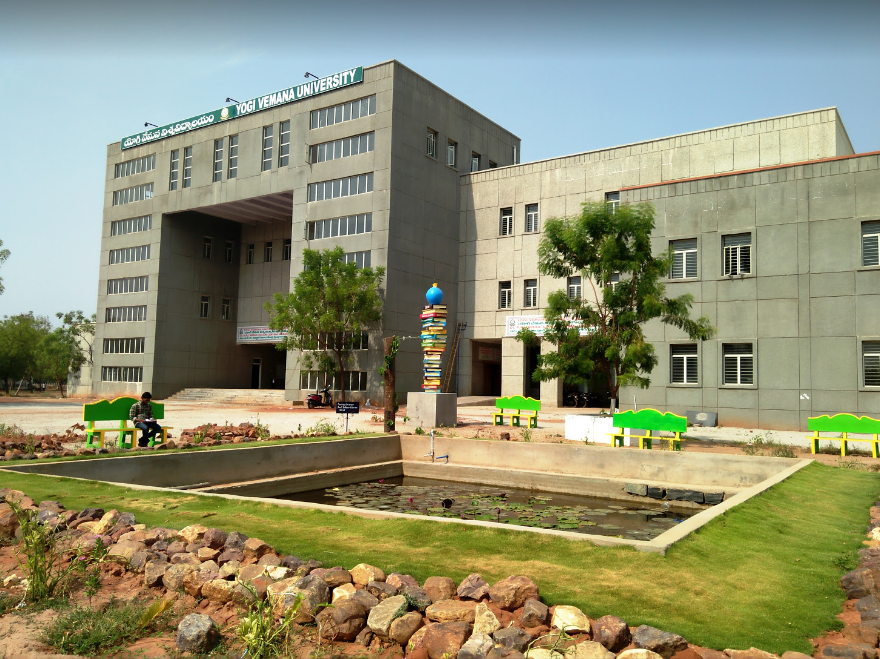
Introduction about Ph.D. in Physics at Yogi Vemana University
The pursuit of a Doctor of Philosophy (Ph.D.) in Physics at Yogi Vemana University (YVU), Kadapa, represents a pinnacle of academic achievement and a gateway to profound scientific discovery. Nestled in the heart of Andhra Pradesh, Yogi Vemana University has established itself as a premier center for higher education, fostering a culture of rigorous inquiry and intellectual growth. For professionals seeking to push the boundaries of human knowledge, this program offers an unparalleled environment to master complex physical phenomena through advanced research and analytical experimentation. The department is equipped with state-of-the-art laboratories and led by a distinguished faculty whose contributions to the global physics community are widely recognized. Engaging in doctoral research here is not merely about obtaining a degree; it is about becoming a visionary scientist capable of addressing the technological and theoretical challenges of the 21st century.
Ph.D Admission 2026-2027 & Writing Support Services by Shiksha Research
In the modern era of scientific advancement, the complexity of research often requires specialized support. Many scholars at this level find that collaborating with professional Research Paper Writing Services can significantly enhance the impact of their publications, ensuring that their findings are communicated with clarity and precision to the international scientific community.
Eligibility Criteria for Ph.D. in Physics at Yogi Vemana University
To embark on the transformative journey of a Ph.D. at Yogi Vemana University, candidates must meet specific academic benchmarks designed to ensure a high level of preparedness for graduate-level research. The eligibility framework is structured as follows:
- Academic Qualification: Candidates must possess a Master?s degree (M.Sc.) in Physics or a closely related discipline from a recognized university.
- Minimum Percentage: A minimum of 55% aggregate marks (or an equivalent CGPA) is required for general category candidates.
- Relaxation: A relaxation of 5% (bringing the requirement to 50%) is typically provided to researchers belonging to SC/ST/OBC (non-creamy layer) and differently-abled categories, in accordance with UGC guidelines.
- Professional Experience: While not mandatory, candidates with prior research experience or those currently working in scientific laboratories are encouraged to apply.
Entrance Exam for Ph.D. in Physics at Yogi Vemana University
Admission to the doctoral program is highly competitive and primarily determined through the Andhra Pradesh Research Common Entrance Test (APRCET). This state-level examination evaluates the candidate's proficiency in core physics concepts and j?dgement in research methodology. The entrance exam usually consists of two parts:
- Part A: Focused on Research Methodology and Teaching Aptitude.
- Part B: Focused on Subject-specific knowledge (Physics), covering Classical Mechanics, Quantum Mechanics, Electromagnetic Theory, and Thermodynamics.
Candidates who have qualified for national-level fellowships such as CSIR-UGC NET, GATE, or INSPIRE are often exempted from the written test, though they must still participate in the interview process.
Fee Structure for Ph.D. in Physics at Yogi Vemana University
Yogi Vemana University maintains a transparent and affordable fee structure aimed at promoting inclusive education without compromising on research quality. Below is an indicative breakdown of the fee components:
| Fee Component | Full-Time Scholars (Approx.) | Part-Time Scholars (Approx.) |
|---|---|---|
| Admission/Registration Fee | ?5,000 | ?7,000 |
| Annual Tuition Fee | ?10,000 - ?15,000 | ?15,000 - ?20,000 |
| Library and Lab Fees | ?3,000 | ?5,000 |
| Development Fee | ?2,000 | ?3,000 |
| Thesis Submission Fee | ?10,000 | ?10,000 |
Admission Process for Ph.D. in Physics at Yogi Vemana University
The admission process is a meticulous endeavor designed to identify individuals with a genuine passion for discovery. The journey begins with the APRCET notification, followed by an online application. After the entrance exam, shortlisted candidates are invited for a comprehensive viva-voce/interview. During this interview, the research committee evaluates the candidate's research proposal, domain knowledge, and potential for original contribution. Successfully navigating this stage requires a well-structured research plan. Scholars frequently utilize professional Thesis and Dissertation Writing Services to refine their initial proposals and ensure their research questions are robust and feasible.
Ph.D. Subjects and Specializations in Physics at Yogi Vemana University
The Physics department at YVU offers a diverse range of specializations, allowing researchers to align their work with global scientific trends. Key areas of focus include:
- Condensed Matter Physics
- Materials Science and Nanotechnology
- Spectroscopy and Molecular Physics
- Renewable Energy and Solar Cells
- Nuclear and Particle Physics
- Atmospheric Physics and Climate Change
Research Areas in Physics at Yogi Vemana University
Yogi Vemana University is at the forefront of several groundbreaking research domains. Scholars are encouraged to engage in multi-disciplinary research projects. Current high-priority research areas include the development of advanced functional materials, the investigation of photonic crystals, and theoretical studies in quantum computing. To derive meaningful conclusions from empirical setups, the university emphasizes rigorous data management. Many researchers seek assistance from Research Data Analysis Services to process complex datasets obtained from laboratories, ensuring the statistical validity of their experimental results.
Documents Required for Ph.D. in Physics at Yogi Vemana University
Ensuring you have the correct documentation is vital for a smooth admission experience. The following documents are typically required:
- SSC/10th Marksheet (Date of Birth Proof)
- Intermediate/12th Certificate
- Undergraduate (B.Sc.) Degree and Consolidated Marksheet
- Postgraduate (M.Sc.) Degree and Marksheet
- Transfer Certificate (TC) and Migration Certificate
- Caste Certificate (if applicable)
- APRCET Rank Card and Hall Ticket
- Detailed Research Proposal/Synopsis
- No Objection Certificate (NOC) for part-time candidates
Yogi Vemana University Ph.D. Syllabus for Physics
The Ph.D. coursework at YVU is structured to provide a solid foundation for independent research. It generally consists of two or three mandatory papers followed by a comprehensive review of literature. The syllabus includes:
- Paper I: Research Methodology: Ethics, quantitative methods, technical writing, and computational techniques. During this phase, mastering Questionnaire Design and Development is often crucial for those conducting survey-based or experimental physics research focusing on educational or industrial impacts.
- Paper II: Advanced Physics: In-depth study of quantum field theory, solid-state electronics, and advanced experimental techniques like XRD, SEM, and FTIR.
- Paper III: Domain Specialization: Topic-specific literature review and preliminary experimental design.
How To Apply for Ph.D. in Physics at Yogi Vemana University
Applying for a Ph.D. at YVU involves several critical steps:
- Notification: Stay updated with official notifications on the Yogi Vemana University website or the APRCET official portal.
- Registration: Complete the online registration process by providing personal and academic details.
- Application Fee: Pay the prescribed application fee through the online gateway.
- Exam Preparation: Download the syllabus and prepare for the APRCET.
- Interview: Upon qualifying the entrance exam, submit your research synopsis and appear for the interview at the Kadapa campus.
Career Scope and Job Opportunities After Ph.D. in Physics from Yogi Vemana University
Earning a Ph.D. in Physics from such a reputable institution opens doors to high-level career paths globally. The analytical and problem-solving skills honed during the doctorate make graduates highly desirable in various sectors:
- Academia: Assistant Professorships in prestigious universities and colleges.
- Research Institutions: Scientist roles in organizations like ISRO, DRDO, TIFR, and BARC.
- Industrial R&D: Leadership positions in semiconductor, material science, and renewable energy industries.
- Data Science: Physics doctors are often recruited as lead data scientists due to their mastery of mathematical modeling.
- Policy and Consultancy: Scientific advisors to governmental and non-governmental agencies.
Scholarship for Ph.D. in Physics at Yogi Vemana University
Financial assistance is available to support dedicated researchers. The university facilitates several scholarship programs, including:
- UGC-JRF/SRF: For candidates who have qualified the NET-JRF.
- CSIR Fellowship: Specifically for science students with high national rankings.
- University Research Fellowship (URF): Merit-based stipends provided by the university itself for top-performing scholars.
- State Government Fellowships: Various schemes aimed at supporting researchers from marginalized backgrounds.
FAQs Regarding Ph.D. in Physics at Yogi Vemana University
1. Can I pursue Ph.D. in Physics at YVU in part-time mode?
Yes, Yogi Vemana University offers part-time Ph.D. programs for working professionals, provided they submit an NOC from their current employer.
2. What is the duration of the Ph.D. program?
The minimum duration is typically 3 years for full-time and 4 years for part-time, with a maximum limit of 6 years.
3. How often are Ph.D. admissions conducted?
Admissions are usually conducted once a year, synchronized with the APRCET schedule.
4. Is there a hostel facility for research scholars?
Yes, the university provides dedicated hostel accommodation with internet and laboratory access for full-time researchers.
5. Do I need to publish papers during my Ph.D.?
Yes, as per UGC norms, scholars must publish at least two research papers in peer-reviewed/UGC-care listed journals before submitting their final thesis.




