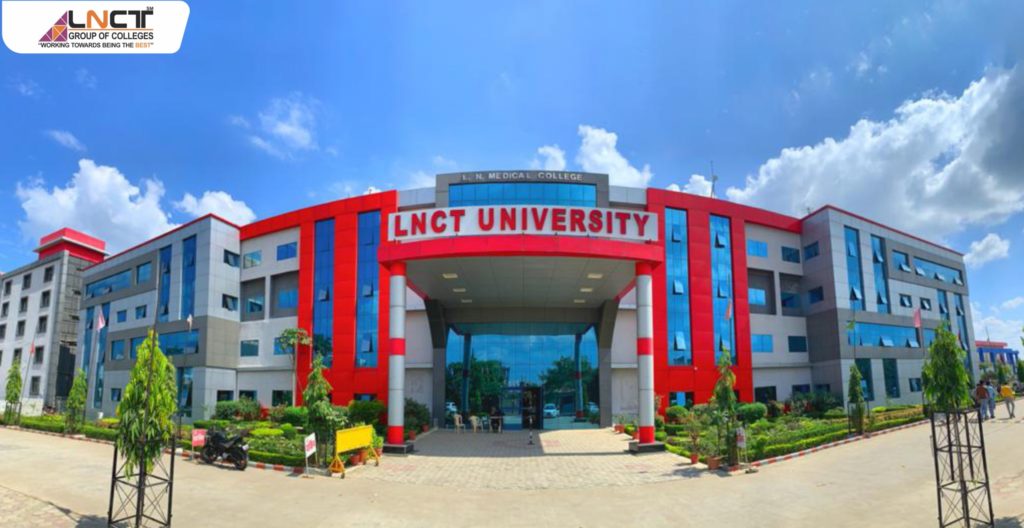
Ph.D. in Political Science from LNCT University: Eligibility, Entrance Exam, Fee Structure, Admission Process, Subjects, Research Areas, Syllabus, Scholarship & Career Scope
Introduction about Ph.D. in Political Science at LNCT University
The Doctor of Philosophy (Ph.D.) in Political Science offered by LNCT University is designed for professionals and scholars who aspire to lead groundbreaking research, influence public policy, and contribute to academic excellence. This program blends rigorous theoretical foundations with contemporary methodological tools, enabling candidates to explore complex political phenomena ranging from governance and international relations to political theory and public administration. With a vibrant research ecosystem, seasoned faculty, and state?of?the?art resources, LNCT University stands out as a premier destination for advanced political science scholarship.
Eligibility Criteria for Ph.D. in Political Science at LNCT University
Prospective candidates must satisfy the following eligibility requirements:
- A Master?s degree (or equivalent) in Political Science, International Relations, Public Administration, Sociology, History, Economics, or any related social science discipline with a minimum of 55% marks (or 5.5 CGPA on a 10?point scale).
- For candidates holding a Bachelor?s degree directly (B.A./B.Sc.) with a minimum of 60% marks, the university may consider entry based on an entrance test and interview performance.
- Valid GATE/UGC NET/CSIR NET score (optional but beneficial) can provide relaxation in the entrance evaluation.
- Eligibility for age relaxation as per the University Grants Commission (UGC) norms for reserved categories.
Applicants are encouraged to submit a well?crafted research proposal to showcase their alignment with LNCT?s research priorities.
Entrance Exam for Ph.D. in Political Science at LNCT University
The entrance examination is a two?stage process:
- Written Test ? A 2?hour objective and descriptive paper that evaluates knowledge of political theory, research methodology, quantitative & qualitative analysis, and contemporary political issues.
- Interview & Presentation ? Shortlisted candidates present a detailed research proposal, followed by a viva?voce with the department panel.
Preparation resources include past year question papers, recommended reading lists, and guidance from faculty mentors. Successful performance in the entrance exam can also waive part of the coursework requirement.
Fee Structure for Ph.D. in Political Science at LNCT University
| Component | Annual Fee (INR) | Notes |
|---|---|---|
| Admission & Registration | 15,000 | One?time payment at enrolment |
| Tuition (Coursework & Seminar) | 30,000 | Payable at the beginning of each academic year |
| Research Guidance & Laboratory | 10,000 | Includes access to data archives and software licences |
| Library & Digital Resources | 5,000 | Annual subscription to journals and e?books |
| Miscellaneous (Printing, Fieldwork, etc.) | 7,500 | Estimated per year |
| Total Approximate Annual Cost | 67,500 |
The university also offers fee waivers and scholarships for meritorious candidates, which can significantly reduce the financial burden.
Admission Process for Ph.D. in Political Science at LNCT University
The admission workflow is streamlined into clear phases:
- Online Application ? Submit the application through the university portal along with academic transcripts, CV, and a draft research proposal.
- Document Verification ? Upload scanned copies of certificates, identity proof, and any qualifying exam scores (GATE/UGC NET).
- Entrance Examination ? Appear for the written test scheduled by the department.
- Interview & Proposal Evaluation ? Attend the interview and presentation session.
- Final Selection & Offer Letter ? Successful candidates receive an official admission letter and can proceed with fee payment.
For personalized guidance throughout the process, consider professional assistance such as PhD Admission Assistance, which helps you navigate each step effectively.
Ph.D. Subjects and Specializations in Political Science at LNCT University
LNCT University offers a flexible curriculum that allows doctoral candidates to specialize in one or more of the following domains:
- Comparative Politics
- International Relations and Global Governance
- Political Theory & Philosophy
- Public Policy and Administration
- Political Economy
- Security Studies and Conflict Resolution
- Environmental Politics
Interdisciplinary collaborations with departments of Economics, Sociology, Law, and Data Science are encouraged to broaden research perspectives.
Research Areas in Political Science at LNCT University
Research at LNCT University aligns with national and global priorities. Current focus areas include:
- Democratic Governance and Institutional Reforms
- Impact of Digital Media on Political Mobilization
- India?s Foreign Policy in a Multipolar World
- Election Systems and Voter Behaviour
- Public Health Policy and Pandemic Governance
- Climate Change Politics and Sustainable Development
- Human Rights, Gender Politics, and Social Justice
Students receive mentorship from faculty members who have published in top?tier journals such as International Studies Quarterly and Journal of Politics.
Documents Required for Ph.D. in Political Science at LNCT University
| Document | Format | Remarks |
|---|---|---|
| Application Form (online) | PDF/Online | Completed with accurate personal details |
| Academic Transcripts (Master?s & Bachelor?s) | Scanned PDF | Attested copies required |
| Curriculum Vitae | PDF (max 2 pages) | Highlight research experience |
| Research Proposal (2,000?2,500 words) | Include objectives, methodology, and bibliography | |
| GATE/UGC NET Scorecard (if any) | Optional but advantageous | |
| Identity Proof (Aadhaar / Passport) | Scanned PDF | Valid government?issued ID |
| Passport?Size Photograph | JPEG/PNG (300?dpi) | Recent, with white background |
LNCT University Ph.D. Syllabus for Political Science
The syllabus is organized into two major phases: Coursework and Research.
Phase I ? Core Coursework (12?15 months)
- Advanced Research Methods in Political Science
- Theoretical Foundations of Politics
- Quantitative Techniques and Data Analysis
- Qualitative Approaches: Interviews, Discourse Analysis
- Seminars on Emerging Issues (e.g., Cyber?Politics, Climate Governance)
Phase II ? Thesis Research (24?36 months)
- Proposal Development and Approval
- Fieldwork / Data Collection
- Data Analysis & Interpretation
- Writing and Submission of Thesis
- Viva?Voce Examination
Students may also enroll in elective modules from related disciplines to enhance interdisciplinary competence.
How To Apply for Ph.D. in Political Science at LNCT University
Follow these step?by?step instructions to submit a competitive application:
- Visit the official LNCT University admissions portal and register a new account.
- Complete the online application form, ensuring that all personal and academic details match your certificates.
- Upload the required documents (refer to the Documents Required table).
- Pay the non?refundable application fee of INR?2,000 via net banking or credit card.
- Schedule the entrance examination date and download the admit card.
- Prepare a research proposal and optionally seek professional help such as PhD Topic Selection and Proposal Assistance to refine your ideas.
- After clearing the written test, attend the interview and presentation as per the notification.
- Upon receiving the admission offer, confirm your seat by paying the first?year tuition fee.
Timely submission and a well?structured proposal greatly improve your chances of admission.
Career Scope and Job Opportunities After Ph.D. in Political Science from LNCT University
A doctorate in Political Science opens doors to a diverse range of high?impact careers:
- Academic Positions: Assistant Professor, Associate Professor, Department Head at universities and research institutes.
- Policy Analyst / Research Fellow: Think?tanks, governmental advisory bodies, and international organisations (e.g., UN, World Bank).
- Public Administration: Senior roles in civil services, ministries, and public sector enterprises.
- International Relations




