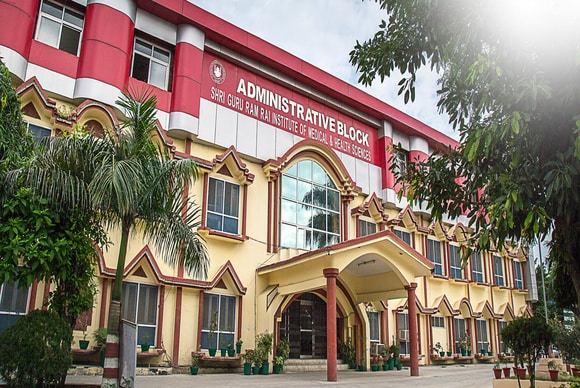
Ph.D. in Radiology & Imaging Technology from Shri Guru Ram Rai University
Introduction about Ph.D. in Radiology & Imaging Technology at Shri Guru Ram Rai University
The Ph.D. in Radiology & Imaging Technology offered by Shri Guru Ram Rai University is designed for seasoned professionals aiming to pioneer advanced research in diagnostic imaging, radiation safety, and therapeutic technologies. This doctoral programme blends rigorous coursework with cutting‑edge research, fostering expertise that drives innovation in hospitals, research institutes, and academia.
Eligibility Criteria for Ph.D. in Radiology & Imaging Technology at Shri Guru Ram Rai University
Candidates must possess a Master’s degree (M.Sc., M.Tech., M.Pharma, or equivalent) with a minimum of 55% marks (or 5.5 CGPA) in a relevant discipline such as Radiology, Medical Imaging, Biomedical Engineering, or Physics. Graduates with a research background and published papers are given preference. Minimum age limit: 21 years (no upper age limit).
Entrance Exam for Ph.D. in Radiology & Imaging Technology at Shri Guru Ram Rai University
The university conducts the SGRU Ph.D. Entrance Test (PET) twice a year. The test evaluates:
- Fundamental concepts of radiology and imaging physics
- Analytical reasoning and quantitative aptitude
- Research methodology and statistics
Candidates can also qualify through national exams such as UGC-NET, CSIR-UGC NET, or GATE in relevant subjects.
Fee Structure for Ph.D. in Radiology & Imaging Technology at Shri Guru Ram Rai University
| Component | Amount (INR) |
|---|---|
| Application Fee (online) | 1,500 |
| Admission Fee (once) | 12,000 |
| Annual Tuition & Lab Charges | 45,000 |
| Library & Resource Centre Fee | 3,000 |
| Miscellaneous (e‑certificates, ID card) | 2,500 |
| Total Approx. per Year | 64,000 |
The total estimated cost for the typical three‑year programme is around ₹1,92,000, excluding scholarships and research funding.
Admission Process for Ph.D. in Radiology & Imaging Technology at Shri Guru Ram Rai University
- Complete the online application form on the university portal.
- Upload scanned copies of academic transcripts, scorecards, and research proposal.
- Pay the non‑refundable application fee.
- Appear for the entrance examination or submit qualifying national exam scores.
- Attend the personal interview and presentation of your research proposal.
- Receive the admission offer letter and submit the required documents for enrollment.
Ph.D. Subjects and Specializations in Radiology & Imaging Technology at Shri Guru Ram Rai University
The doctoral curriculum offers specializations in:
- Advanced Diagnostic Imaging (MRI, CT, PET)
- Radiation Oncology & Therapeutic Physics
- Medical Image Processing & Artificial Intelligence
- Radiation Safety and Dosimetry
- Biomedical Instrumentation and Device Development
Research Areas in Radiology & Imaging Technology at Shri Guru Ram Rai University
Faculty‑guided research focuses on:
- Quantitative imaging biomarkers for early disease detection.
- AI‑driven image reconstruction and segmentation.
- Low‑dose radiation techniques and patient safety.
- Hybrid imaging modalities (e.g., PET‑MRI).
- Nanotechnology‑based contrast agents.
Documents Required for Ph.D. in Radiology & Imaging Technology at Shri Guru Ram Rai University
| Document | Format |
|---|---|
| Completed application form | |
| Academic transcripts & degree certificates | Scanned PDF (original & attested) |
| Research proposal (max 1500 words) | |
| Entrance exam scorecard / GATE/NET certificate | |
| Proof of identity (Aadhaar, Passport) | Scanned PDF |
| Two recommendation letters | PDF (signed) |
Shri Guru Ram Rai University Ph.D. Syllabus for Radiology & Imaging Technology
The syllabus is divided into two phases:
Phase I – Core Coursework (12 months)
- Fundamentals of Radiology and Imaging Physics
- Advanced Modalities & Clinical Applications
- Research Methodology and Biostatistics
- Ethics in Medical Imaging
Phase II – Research & Thesis (24 months)
- Literature Review & Problem Definition
- Experimental Design & Data Acquisition
- Data Analysis, AI Modeling, and Validation
- Thesis Writing, Publication & Defense
How To Apply for Ph.D. in Radiology & Imaging Technology at Shri Guru Ram Rai University
Visit the official university website, navigate to the Admissions → Ph.D. Programs section, and follow the step‑by‑step guide. Ensure you have a stable internet connection for uploading large PDF files and keep your payment gateway details handy for the application fee.
Career Scope and Job Opportunities After Ph.D. in Radiology & Imaging Technology from Shri Guru Ram Rai University
Graduates can pursue rewarding roles such as:
- Chief Imaging Scientist in tertiary hospitals.
- Research Fellow / Principal Investigator in national labs (e.g., ICMR, CSIR).
- Faculty positions (Assistant/Associate Professor) in medical colleges.
- Product Development Engineer for imaging equipment manufacturers.
- Consultant for regulatory bodies and health ministries.
The growing demand for AI‑enabled diagnostics and low‑dose imaging technologies ensures robust job prospects and attractive salaries.
Scholarship for Ph.D. in Radiology & Imaging Technology at Shri Guru Ram Rai University
The university offers merit‑based scholarships covering up to 50% of tuition fees for candidates with a CGPA of 8.0/10 or higher. Additionally, external funding can be secured through:
- UGC‑CSIR JRF & SRF fellowships.
- ICAR/ICMR research grants.
- Industry‑sponsored projects in collaboration with leading imaging firms.
FAQs Regarding Ph.D. in Radiology & Imaging Technology at Shri Guru Ram Rai University
- What is the minimum duration of the Ph.D. programme?
- The standard duration is three years, extendable up to five years based on research progress.
- Can I pursue a part‑time Ph.D. while working?
- Yes, the university provides flexible scheduling for working professionals, subject to supervisor approval.
- Is there a provision for publishing my thesis in indexed journals?
- Absolutely. The curriculum mandates at least two articles in SCI/SCOPUS indexed journals before thesis submission.
- Do I need to have prior clinical experience?
- Clinical experience is advantageous but not mandatory if you possess strong research credentials.
- How are the research supervisors assigned?
- Candidates submit a research proposal; the department matches them with faculty experts based on interest and availability.




