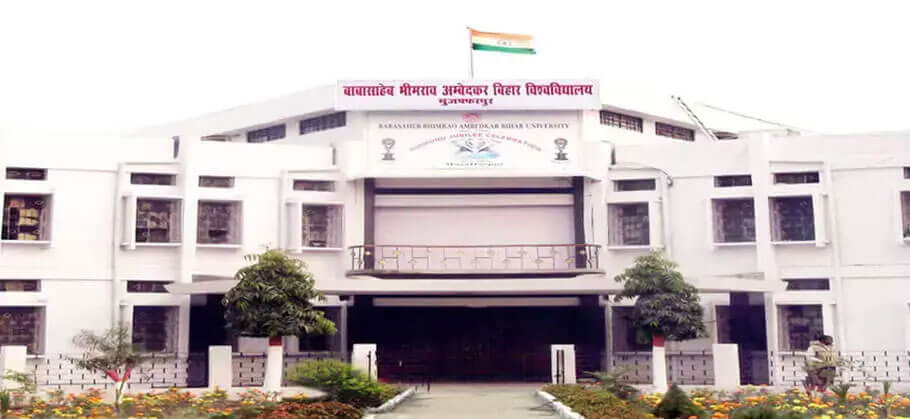
Introduction about Ph.D. in Sanskrit at Babasaheb Bhimrao Ambedkar Bihar University
Pursuing a Ph.D. in Sanskrit at Babasaheb Bhimrao Ambedkar Bihar University (BRABU) offers scholars an unparalleled opportunity to delve deep into ancient wisdom while contributing to contemporary research. The program blends rigorous academic training with extensive fieldwork, positioning graduates at the forefront of Sanskrit studies, linguistic research, and cultural preservation. Whether you aim to become a university professor, a research specialist, or an expert in heritage management, this doctorate equips you with the scholarly competence and professional credibility required to excel.
Eligibility Criteria for Ph.D. in Sanskrit at Babasaheb Bhimrao Ambedkar Bihar University
Applicants must possess a Master’s degree in Sanskrit or a closely related discipline with a minimum of 55% marks (or equivalent CGPA). Candidates who have cleared the UGC-NET or the CSIR‑JRF are exempted from the university’s entrance test. For those holding a Ph.D. in an allied field, a supplementary qualification in Sanskrit may be considered on a case‑by‑case basis.
Entrance Exam for Ph.D. in Sanskrit at Babasaheb Bhimrao Ambedkar Bihar University
The entrance examination evaluates candidates on three core components: linguistic proficiency, research methodology, and subject-specific knowledge. The test comprises a written paper (75 marks) and a personal interview (25 marks). Topics include Vedic literature, classical poetry, modern Sanskrit criticism, and quantitative research techniques.
Fee Structure for Ph.D. in Sanskrit at Babasaheb Bhimrao Ambedkar Bihar University
| Fee Component | Amount (INR) |
|---|---|
| Admission/Registration Fee | 5,000 |
| Annual Tuition & Laboratory Charges | 12,000 |
| Library & Resource Access | 2,000 |
| Examination & Evaluation Fee (per year) | 3,500 |
| Total Approx. Cost (3 Years) | 58,500 |
Students are encouraged to explore the university’s scholarship schemes and external funding opportunities to mitigate expenses.
Admission Process for Ph.D. in Sanskrit at Babasaheb Bhimrao Ambedkar Bihar University
- Online application submission through the university portal.
- Upload scanned copies of academic transcripts, research proposal, and passport‑size photographs.
- Pay the non‑refundable registration fee.
- Appear for the entrance exam (or submit UGC‑NET/CSIR‑JRF score for exemption).
- Participate in the personal interview conducted by the Department of Sanskrit.
- Receive admission confirmation and enrollment in the Ph.D. programme.
Ph.D. Subjects and Specializations in Sanskrit at Babasaheb Bhimrao Ambedkar Bihar University
The doctorate offers a range of specializations, including:
- Vedic Studies and Sanskrit Philology
- Classical Poetry and Drama
- Sanskrit Linguistics and Computational Grammar
- Modern Sanskrit Literature and Translation Studies
- Indology, Philosophy, and Comparative Religion
Research Areas in Sanskrit at Babasaheb Bhimrao Ambedkar Bihar University
Prominent research domains encompass:
- Manuscript preservation and digital archiving
- Interdisciplinary studies linking Sanskrit with archaeology, astronomy, and medicine
- Corpus linguistics and natural language processing for ancient texts
- Socio‑cultural impact of Sanskrit literature across South Asia
- Critical editions and commentaries on rare texts
Documents Required for Ph.D. in Sanskrit at Babasaheb Bhimrao Ambedkar Bihar University
| Document | Specification |
|---|---|
| Filled Application Form | Online submission with electronic signature |
| Academic Transcripts | Original + certified copy of Master’s degree |
| Research Proposal | Maximum 1500 words, including objectives and methodology |
| UGC‑NET/CSIR‑JRF Scorecard (if applicable) | Valid certificate issued within the last 5 years |
| Identity Proof | Aadhaar Card / Passport (valid) |
| Passport‑size Photographs | Recent, on white background (3 copies) |
Babasaheb Bhimrao Ambedkar Bihar University Ph.D. Syllabus for Sanskrit
The syllabus is structured across three phases:
- Phase I (Year 1): Advanced Sanskrit grammar, research methodology, and elective courses aligned with the chosen specialization.
- Phase II (Year 2): Comprehensive literature review, fieldwork, and preparation of a detailed research manuscript.
- Phase III (Year 3): Thesis writing, submission, and defense before a panel of eminent scholars.
Students may also attend workshops on Research Data Analysis Services to strengthen quantitative aspects of their projects.
How To Apply for Ph.D. in Sanskrit at Babasaheb Bhimrao Ambedkar Bihar University
Visit the official university website, navigate to the “Admissions” section, and click on “Ph.D. – Sanskrit.” Fill in the required fields, upload all supporting documents, and submit the form. After the application deadline, monitor your email for the entrance exam schedule and interview invitation.
Career Scope and Job Opportunities After Ph.D. in Sanskrit from Babasaheb Bhimrao Ambedkar Bihar University
Graduates enjoy a diverse career landscape:
- University faculty positions (Assistant/Associate Professor)
- Research fellowships in national institutes such as the Indian Council of Historical Research (ICHR)
- Content development for publishing houses and digital platforms
- Heritage conservation roles with museums, cultural ministries, and UNESCO projects
- Consultancy in language technology firms focusing on Sanskrit NLP
Many alumni also contribute to **Thesis and Dissertation Writing Services** and **Research Paper Writing Services**, leveraging their expertise to guide upcoming scholars.
Scholarship for Ph.D. in Sanskrit at Babasaheb Bhimrao Ambedkar Bihar University
The university offers merit‑based scholarships covering tuition, stipends, and research grants. Additionally, candidates may apply for external scholarships such as the UGC‑CSIR JRF, ICAR‑JRF, and state government fellowships. Eligibility is generally based on academic performance, research proposal quality, and interview scores.
FAQs Regarding Ph.D. in Sanskrit at Babasaheb Bhimrao Ambedkar Bihar University
- 1. What is the minimum duration of the Ph.D. program?
- The standard duration is three years, extendable by one year on the basis of satisfactory progress.
- 2. Can I pursue the Ph.D. part‑time while employed?
- Yes, the university allows part‑time registration for working professionals, subject to approval from the department.
- 3. Is there a provision for foreign scholars?
- International candidates meeting the academic criteria can apply, provided they obtain a valid study visa and fulfil language proficiency requirements.
- 4. How often are the scholarship disbursements made?
- Scholarships are typically released in quarterly installments after verification of academic progress.
- 5. Where can I find assistance with thesis writing?
- Students may avail Thesis and Dissertation Writing Services for professional guidance throughout their research journey.
- 6. Are there opportunities for interdisciplinary research?
- Absolutely. The department encourages collaborations with departments like History, Computer Science, and Philosophy.




