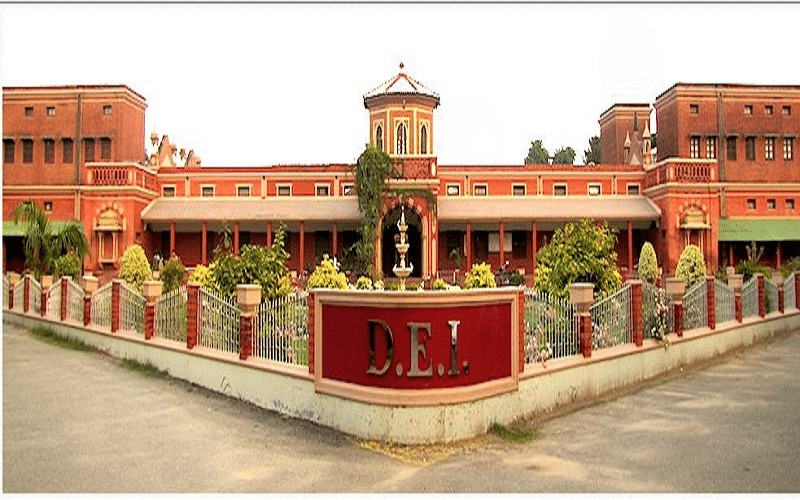
Introduction about Ph.D. in Sanskrit at Dayalbagh Educational Institute
The Ph.D. in Sanskrit offered by Dayalbagh Educational Institute (DEI) stands as a beacon for scholars who aspire to delve deep into one of the world’s oldest literary traditions. DEI’s doctoral program blends rigorous academic research with a rich cultural heritage, empowering professionals to contribute original scholarship to the fields of linguistics, philosophy, literature, and beyond. Whether you aim to become a university professor, a research consultant, or a cultural policy advisor, the program equips you with the analytical tools and scholarly networks essential for a distinguished career.
Eligibility Criteria for Ph.D. in Sanskrit at Dayalbagh Educational Institute
- Master’s degree (M.A.) in Sanskrit or a related discipline with a minimum aggregate of 55% (or equivalent CGPA) from a recognized university.
- Qualified in the DEI entrance examination or any national level test such as UGC NET, CSIR NET, or JRF.
- For candidates holding a Ph.D. in another discipline, a minimum of two years of research experience in Sanskrit is required.
- Applicants must possess a valid scorecard of the entrance exam and meet the age limit of 45 years (relaxations applicable as per government norms).
Entrance Exam for Ph.D. in Sanskrit at Dayalbagh Educational Institute
DEI conducts a comprehensive entrance test designed to evaluate the candidate’s proficiency in Sanskrit grammar, literature, and research methodology. The exam comprises three sections:
- General Aptitude & Reasoning – 30 marks
- Subject Knowledge (Sanskrit) – 50 marks (includes Vedic, Classical, and Modern Sanskrit)
- Research Methodology & English Comprehension – 20 marks
Successful candidates are invited for an interview that assesses research potential and alignment with DEI’s scholarly objectives.
Fee Structure for Ph.D. in Sanskrit at Dayalbagh Educational Institute
| Fee Component | Amount (INR) |
|---|---|
| Application & Processing Fee | 2,500 |
| Entrance Examination Fee | 3,000 |
| Annual Tuition & Laboratory Charges | 15,000 per annum |
| Library & Resource Access | 1,500 per annum |
| Miscellaneous (Sports, Welfare, etc.) | 2,000 per annum |
| Total Approximate Cost (3 years) | 55,000 |
Admission Process for Ph.D. in Sanskrit at Dayalbagh Educational Institute
The admission journey follows a systematic sequence to ensure transparency and meritocracy:
- Online Application: Submit the application form through DEI’s official portal, uploading scanned copies of academic certificates and identification proof.
- Payment of Fees: Pay the non-refundable application and examination fees via net banking or credit/debit card.
- Entrance Examination: Appear for the written test as per the scheduled date.
- Interview & Proposal Review: Shortlisted candidates present a research proposal and undergo a viva-voce with the department panel.
- Final Admission Letter: Successful candidates receive an official admission letter with details of enrollment and fee payment schedule.
Ph.D. Subjects and Specializations in Sanskrit at Dayalbagh Educational Institute
DEI offers a diverse array of specializations to match varied scholarly interests:
- Vedic Studies and Rituals
- Classical Sanskrit Literature (Mahakavya, Nataka, Kāvya)
- Sanskrit Linguistics and Philology
- Comparative Indo-Aryan Languages
- Philosophical Systems (Darśana, Nyāya, Mīmāṃsā)
- Modern Sanskrit and Digital Humanities
- Translation Studies and Intercultural Communication
Research Areas in Sanskrit at Dayalbagh Educational Institute
Faculty mentors guide doctoral candidates across vibrant research domains, including but not limited to:
- Critical edition and commentary of obscure manuscripts
- Computational analysis of Sanskrit corpora
- Intersections of Sanskrit philosophy with contemporary ethics
- Preservation of oral traditions and folk narratives
- Impact of Sanskrit on modern Indian languages
- Gender studies in classical Sanskrit texts
- Environmental ethics in Vedic literature
Documents Required for Ph.D. in Sanskrit at Dayalbagh Educational Institute
| Document | Details |
|---|---|
| Completed Application Form | Online submission with signature |
| Academic Transcripts | Mark sheets and degree certificates (M.A. in Sanskrit) |
| Entrance Exam Scorecard | DEI or recognized national exam |
| Research Proposal | 250–300 words outlining objectives and methodology |
| Curriculum Vitae (CV) | Academic and professional achievements |
| Identification Proof | Aadhaar / Passport / Driving License |
| Photographs | Two recent passport‑size photos |
Dayalbagh Educational Institute Ph.D. Syllabus for Sanskrit
The doctoral syllabus is structured to blend coursework with intensive research:
- Year 1 – Foundations: Advanced Sanskrit Grammar, Research Methodology, Seminar on Contemporary Issues in Sanskrit Studies.
- Year 2 – Specialization: Elective modules aligned with chosen specialization, manuscriptology workshop, data analysis tools for Sanskrit.
- Year 3 – Dissertation: Independent research, periodic progress reviews, publication of at least one peer‑reviewed article, final thesis submission and defense.
How To Apply for Ph.D. in Sanskrit at Dayalbagh Educational Institute
Follow these step‑by‑step instructions to submit a compelling application:
- Visit the official DEI admission portal and click “Apply for Ph.D.”
- Create a user account using a valid email address.
- Fill in personal, academic, and contact details accurately.
- Upload scanned copies of all required documents (see “Documents Required” table).
- Pay the application fee through the secure payment gateway.
- Submit the form and note the generated application number for future correspondence.
- Prepare for the entrance examination by reviewing DEI’s recommended reading list and past question papers.
Career Scope and Job Opportunities After Ph.D. in Sanskrit from Dayalbagh Educational Institute
A doctorate in Sanskrit opens doors to a multitude of professional avenues:
- Academia: Lectureship, Assistant Professor, Associate Professor, or Head of Department in universities and colleges.
- Research Institutes: Positions at Indian Council of Historical Research (ICHR), National Institute of Advanced Studies (NIAS), and cultural preservation bodies.
- Publishing & Translation: Editorial roles in scholarly journals, translation of classical texts for global audiences.
- Digital Humanities: Development of Sanskrit databases, AI-driven language processing, and e‑learning platforms.
- Government & NGOs: Advisory roles in the Ministry of Culture, UNESCO projects, and heritage conservation NGOs.
- Consultancy: Expert consultancy for media, film, and literature projects requiring authentic Sanskrit expertise.
Alumni of the program have secured prestigious fellowships such as the UGC Junior Research Fellowship (JRF) and have published extensively in peer‑reviewed journals, further enhancing their employability.
Scholarship for Ph.D. in Sanskrit at Dayalbagh Educational Institute
DEI collaborates with several funding agencies to provide financial assistance:
- DEI Merit Scholarship: Covers tuition and a monthly stipend of INR 12,000 for eligible candidates.
- UGC JRF & SRF: National scholarships offering up to INR 31,000 per month.
- State Government Fellowships: Additional support for candidates from specific regions.
- External Grants: Opportunities to apply for research grants from the Ministry of Education, CSIR, and private foundations.
Early application and a strong research proposal increase the likelihood of securing these scholarships.
FAQs Regarding Ph.D. in Sanskrit at Dayalbagh Educational Institute
- What is the minimum duration of the Ph.D. program?
- The program is designed for three years of full‑time study, with a possible extension of up to one year based on research progress.
- Can working professionals enroll in the Ph.D. program?
- Yes, DEI offers a part‑time option for candidates who maintain a minimum of 30% attendance in mandatory seminars and workshops.
- Is there a language proficiency requirement besides Sanskrit?
- English proficiency is essential for scholarly writing. Candidates must achieve a minimum TOEFL/IELTS score if their prior education was not in English.
- How many publications are required before thesis submission?
- At least one peer‑reviewed article in an indexed journal is mandatory, though two or more are strongly encouraged.
- What support is available for manuscript digitization?
- DEI’s library provides state‑of‑the‑art digitization labs, and students can access funding for field trips to manuscript repositories.
Need professional assistance with your doctoral journey? Explore our specialist services:
Editing and Proofreading Services
PhD Topic Selection and Proposal Assistance
<a href="https://shiksharesearch.com/services/honorary-doctor




