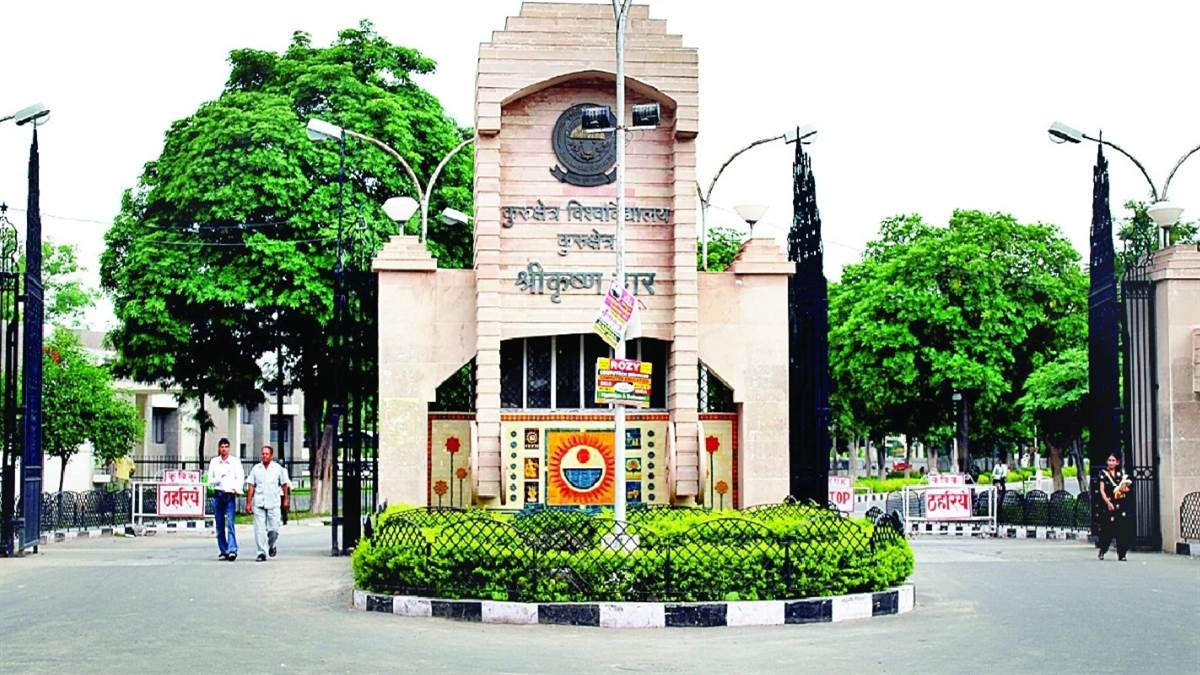
Introduction about Ph.D. in Sanskrit at Kurukshetra University
Embarking on a Ph.D. in Sanskrit at Kurukshetra University (KUK) is more than just an academic pursuit; it is a profound journey into the very soul of Indian civilization. Sanskrit, often referred to as 'Devavani' or the language of the Gods, holds the keys to ancient wisdom, philosophy, science, and literature. Kurukshetra University, established in the land of the Bhagavad Gita, provides a sanctified and intellectually stimulating environment for scholars to delve deep into the linguistic and philosophical nuances of this classical language. This doctoral program is designed for visionary professionals and academicians who seek to breathe new life into ancient texts through rigorous research and modern critical analysis. By choosing KUK, researchers align themselves with a heritage of excellence, guided by distinguished faculty members who are dedicated to preserving and propagating the Sanskrit legacy in a contemporary global context.
Ph.D Admission 2026-2027 & Writing Support Services by Shiksha Research
Eligibility Criteria for Ph.D. in Sanskrit at Kurukshetra University
To aspire for a Ph.D. in Sanskrit at this prestigious institution, candidates must demonstrate a strong academic foundation. The eligibility criteria are designed to ensure that the researchers possess the linguistic proficiency and analytical depth required for doctoral-level investigations. The primary requirements include:
- Master?s Degree: Candidates must hold a Master?s degree (M.A. in Sanskrit or Acharya) from a recognized university with at least 55% marks in aggregate. A relaxation of 5% marks is generally provided to candidates belonging to SC/ST/OBC (Non-creamy layer) and Differently-Abled categories as per UGC and State Government norms.
- Qualification of National Level Tests: While not mandatory for all, preference and weightage are given to candidates who have qualified for UGC-NET (with JRF or without), SLET, or M.Phil. through a regular mode with significant coursework.
- Professional Integrity: Applicants are expected to have a keen interest in research and a commitment to academic ethics, ensuring they are prepared for the intensive nature of Sanskrit scholarship.
Entrance Exam for Ph.D. in Sanskrit at Kurukshetra University
The gateway to the doctoral program is the Kurukshetra University Research Entrance Test (KURET). This examination serves as a rigorous assessment of a candidate?s aptitude for higher research. The exam is divided into two major segments: Research Methodology and the Core Subject (Sanskrit). The Research Methodology section evaluates the candidate's understanding of data interpretation, logic, and analytical reasoning. The Core Subject section deepens into Vedic literature, Grammar (Vyakarana), Indian Philosophy (Darshana), and Classical Literature (Sahitya).
Preparing for this exam requires a strategic approach, where many scholars often seek professional advice via Research Paper Writing Services to understand the standards of high-level academic discourse and publication styles. Success in the entrance exam is the first step toward becoming a recognized authority in the field of Sanskrit studies.
Fee Structure for Ph.D. in Sanskrit at Kurukshetra University
Investment in a Ph.D. program at Kurukshetra University is an investment in professional and personal growth. The fee structure is designed to be affordable while maintaining high standards of infrastructure and resources. Below is an approximate breakdown of the costs involved:
| Category of Fee | Approximate Amount (INR) | Frequency |
|---|---|---|
| Application & Entrance Test Fee | 800 - 1,200 | One-time |
| Enrollment/Registration Fee | 5,000 - 10,000 | One-time |
| Annual Tuition Fee | 2,000 - 5,000 | Per Year |
| Ph.D. Course Work Fee | 10,000 - 15,000 | One-time |
| Library & Caution Money (Refundable) | 2,000 - 3,000 | One-time |
| Thesis Submission & Evaluation Fee | 10,000 - 15,000 | At the time of submission |
Note: The fees mentioned are indicative and subject to change based on university notifications and government regulations. Scholars are advised to check the official KUK prospectus for the exact figures during the admission year.
Admission Process for Ph.D. in Sanskrit at Kurukshetra University
The admission process at Kurukshetra University is transparent and merit-based. It follows a structured path to ensure that only the most dedicated scholars are integrated into the research community. The steps involve:
- Notification: The university issues a notification on its official website and leading newspapers inviting applications for the Ph.D. program.
- Application Submission: Candidates must fill out the online application form and upload necessary documents.
- Entrance Test (KURET): Eligible candidates appear for the entrance test. Exemptions are often granted to JRF holders and certain UGC-NET qualifiers, though they may still need to participate in the interview.
- Interview/Viva-Voce: Shortlisted candidates are invited for an interview before the Departmental Research Committee (DRC). During this stage, candidates present their research interest. Professionals sometimes consult experts for Questionnaire Design and Development when their proposed research involves empirical surveys or fieldwork.
- Merit Listing: A final merit list is prepared based on entrance scores, academic records, and interview performance.
- Course Work: Selected candidates undergo a mandatory six-month Ph.D. coursework period before formal registration.
Ph.D. Subjects and Specializations in Sanskrit at Kurukshetra University
The Department of Sanskrit at Kurukshetra University offers a rich tapestry of specializations, allowing researchers to choose a niche that aligns with their passion. These specializations ensure that the vast ocean of Sanskrit literature is explored from every possible angle. Common specializations include:
- Veda and Vedic Literature: Deep exploration of Samhitas, Brahmanas, Aranyakas, and Upanishads.
- Vyakarana (Grammar): Scientific analysis of Panini?s Ashtadhyayi and later linguistic developments.
- Sahitya (Literature & Poetics): Critical study of Epics, Puranas, Classical Dramas, and Kavyashastra.
- Darshana (Philosophy): Studies in Nyaya, Vaisheshika, Samkhya, Yoga, Mimamsa, and Vedanta.
- Epigraphy and Numismatics: Deciphering ancient inscriptions and coins to reconstruct history.
- Dharmashastra and Arthashastra: Analyzing ancient Indian jurisprudence and political science.
Research Areas in Sanskrit at Kurukshetra University
Research at KUK is not confined to library reading; it involves rigorous critical thought and cross-disciplinary applications. The university encourages scholars to look beyond traditional boundaries and find contemporary relevance in ancient texts. Current research areas include:
Scholars are working on comparative literature, manuscriptology, and the digital humanities, where ancient manuscripts are digitized and analyzed using modern tools. During the advanced stages of research, particularly when dealing with linguistic patterns or survey data in sociological studies of ancient traditions, candidates often utilize Research Data Analysis Services to ensure their findings are statistically significant and academically robust.
Furthermore, the intersection of Sanskrit with modern sciences, such as Ayurveda, Vastu, and Psychology, provides fertile ground for groundbreaking dissertations that bridge the gap between antiquity and modernity.
Documents Required for Ph.D. in Sanskrit at Kurukshetra University
A seamless application process requires the careful preparation of several documents. Ensuring these are ready can significantly reduce the stress of the admission cycle:
- Master?s Degree Certificate and Consolidated Marksheets.
- Bachelor?s Degree Certificate and Marksheets.
- 10th and 12th Standard Certificates (for proof of age).
- Character Certificate from the last attended institution.
- UGC-NET/JRF/SLET Certificate (if applicable).
- Caste/Category Certificate (if claiming reservation).
- Migration Certificate (if coming from another university).
- Research Proposal (Synopsis) ? a preliminary outline of the proposed study.
- No Objection Certificate (NOC) from the employer if the candidate is working.
- Passport-size photographs and valid Identity Proof (Aadhar Card/Voter ID).
Kurukshetra University Ph.D. Syllabus for Sanskrit
The Ph.D. curriculum at KUK is meticulously structured, starting with a mandatory Course Work phase designed to equip scholars with essential research tools. The syllabus typically covers:
- Paper I: Research Methodology: Focusing on techniques of research, selection of topics, bibliography preparation, and the use of ICT in Sanskrit research.
- Paper II: Advanced Study of Sanskrit Literature: An in-depth look at classical texts and modern interpretations of Sanskrit works.
- Paper III: Review of Literature & Seminar: Scholars are required to present seminars on their specific research interest, demonstrating their grasp over current developments in the field.
The coursework culminates in an examination, the clearing of which is mandatory for the final registration of the thesis title. The subsequent years are dedicated to exhaustive research, leading to the creation of a high-quality dissertation. To maintain the highest academic standards during the drafting phase, many scholars engage with Thesis and Dissertation Writing Services to ensure their structure, language, and formatting meet the stringent requirements of the university.
How To Apply for Ph.D. in Sanskrit at Kurukshetra University
To join the community of scholars at Kurukshetra University, follow these motivational steps toward your academic aspirations:
- Visit the Portal: Go to the official Kurukshetra University website (kuk.ac.in) and navigate to the 'Admissions' or 'Ph.D.' section.
- Registration: Create a user account using a valid email ID and phone number.
- Fill the Form: Enter your personal, academic, and professional details carefully. Ensure that your spelling of Sanskrit terms is accurate where required.
- Upload Documents: Scan and upload the required documents as per the specified format and size.
- Fee Payment: Pay the application fee through the integrated online payment gateway (Net Banking/Debit/Credit Card).
- Print Confirmation: Save and print the completed application form and fee receipt for future reference during the entrance exam and interview.
Career Scope and Job Opportunities After Ph.D. in Sanskrit from Kurukshetra University
A Ph.D. in Sanskrit from a recognized institution like Kurukshetra University opens doors to a plethora of prestigious career paths. It is a credential that signifies not just knowledge, but discipline and intellectual capability. Professionals can explore opportunities such as:
- Academic Excellence: Become an Assistant Professor or Lecturer in universities and colleges across India and abroad.
- Research and Development: Work as a Research Scientist or Fellow in cultural research institutes, manuscript libraries, and oriental research centers.
- Civil Services: Sanskrit is a highly scoring optional subject in the UPSC Civil Services and State PSC exams.
- Content Curation: Serve as an expert consultant for media houses, theater, and film industries focusing on historical and mythological content.
- International Opportunities: Many foreign universities have Departments of Indology seeking experts in Sanskrit grammar and philosophy.
- Archives and Museums: Work as a Curator or Epigraphist, preserving India's tangible and intangible heritage.
Scholarship for Ph.D. in Sanskrit at Kurukshetra University
Kurukshetra University is dedicated to supporting the financial needs of its bright minds. Various scholarships and fellowships are available to ensure that financial hurdles do not obstruct the path of knowledge:
- UGC-JRF (Junior Research Fellowship): Candidates who qualify for JRF receive a substantial monthly stipend and a contingency grant.
- University Research Scholarship (URS): KUK offers its own scholarship to meritorious students who do not have NET-JRF but have topped the university entrance ranking.
- Rajiv Gandhi National Fellowship: For students belonging to specific categories as per government guidelines.
- State Government Scholarships: Various schemes for SC/ST/OBC and economically weaker section students provided by the Haryana Government.
FAQs Regarding Ph.D. in Sanskrit at Kurukshetra University
Q1: Is KURET compulsory for everyone?
A1: Generally, KURET is compulsory for most students. However, JRF holders are often exempted from the entrance test but must participate in the interview process.
Q2: Can I pursue a Ph.D. in Sanskrit part-time?
A2: Kurukshetra University primarily offers full-time Ph.D. programs. However, teachers and professionals working in recognized institutions may be allowed to register under certain specific university ordinances regarding part-time research.
Q3: What is the medium of instruction for Ph.D. in Sanskrit?
A3: The medium of instruction and thesis writing is primarily Sanskrit or Hindi, although English may be permitted depending on the nature of the research topic and departmental approval.
Q4: How long does it take to complete the Ph.D.?
A4: The minimum duration is three years, including coursework, and the maximum duration is typically six years, with scope for extensions under special circumstances.
Q5: Does KUK help with placement after Ph.D.?
A5: Yes, the University has a dedicated Career and Counseling Cell that assists doctoral scholars in finding academic and research placements through networking and campus drives.




