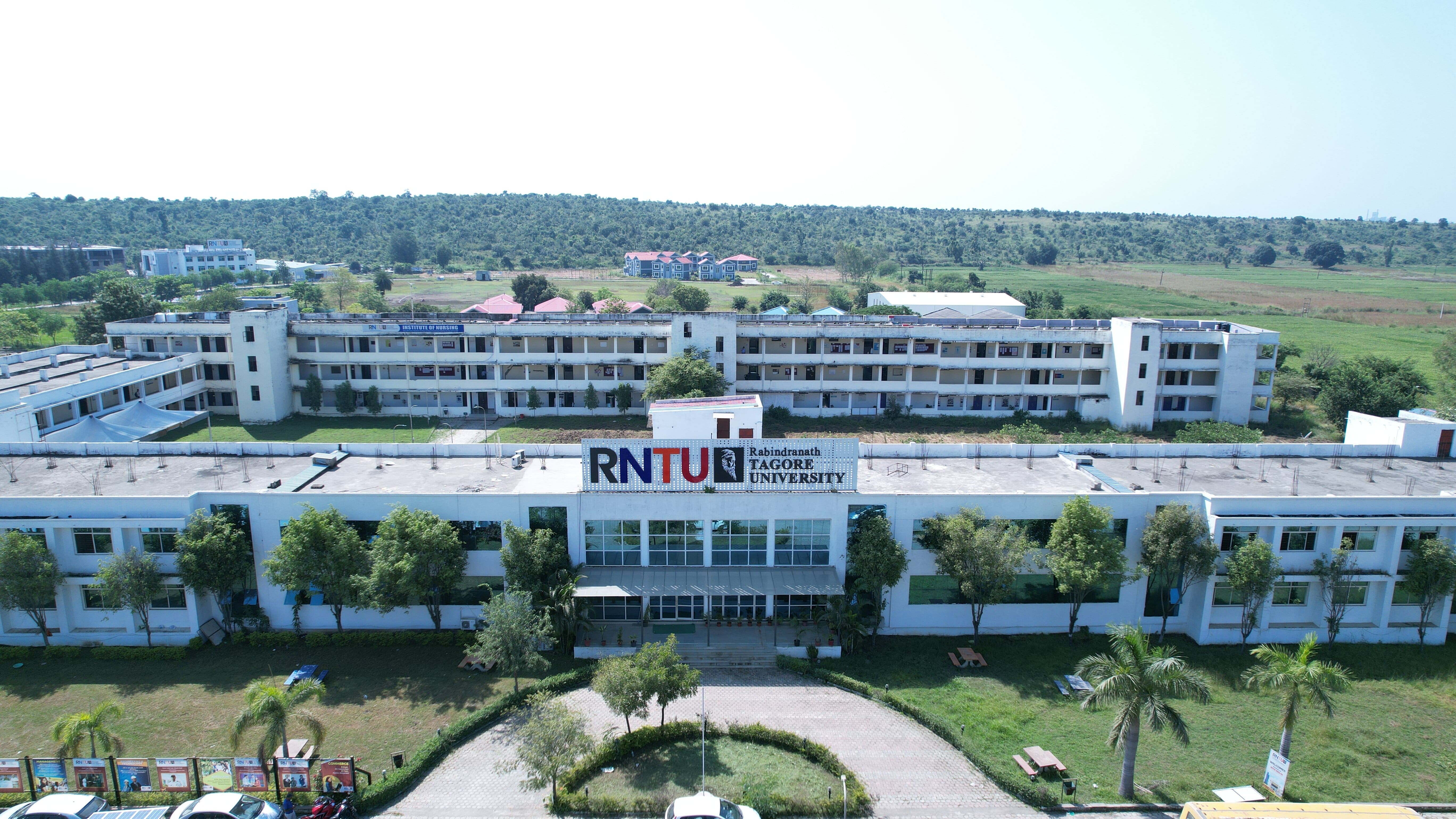
Ph.D. in Sanskrit from Rabindranath Tagore University: Eligibility, Admission, Fee, Syllabus & Career
Introduction about Ph.D. in Sanskrit at Rabindranath Tagore University
The Ph.D. programme in Sanskrit at Rabindranath Tagore University (RTU) stands as a beacon for scholars seeking to delve deep into the ancient linguistic and literary heritage of India. Designed for professionals and academicians, the doctorate offers a rigorous blend of classical research, contemporary methodologies, and interdisciplinary collaboration. Whether you aim to become a university professor, a research analyst, or an expert consultant in cultural preservation, RTU’s Sanskrit doctorate equips you with the scholarly depth and professional credibility required in today’s competitive landscape.
Eligibility Criteria for Ph.D. in Sanskrit at Rabindranath Tagore University
Candidates must possess a master’s degree (M.A.) in Sanskrit or a related discipline with a minimum aggregate of 55% (or equivalent CGPA). Professionals with a Master’s in Linguistics, Comparative Literature, or Indology are also considered, provided they have undertaken a minimum of one semester of Sanskrit coursework. Additionally, applicants should have a demonstrable research aptitude, evidenced by publications, conference papers, or a well‑crafted research proposal.
Entrance Exam for Ph.D. in Sanskrit at Rabindranath Tagore University
RTU conducts a specialized entrance examination titled “RTU Sanskrit Doctoral Test (RSDT)”. The test evaluates candidates on classical grammar (Vyakarana), literary criticism (Alankara), ancient philosophy, and research methodology. A separate interview assesses the feasibility of the proposed research topic and the candidate’s analytical capabilities. Successful candidates are awarded a merit‑based scholarship covering tuition and a research stipend.
Fee Structure for Ph.D. in Sanskrit at Rabindranath Tagore University
The fee structure is transparent and designed to support scholars from diverse backgrounds. Below is the detailed breakdown for the 2026‑2027 academic session:
| Component | Annual Amount (INR) | Notes |
|---|---|---|
| Tuition Fee | 45,000 | Includes access to labs, libraries, and online resources. |
| Research Material & Laboratory Charges | 12,000 | Covering manuscripts, digital archives, and fieldwork expenses. |
| Annual Registration & Examination Fee | 8,000 | One‑time per semester. |
| Infrastructure & Miscellaneous | 5,000 | Includes internet, campus facilities, and student services. |
| Total Approx. Annual Cost | 70,000 | Subject to annual revision by the university finance committee. |
Admission Process for Ph.D. in Sanskrit at Rabindranath Tagore University
The admission journey comprises the following steps:
- Online Application: Submit the digital form with personal details, academic records, and a concise research proposal.
- Document Verification: Upload scanned copies of certificates, mark sheets, and identity proof.
- Entrance Examination: Appear for the RSDT either on campus or at designated test centers.
- Interview & Proposal Review: Shortlisted candidates attend a panel interview where the research proposal is critically examined.
- Final Offer Letter: Successful candidates receive an admission letter with fee payment instructions.
Ph.D. Subjects and Specializations in Sanskrit at Rabindranath Tagore University
RTU offers a range of specializations tailored to contemporary research demands:
- Vedic Studies and Ritual Literature
- Classical Sanskrit Poetry and Drama
- Pan‑Indian Comparative Linguistics
- Sanskrit in Digital Humanities
- Philosophical Texts & Commentarial Traditions
- Manuscriptology & Epigraphy
Research Areas in Sanskrit at Rabindranath Tagore University
The university’s research ecosystem encourages interdisciplinary projects, such as:
- Computational Sanskrit – Natural Language Processing for ancient texts.
- Eco‑critical readings of Sanskrit ecological treatises.
- Cross‑cultural studies linking Sanskrit with East‑Asian classical languages.
- Preservation of endangered palm‑leaf manuscripts using digitisation techniques.
- Gender perspectives in classical Indian literature.
Documents Required for Ph.D. in Sanskrit at Rabindranath Tagore University
Applicants must submit the following original documents or attested copies:
| Document | Details |
|---|---|
| Academic Transcripts | Mark sheets for B.A., M.A. (and any additional qualifications) |
| Research Proposal | 2‑3 page document outlining objectives, methodology, and expected contribution |
| Identity Proof | Aadhaar Card / Passport / Driving License |
| Curriculum Vitae (CV) | Professional and academic achievements, publications, conferences |
| Letter of Recommendation | Two academic references from recognized scholars |
Rabindranath Tagore University Ph.D. Syllabus for Sanskrit
The doctoral syllabus is structured into three phases:
- Coursework (Year 1): Advanced courses in Sanskrit grammar, literary theory, research methodology, and digital tools for textual analysis.
- Comprehensive Examination (End of Year 1): Written and oral tests to assess mastery of core concepts.
- Dissertation (Years 2‑4): Original research under the guidance of a faculty supervisor, culminating in a dissertation defense before a university panel.
How To Apply for Ph.D. in Sanskrit at Rabindranath Tagore University
Follow these precise steps to submit a successful application:
- Visit the official RTU admissions portal and create a user account.
- Complete the online application form, ensuring accurate entry of personal and academic details.
- Upload required documents in PDF format (max 5 MB each).
- Pay the non‑refundable application fee of INR 2,500 via net banking or UPI.
- Schedule the entrance exam date and download the admit card.
- Prepare for the interview by reviewing your research proposal and recent publications.
Career Scope and Job Opportunities After Ph.D. in Sanskrit from Rabindranath Tagore University
Graduates of the Sanskrit doctorate enjoy a diverse spectrum of career paths:
- Academia: Lecturer, Associate Professor, Department Head in universities across India and abroad.
- Research Institutes: Positions at CSIR, Indian Council of Historical Research, and international cultural foundations.
- Digital Humanities Firms: Roles involving text digitisation, corpus development, and AI‑driven language tools.
- Publishing & Editorial: Senior editor for classical literature series, translation projects, and academic journals.
- Cultural Preservation NGOs: Project management for manuscript conservation and heritage education.
- Government Services: Advisory positions in the Ministry of Culture, Archaeological Survey of India, and state language commissions.
Scholarship for Ph.D. in Sanskrit at Rabindranath Tagore University
RTU offers merit‑based scholarships covering up to 70% of tuition fees, alongside a monthly research stipend of INR 8,000. Additionally, externally funded fellowships such as the UGC‑NET JRF, CSIR‑CDRI, and the Ministry of Human Resource Development (MHRD) scholarships are open to eligible candidates. Applicants are encouraged to explore Thesis and Dissertation Writing Services to strengthen their proposal and increase scholarship eligibility.
FAQs Regarding Ph.D. in Sanskrit at Rabindranath Tagore University
- Q1: Can working professionals enroll in the Ph.D. programme?
- A: Yes. Part‑time enrolment is available, with flexible class schedules and weekend seminars.
- Q2: Is prior knowledge of digital tools mandatory?
- A: While not compulsory, familiarity with basic computational tools is advantageous. The university provides introductory workshops on Research Data Analysis Services.
- Q3: How long does it take to complete the doctorate?
- A: The typical duration is 4 years, subject to satisfactory progress in coursework and dissertation research.
- Q4: Are publications required for doctoral completion?
- A: Candidates must publish at least two articles in peer‑reviewed journals or conference proceedings. Assistance is available through Research Paper Writing Services.
- Q5: What support is provided for fieldwork?
- A: The university allocates a modest fieldwork grant and offers guidance on designing surveys using Questionnaire Design and Development tools.




