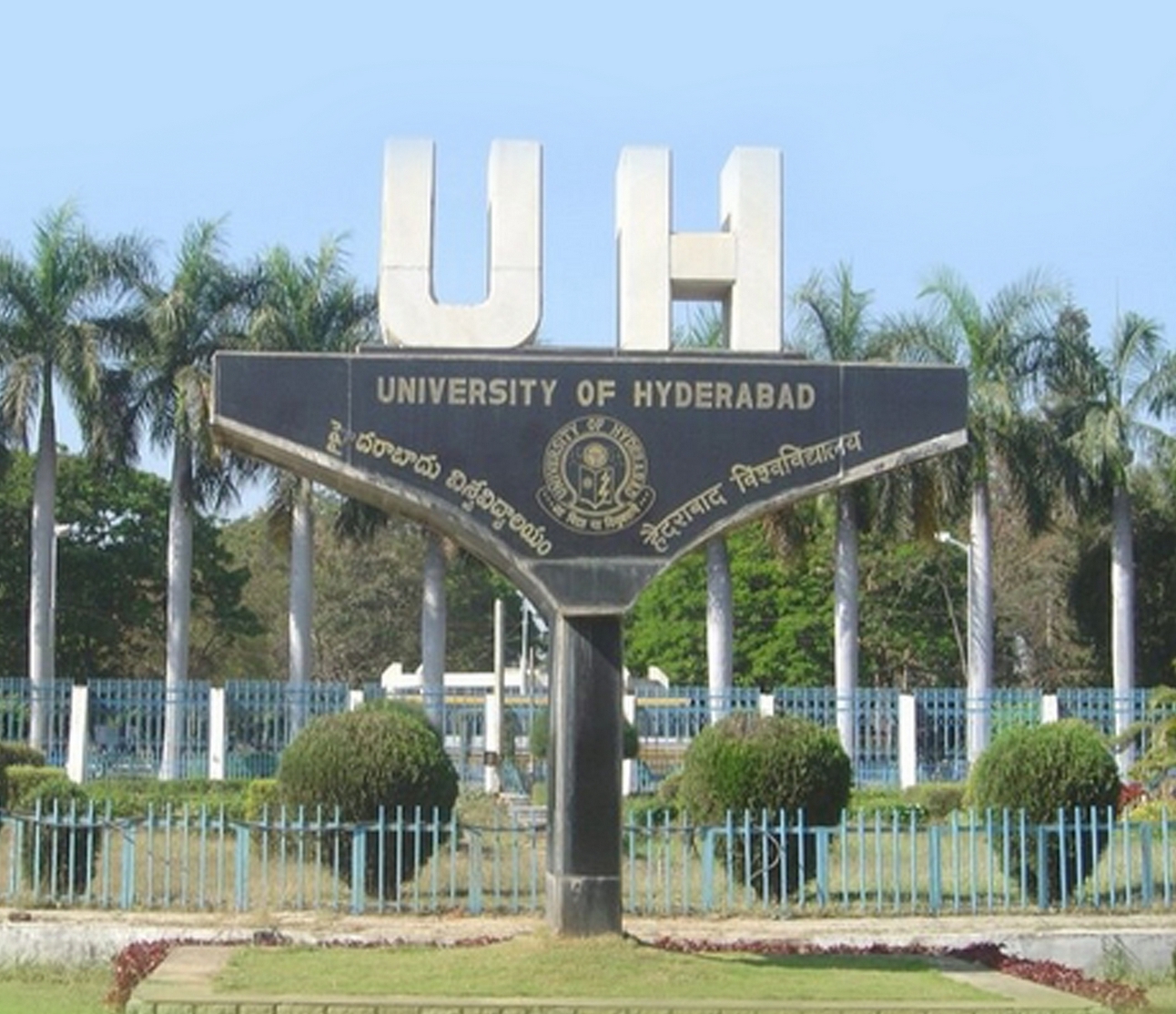
Introduction about Ph.D. in Sanskrit at University of Hyderabad
The University of Hyderabad stands as a beacon of academic excellence in India, offering a distinguished Ph.D. in Sanskrit that blends ancient wisdom with contemporary research methodologies. Aspiring scholars and seasoned professionals find a vibrant ecosystem of renowned faculty, state‑of‑the‑art libraries, and interdisciplinary collaborations that foster groundbreaking scholarship. Whether your passion lies in classical literature, linguistic analysis, or cultural studies, the doctorate program equips you with the tools to become a thought leader in the field of Sanskrit studies.
Eligibility Criteria for Ph.D. in Sanskrit at University of Hyderabad
Prospective candidates must satisfy the following minimum requirements:
- A Master's degree (M.A.) in Sanskrit or a related discipline with at least 55% aggregate marks (or an equivalent CGPA as per university regulations).
- Qualifying scores in the university‑conducted Ph.D. entrance test or a recognized national test such as UGC‑NET / CSIR‑NET.
- For candidates holding a Ph.D. in another discipline, a minimum of 5 years of research experience or a proven publication record in Sanskrit studies may be considered.
- Non‑resident Indian citizens must provide proof of English language proficiency (IELTS/TOEFL) if their prior education was not in English.
Entrance Exam for Ph.D. in Sanskrit at University of Hyderabad
The entrance examination assesses both subject‑specific knowledge and research aptitude. The test comprises:
- Written Paper (100 marks): Classical Sanskrit literature, grammar, philology, and modern interpretative methods.
- Research Proposal Presentation (30 marks): Candidates submit a concise research proposal and defend it before a panel.
- Interview (20 marks): Evaluation of academic background, motivation, and alignment with faculty expertise.
Preparation resources include past question papers, the university’s recommended reading list, and guidance from senior scholars.
Fee Structure for Ph.D. in Sanskrit at University of Hyderabad
| Component | Annual Fee (INR) | Notes |
|---|---|---|
| Tuition & Examination Fee | 12,000 | Mandatory for all full‑time Ph.D. candidates |
| Library & Resource Center Fee | 3,000 | Includes access to rare manuscripts and digital archives |
| Lab & Field Work Support (if applicable) | 5,000 | For projects involving epigraphic or archaeological components |
| Student Services & Miscellaneous | 2,000 | Health, counseling, and campus activities |
| Total Approximate Annual Cost | 22,000 | Subject to annual revision by the university finance office |
Admission Process for Ph.D. in Sanskrit at University of Hyderabad
The admission workflow is streamlined for efficiency:
- Online Application: Submit the digital application form via the university portal along with scanned copies of academic transcripts.
- Document Verification: The Admissions Committee reviews eligibility, academic records, and research proposal.
- Entrance Examination: Eligible candidates are invited to sit for the written test and presentation.
- Result Declaration: Scores and interview performance are published on the portal.
- Final Offer Letter: Successful candidates receive an official admission letter and guidance on enrollment formalities.
Ph.D. Subjects and Specializations in Sanskrit at University of Hyderabad
Students can tailor their doctoral research to one of the following specializations:
- Vedic Studies & Ritual Practices
- Classical Literature & Poetics (Kavya, Nataka)
- Linguistics & Grammar (Vyakarana)
- Philosophical Texts (Darshana) and Logic (Nyaya)
- Comparative Indo‑Aryan Studies
- Digital Humanities & Sanskrit Computing
- Manuscriptology & Epigraphy
Research Areas in Sanskrit at University of Hyderabad
The university promotes interdisciplinary research that bridges traditional Sanskrit scholarship with modern domains:
- Interpretation of Vedic rituals in contemporary social contexts
- Translation studies and cross‑cultural literary analysis
- Computational linguistics for Sanskrit text encoding
- Philosophical dialogues between Sanskrit and Western thought
- Preservation of endangered manuscripts through digital archiving
- Ecocritical readings of ancient environmental concepts
Documents Required for Ph.D. in Sanskrit at University of Hyderabad
| Document | Format | Remarks |
|---|---|---|
| Academic Transcripts (M.A. & earlier) | PDF (scanned) | Must be attested by the issuing university |
| Entrance Exam Scorecard | UGC‑NET/CSIR‑NET or University test | |
| Research Proposal (max 1500 words) | DOCX or PDF | Include objectives, methodology, and bibliography |
| Curriculum Vitae | Highlight publications, conferences, and teaching experience | |
| Identity Proof (Aadhaar / Passport) | Government‑issued photo ID | |
| Letter of Recommendation (2) | From academic mentors familiar with your research potential |
University of Hyderabad Ph.D. Syllabus for Sanskrit
The syllabus is designed to develop both depth and breadth of knowledge:
- Core Modules: Advanced Sanskrit Grammar, Textual Criticism, Research Methodology, Philosophy of Language.
- Elective Modules (choose any two): Vedic Mathematics, Sanskrit Computational Tools, Comparative Mythology, Sanskrit Drama & Performance.
- Seminars & Workshops: Guest lectures by eminent scholars, manuscript preservation techniques, digital editing software.
- Thesis Submission: Minimum of 80,000 words, including a critical edition, translation, or original research contribution.
How To Apply for Ph.D. in Sanskrit at University of Hyderabad
Follow these step‑by‑step instructions to ensure a smooth application:
- Visit the official University of Hyderabad admissions portal and create a user account.
- Complete the online application form, selecting “Ph.D. – Sanskrit” as the program.
- Upload all required documents (see the Documents Required table).
- Pay the non‑refundable application fee of INR 2,500 through net banking or credit card.
- Submit the application and note the generated application reference number.
- Monitor email and portal notifications for the entrance test schedule and interview invitation.
- Upon selection, complete enrollment formalities by uploading the signed admission offer.
Career Scope and Job Opportunities After Ph.D. in Sanskrit from University of Hyderabad
Graduates of the Sanskrit doctorate enjoy diverse and rewarding career paths:
- Academia: Lecturer, Assistant Professor, or Professor in universities and research institutes worldwide.
- Research Institutions: Positions at CSIR, Indian Council of Historical Research, and cultural heritage bodies.
- Publishing & Editorial: Editorial roles in scholarly journals, translation houses, and digital content platforms.
- Government & Policy: Advisory positions in Ministries of Culture, Education, and Tourism.
- Digital Humanities: Development of Sanskrit corpora, AI language models, and e‑learning tools.
- Consultancy: Expertise for NGOs and NGOs working on cultural preservation and language revitalization.
Scholarship for Ph.D. in Sanskrit at University of Hyderabad
The university offers multiple financial aid schemes to encourage meritorious research:
- University Fellowships: Full tuition waiver and a monthly stipend of INR 15,000 for five years.
- UGC Junior Research Fellowships (JRF): Recognized nationally, providing a stipend of INR 31,000 per month.
- External Scholarships: Opportunities from the Ministry of Culture, Indian Council of Historical Research (ICHR), and private trusts.
- Travel Grants: Funding for national and international conferences, workshops, and field trips.
FAQs Regarding Ph.D. in Sanskrit at University of Hyderabad
- 1. Can I pursue a part‑time Ph.D. in Sanskrit while working?
- Yes, the university offers part‑time registration for working professionals, provided they meet the same eligibility criteria and attend mandatory seminars.
- 2. Is there a provision for interdisciplinary research with other departments?
- Absolutely. Candidates can co‑supervise with faculty from Linguistics, Philosophy, Computer Science, or History to enrich their research scope.
- 3. How long does it typically take to complete the doctorate?
- The minimum period is three years, and the maximum permissible duration is eight years, subject to satisfactory progress reports.
- 4. Are publications mandatory for Ph.D. completion?
- Students must publish at least two research articles in peer‑reviewed journals or present at recognized conferences before thesis submission.
- 5. What language proficiency is required for non‑native speakers?
- Applicants whose primary medium of instruction was not English must submit IELTS (minimum 6.0) or TOEFL (minimum 80) scores.
For additional assistance with your application, consider professional services such as <a href




