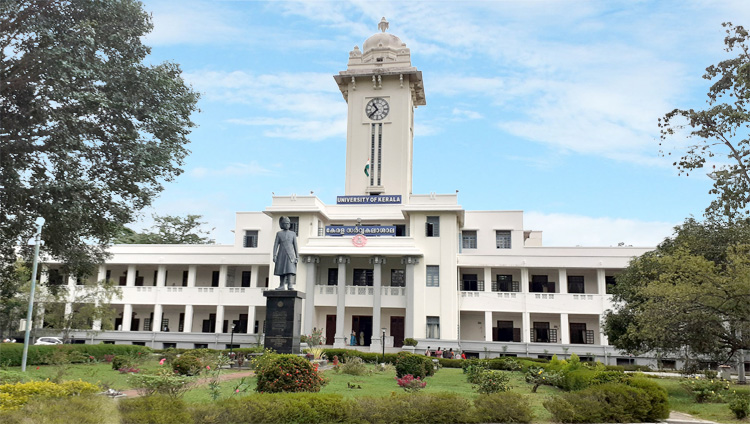
Introduction about Ph.D. in Sociology at Kerala University
Kerala University, a premier institution in South India, offers a research‑intensive Ph.D. in Sociology that equips professionals with the analytical tools to explore social structures, cultural dynamics, and policy impacts. The program is designed for scholars who aspire to become thought leaders, university lecturers, or senior analysts in governmental and non‑governmental sectors. With a robust curriculum, interdisciplinary research opportunities, and state‑of‑the‑art faculty guidance, this doctorate paves the way for a transformative academic journey.
Eligibility Criteria for Ph.D. in Sociology at Kerala University
- Master’s degree (M.A./M.Sc.) in Sociology or a closely related discipline from a recognized university.
- Minimum aggregate of 55% (or equivalent CGPA) in the qualifying postgraduate program.
- For candidates holding a professional degree (e.g., M.Phil, B.Ed), a minimum of 60% is preferred.
- Valid scores in the university‑conducted entrance test or national level examinations such as UGC‑NET/CSIR‑NET.
- Proficiency in English (both written and spoken) to undertake research and publish in reputed journals.
Entrance Exam for Ph.D. in Sociology at Kerala University
The entrance examination comprises two stages: a written test followed by a personal interview. The written test evaluates the candidate’s grasp of sociological theories, research methodology, and statistical analysis. Typical sections include:
- Core Sociology – Classical & Contemporary Theories.
- Research Methods – Qualitative & Quantitative Techniques.
- Statistical Tools – SPSS, R, and data interpretation.
- General Awareness – Current social issues and policy frameworks.
Candidates who have cleared UGC‑NET or CSIR‑NET are exempted from the written test but must still appear for the interview. Preparation resources, sample papers, and past year question banks are available on the university’s official portal.
Fee Structure for Ph.D. in Sociology at Kerala University
| Category | Annual Fee (INR) | One‑Time Charges |
|---|---|---|
| Tuition & Laboratory Fees | 12,500 | — |
| Registration & Examination Fees | 5,000 | 2,000 (initial registration) |
| Library & Digital Resource Access | 1,500 | — |
| Miscellaneous (Seminars, Workshops) | 2,000 | — |
| Total Approx. | 21,000 | 2,000 |
Note: Fees are subject to revision each academic year. Candidates from economically weaker sections may apply for fee concessions as per university policy.
Admission Process for Ph.D. in Sociology at Kerala University
- Online Application: Fill the application form on the university’s admission portal and upload scanned copies of academic certificates.
- Payment of Application Fee: Pay the non‑refundable fee of INR 1,500 via net banking or UPI.
- Entrance Examination: Appear for the written test (unless exempted) on the scheduled date.
- Interview & Proposal Review: Shortlisted candidates present their research proposal before a panel of experts.
- Final Selection: Admission letter issued to successful candidates, followed by enrollment and fee payment.
Ph.D. Subjects and Specializations in Sociology at Kerala University
The doctorate offers the following specialization tracks, allowing candidates to tailor their research focus:
- Social Stratification & Inequality
- Rural Development & Agrarian Studies
- Gender Studies & Feminist Theory
- Urban Sociology & Migration
- Health Sociology & Public Policy
- Educational Sociology & Curriculum Studies
- Environmental Sociology & Climate Change
- Digital Sociology & Media Studies
Research Areas in Sociology at Kerala University
Kerala University encourages interdisciplinary research that addresses both local and global challenges. Prominent research domains include:
- Impact of globalization on traditional Kerala societies.
- Social implications of Kerala’s high literacy and health indices.
- Migration patterns and remittance economies in South India.
- Gender dynamics in coastal fishing communities.
- Policy analysis of poverty alleviation schemes.
- Digital transformation and its effect on youth culture.
- Climate resilience and community adaptation strategies.
Documents Required for Ph.D. in Sociology at Kerala University
| Document | Format | Remarks |
|---|---|---|
| Completed Application Form | Online submission only. | |
| Academic Transcripts (M.A./M.Sc.) | Scanned PDF | Attested by issuing university. |
| Research Proposal (max 2,500 words) | DOCX/PDF | Include objectives, methodology, and bibliography. |
| Entrance Exam Scorecard | UGC‑NET/CSIR‑NET or university test. | |
| Identity Proof (Aadhar/Passport) | Scanned PDF | Valid government ID. |
| Resume / Curriculum Vitae | Highlight research experience. |
Kerala University Ph.D. Syllabus for Sociology
The syllabus is structured into three phases – Coursework, Comprehensive Examination, and Dissertation. Key components are:
- Core Modules: Advanced Sociological Theory, Research Methodology, Quantitative & Qualitative Analysis.
- Elective Modules: Selected based on specialization (e.g., Gender Studies, Rural Development).
- Seminars & Workshops: Presentation of ongoing research, peer review sessions.
- Comprehensive Exam: Written test covering all core and elective modules.
- Dissertation: Original research contribution, typically 80–120 pages, defended before a scholarly panel.
How To Apply for Ph.D. in Sociology at Kerala University
Follow these step‑by‑step instructions:
- Visit the official Kerala University Ph.D. Admissions page.
- Register using your email address and create a secure password.
- Complete the online application, uploading the required documents listed in the “Documents Required” section.
- Pay the application fee through the integrated payment gateway.
- Submit the application and note the acknowledgement number for future correspondence.
- Monitor your email for notifications regarding the entrance examination schedule and interview invitations.
For personalized assistance, consider our PhD Admission Assistance service, which guides you through every stage of the process.
Career Scope and Job Opportunities After Ph.D. in Sociology from Kerala University
Graduates with a doctorate in Sociology enjoy a wide spectrum of career paths:
- Academic Positions: Lecturer, Assistant Professor, Associate Professor, or Head of Department in universities and colleges.
- Research Institutes: Senior Research Fellow, Project Manager, or Policy Analyst at think‑tanks, NGOs, and governmental agencies.
- Public Policy & Administration: Advisory roles in state and central ministries, especially in social welfare, education, and health.
- International Organizations: Positions with UN bodies, World Bank, or NGOs focusing on development and human rights.
- Corporate Sector: Corporate Social Responsibility (CSR) lead, Market Research Analyst, or Human Resources Strategist.
- Publishing & Media: Editorial roles, content strategist, or columnist specializing in social issues.
The interdisciplinary nature of the program also equips graduates for consultancy work, grant writing, and entrepreneurship in social enterprises.
Scholarship for Ph.D. in Sociology at Kerala University
Kerala University offers several merit‑based and need‑based scholarships:
- Kerala State Doctoral Fellowship: INR 15,000 per month for ten months, renewable based on academic performance.
- UGC JRF (Junior Research Fellowship): National scholarship covering stipend and contingency allowance.
- University‑Sponsored Research Grants: Funding for fieldwork, data collection, and conference participation.
- Private Foundations: Partnerships with NGOs and corporate CSR funds provide additional support.
Applicants can also explore Editing and Proofreading Services to enhance their research manuscripts and increase chances of publishing, which often attracts further financial aid.
FAQs Regarding Ph.D. in Sociology at Kerala University
- Q1: Can I pursue a Ph.D. in Sociology directly after completing my M.A. without clearing NET?
- Yes. Kerala University conducts its own entrance test. However, clearing UGC‑NET/CSIR‑NET waives the written test requirement.
- Q2: What is the minimum duration to complete the Ph.D.?
- The minimum stipulated period is three years, provided the candidate clears the comprehensive exam and submits the dissertation within this timeframe.
- Q3: Is part‑time enrollment available for working professionals?
- Yes, the university offers a part‑time track with flexible coursework schedules and extended time limits for thesis submission.
- Q4: How many publications are required before submitting the thesis?
- At least one peer‑reviewed journal article is recommended, though it is not mandatory. Publishing enhances the dissertation’s impact.
- Q5: Are there any collaborations with international universities?
- Kerala University has MoUs with several overseas institutions, allowing joint supervision, exchange programs, and co‑authored publications.
For comprehensive support throughout your doctoral journey—including topic selection, proposal writing, and publication—explore our dedicated services:




