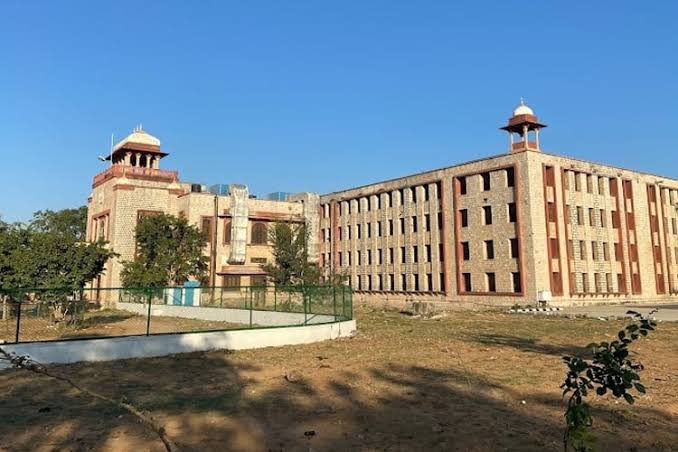
Ph.D. in Sociology from Rajasthan University: Eligibility, Entrance Exam, Fee Structure, Admission Process, Subjects, Research Areas, Syllabus, Scholarship & Career Scope
Introduction about Ph.D. in Sociology at Rajasthan University
Rajasthan University stands as a beacon of academic excellence in the heart of India, offering a dynamic Ph.D. in Sociology program that blends rigorous research methodology with contemporary social theory. This doctoral journey is designed for professionals who aspire to become thought leaders, policy analysts, and scholars capable of influencing societal transformation. The university’s vibrant research environment, seasoned faculty, and extensive library resources create an ideal setting for breakthrough sociological inquiry.
Whether you aim to dissect urbanization trends, explore gender dynamics, or investigate the impact of digital media on cultural identities, Rajasthan University's Ph.D. program equips you with the analytical tools and scholarly mentorship needed to shape the future of sociology.
Eligibility Criteria for Ph.D. in Sociology at Rajasthan University
Prospective candidates must satisfy the following minimum requirements:
- A Master’s degree in Sociology or a closely related discipline with at least 55% marks (or an equivalent CGPA of 6.0/10). Candidates with a PG Diploma in Sociology are also considered.
- For candidates holding a UG degree in Sociology, a NET or UGC-CSIR qualification is mandatory.
- Age limit: No upper age restriction, though candidates must be physically fit to undertake research activities.
- English proficiency: Candidates whose medium of instruction was not English must attain a minimum TOEFL score of 80 or IELTS band 6.0.
Meeting the eligibility thresholds ensures you are well-prepared for the demanding research work ahead.
Entrance Exam for Ph.D. in Sociology at Rajasthan University
The university conducts a two‑stage selection process:
- Written Test – A 2‑hour paper covering research methodology, sociological theory, and quantitative/qualitative analysis. Sample questions are released on the university portal.
- Interview & Presentation – Candidates present a concise research proposal (10‑15 minutes) followed by a viva‑voce assessing depth of knowledge, originality, and feasibility.
Applicants who have previously cleared national level exams such as UGC‑NET or CSIR‑JRF are exempted from the written test but must still appear for the interview.
Fee Structure for Ph.D. in Sociology at Rajasthan University
| Component | Amount (INR) | Notes |
|---|---|---|
| Application Fee (online) | 1,500 | Non‑refundable, payable at time of submission |
| Admission Fee (once per semester) | 4,000 | Includes library & lab access |
| Annual Tuition & Research Fees | 22,000 | Covering coursework, data collection, and software licenses |
| Miscellaneous (printing, fieldwork) | 5,000 | Estimated per year |
| Total Approximate Cost (3‑year program) | 84,500 | Subject to revision each academic year |
Students may apply for financial aid, merit‑based scholarships, or research grants to offset these costs.
Admission Process for Ph.D. in Sociology at Rajasthan University
Follow these steps for a smooth admission experience:
- Visit the official Rajasthan University Ph.D. portal and create an applicant account.
- Fill out the online application form, upload scanned copies of academic transcripts, and pay the application fee.
- Submit a concise research proposal (max 1500 words) outlining objectives, literature review, methodology, and expected outcomes.
- Await the call‑letter for the written test (if applicable) and schedule the interview.
- After successful evaluation, receive the provisional admission letter and pay the first semester’s tuition fee.
- Complete registration at the university’s Office of Research & Development, where you will receive your supervisor assignment.
The entire process, from application to enrollment, typically spans 4–6 weeks if all documents are in order.
Ph.D. Subjects and Specializations in Sociology at Rajasthan University
Rajasthan University offers a broad spectrum of specializations, enabling scholars to focus on niche domains:
- Urban & Rural Sociology
- Gender & Women Studies
- Social Anthropology
- Socio‑Economic Development
- Migration & Diaspora Studies
- Education Sociology
- Media, Culture & Communication
- Political Sociology & Public Policy
Students can also design interdisciplinary topics by collaborating with departments such as Economics, Political Science, or Geography.
Research Areas in Sociology at Rajasthan University
Current faculty research strengths include:
- Impact of digital transformation on social stratification.
- Social movements and grassroots activism in Rajasthan.
- Health disparities and social determinants of health.
- Environmental sociology – climate change adaptation in rural communities.
- Entrepreneurship and informal economies.
- Historical sociology of caste and ethnicity.
These focal areas align with national development priorities and offer ample funding opportunities from governmental and non‑governmental bodies.
Documents Required for Ph.D. in Sociology at Rajasthan University
| Document | Format | Remarks |
|---|---|---|
| Completed Online Application Form | Generated after login | |
| Mark Sheets & Degree Certificates (Post‑Graduate) | Scanned PDF (max 2 MB each) | Must be attested |
| Research Proposal | Word Document | Maximum 1500 words |
| Proof of Identification (Aadhaar/Passport) | Valid government ID | |
| Experience Certificate (if any) | Relevant professional experience | |
| Letter of Recommendation (2) | From academicians or senior professionals |
All documents must be uploaded on the portal before the submission deadline. Missing or illegible files will lead to application rejection.
Rajasthan University Ph.D. Syllabus for Sociology
The Ph.D. curriculum is structured into three phases:
- Coursework (Year 1) – Core modules such as Research Methodology, Advanced Sociological Theory, Quantitative & Qualitative Data Analysis, and Ethics in Social Research.
- Comprehensive Examination (End of Year 1) – Written test covering coursework content.
- Dissertation Phase (Years 2‑3) – Original research under the guidance of a faculty supervisor, culminating in a defended thesis.
Students may also opt for elective workshops on Research Data Analysis Services to sharpen statistical competencies.
How To Apply for Ph.D. in Sociology at Rajasthan University
Applying is straightforward when you follow these detailed instructions:
- Register on the university’s Ph.D. portal and verify your email address.
- Upload the required documents (see the Documents Required table).
- Enter your research proposal directly into the portal’s “Proposal Builder” tool.
- Pay the application fee using the integrated payment gateway (credit/debit cards, net banking, UPI).
- Submit the application and note the generated Application ID for future correspondence.
- Track status through the “My Applications” dashboard; you will receive email alerts for test dates and interview schedules.
For assistance with proposal writing, candidates can explore Thesis and Dissertation Writing Services, which provide expert feedback and formatting support.
Career Scope and Job Opportunities After Ph.D. in Sociology from Rajasthan University
Graduates of the Ph.D. program emerge as highly sought‑after professionals in various sectors:
- Academia – Lecturer, Assistant Professor, Associate Professor, or Research Fellow in universities across India and abroad.
- Public Policy & Governance – Senior Analyst, Policy Advisor, or Research Director in ministries, state governments, and think‑tanks.
- International Organizations – Roles in UNDP, WHO, World Bank, focusing on social development programs.
- Non‑Governmental Organizations (NGOs) – Program Manager, Monitoring & Evaluation Specialist, or Community Development Consultant.




