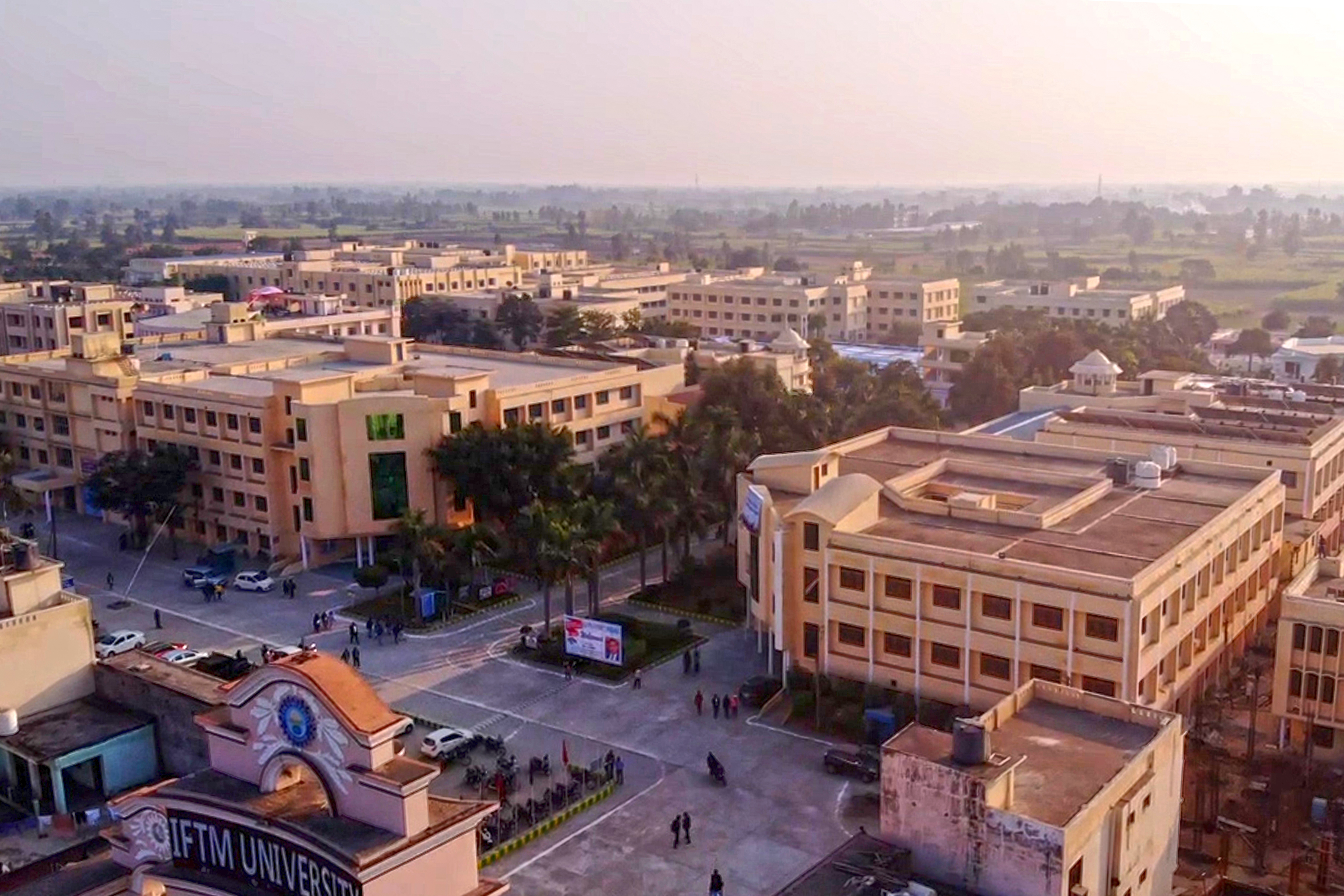
Introduction about Ph.D. in Soil and Water Conservation Engineering at IFTM University
The Doctor of Philosophy (Ph.D.) in Soil and Water Conservation Engineering offered by IFTM University is a research‑intensive program designed for engineers, scientists and environmental professionals who aspire to lead innovative projects in sustainable land management, watershed protection, and climate‑resilient agriculture. This program blends advanced theoretical knowledge with hands‑on field investigations, enabling scholars to develop cutting‑edge solutions for soil erosion control, water resource optimization, and ecosystem restoration. With world‑class faculty, state‑of‑the‑art laboratories, and collaborations with government agencies, IFTM University creates a fertile ground for interdisciplinary research that directly addresses the pressing challenges of water scarcity and land degradation.
Ph.D Admission 2026-2027 & Writing Support Services by Shiksha Research
Eligibility Criteria for Ph.D. in Soil and Water Conservation Engineering at IFTM University
Prospective candidates must satisfy the following minimum requirements:
- Academic Qualification: A Master’s degree (M.Tech/M.Sc.) in Soil Science, Civil Engineering, Environmental Engineering, Agricultural Engineering, or a closely related discipline with a minimum aggregate of 55% (or equivalent CGPA).
- Research Aptitude: Demonstrated research experience through publications, project work, or a strong research proposal.
- Language Proficiency: English proficiency (IELTS/TOEFL) is optional for Indian nationals but mandatory for international applicants.
- Age Limit: No upper age limit, but candidates above 35 years may be required to provide additional work‑experience evidence.
Entrance Exam for Ph.D. in Soil and Water Conservation Engineering at IFTM University
IFTM University conducts its own Ph.D. Entrance Test for candidates who do not possess a valid GATE score. The exam evaluates:
- Fundamental concepts of soil mechanics, hydrology, and water resources engineering.
- Analytical reasoning and quantitative aptitude.
- Research methodology and academic writing skills.
Candidates with a valid GATE score (Civil/Environmental Engineering) are exempted from the entrance test and may directly apply for the interview round. The selection process includes a written test (if applicable) followed by a personal interview with the department’s research committee.
Fee Structure for Ph.D. in Soil and Water Conservation Engineering at IFTM University
The total fee includes tuition, lab charges, and administrative costs. Fees are subject to revision each academic year. Below is the fee breakdown for the academic year 2025‑26:
| Component | Amount (INR) | Frequency |
|---|---|---|
| Tuition Fee (per semester) | 35,000 | Semester |
| Laboratory & Field Work Charges | 12,000 | Annual |
| Research & Publication Support | 8,000 | Annual |
| University Development Fee | 5,000 | One‑time |
| Total Approximate Cost (4‑Year Programme) | 2,80,000 – 3,20,000 | — |
Admission Process for Ph.D. in Soil and Water Conservation Engineering at IFTM University
The admission workflow is streamlined to ensure transparency and efficiency:
- Online Application: Fill out the e‑application form on the university portal, upload scanned documents, and pay the non‑refundable application fee.
- Submission of Research Proposal: A concise 2‑page proposal outlining the intended research problem, objectives, and methodology.
- Screening: Eligibility verification by the department’s admissions committee.
- Entrance Test (if applicable) & Interview: Successful candidates are invited for the written test and a personal interview.
- Final Offer Letter: Admission confirmation, fee payment schedule, and enrollment instructions are sent via email.
- Registration: Completion of formal registration, allocation of supervisor, and enrollment in the first semester.
Ph.D. Subjects and Specializations in Soil and Water Conservation Engineering at IFTM University
Students can tailor their research across the following core specializations:
- Soil Erosion Prediction and Control
- Integrated Watershed Management
- Hydro‑geotechnical Modelling
- Climate‑Adapted Irrigation Systems
- Remote Sensing & GIS for Land‑Water Interactions
- Eco‑hydrological Restoration
- Water Quality Management in Agricultural Runoff
Research Areas in Soil and Water Conservation Engineering at IFTM University
The department actively pursues research in several high‑impact domains, including:
- Development of low‑cost bio‑engineering structures for slope stabilization.
- Simulation of sediment transport using AI‑based predictive models.
- Assessment of climate‑change effects on catchment hydrology.
- Design of water‑saving irrigation technologies for semi‑arid regions.
- Policy‑oriented studies on watershed governance and community participation.
Documents Required for Ph.D. in Soil and Water Conservation Engineering at IFTM University
The following documents must be uploaded in PDF format (maximum size 2 MB each):
| Document | Details |
|---|---|
| Academic Transcripts | Mark sheets of Bachelor’s and Master’s degrees |
| Degree Certificates | Original certificates with attested copies |
| Research Proposal | 2‑page document outlining research problem and methodology |
| Curriculum Vitae (CV) | Professional experience, publications, projects |
| Statement of Purpose | Motivation for pursuing Ph.D. at IFTM University |
| Letters of Recommendation | Two academic/industry references (PDF) |
| English Proficiency Proof (if applicable) | IELTS/TOEFL scorecard |
IFTM University Ph.D. Syllabus for Soil and Water Conservation Engineering
The curriculum is divided into three phases: Coursework, Comprehensive Examination, and Thesis Research.
- Phase I – Core Coursework (12 credits): Advanced Soil Mechanics, Hydrology & Water Resources, Remote Sensing for Conservation, Research Methodology, and Statistical Techniques.
- Phase II – Electives (6 credits): Choose from GIS‑Based Watershed Modelling, Climate‑Smart Agriculture, Sustainable Drainage Systems, and Soil‑Water Interaction Modelling.
- Phase III – Comprehensive Exam: Written and oral test assessing depth of knowledge before commencing thesis work.
- Phase IV – Thesis Research (30+ credits): Original research under the guidance of a faculty supervisor, culminating in a publicly defended dissertation.
How To Apply for Ph.D. in Soil and Water Conservation Engineering at IFTM University
Follow these step‑by‑step instructions to submit a successful application:
- Visit the official IFTM University admissions portal and create a user account.
- Complete the online application form, ensuring all mandatory fields are filled.
- Upload the required documents (refer to the “Documents Required” table).
- Pay the Rs. 2,000 non‑refundable application fee via net banking or UPI.
- Submit your research proposal and, if applicable, schedule the entrance test.
- Monitor your email for interview invitations and further instructions.
- Upon acceptance, complete the fee payment and register for the first semester.
Career Scope and Job Opportunities After Ph.D. in Soil and Water Conservation Engineering from IFTM University
Graduates are equipped to assume senior roles in both the public and private sectors. Potential career pathways include:
- Senior Research Scientist – Government research labs (e.g., CSIR, ICAR).
- Chief Hydrologist – Water resource corporations, irrigation agencies.
- Consultant – Environmental impact assessment firms and NGOs.
- Academia – Assistant/Associate Professor positions and post‑doctoral fellowships.
- Policy Analyst – Ministries of Environment, Agriculture, and Rural Development.
- Project Manager – Large‑scale watershed development and climate‑resilience projects funded by international agencies (World Bank, ADB).
The demand for experts in soil and water conservation is growing exponentially due to increasing awareness of climate adaptation, making this Ph.D. a strategic investment for long‑term career growth.
Scholarship for Ph.D. in Soil and Water Conservation Engineering at IFTM University
IFTM University offers merit‑based and need‑based scholarships to support deserving candidates:
- University Merit Scholarship: Up to 50% tuition waiver for top 10% of applicants based on academic records.
- Research Assistantship (RA): Stipends ranging from INR 15,000 to 25,000 per month for students engaged in funded projects.
- External Fellowships: Guidance for applying to national scholarships such as the CSIR‑JRF, UGC‑NET, and the Ministry of Education’s INSPIRE program.
- Need‑Based Financial Aid: Up to 75% fee remission for candidates from economically weaker sections.
FAQs Regarding Ph.D. in Soil and Water Conservation Engineering at IFTM University
- 1. What is the minimum duration to complete the Ph.D.?
- The program is structured for a minimum of 4 years, subject to successful completion of coursework, comprehensive exam, and thesis




