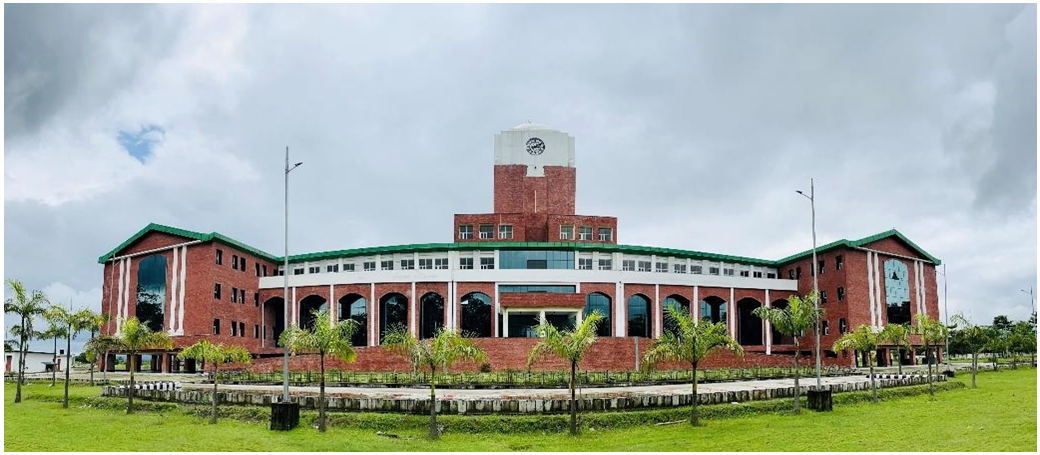
Ph.D. in Soil and Water Conservation Engineering at Indian Agricultural Research Institute: Eligibility, Entrance Exam, Fee Structure, and Career Scope
Introduction about Ph.D. in Soil and Water Conservation Engineering at Indian Agricultural Research Institute
The Indian Agricultural Research Institute (IARI), often referred to as the Pusa Institute, stands as a beacon of academic excellence in agricultural sciences in India. A Ph.D. in Soil and Water Conservation Engineering from this prestigious institution is more than just a degree; it is a commitment to ensuring environmental sustainability and food security for a growing nation. As natural resources face unprecedented pressure, the need for visionary researchers to develop innovative irrigation, drainage, and soil protection technologies has never been higher. This program empowers students to transform landscapes, improve water use efficiency, and tackle the challenges posed by climate change.
Eligibility Criteria for Ph.D. in Soil and Water Conservation Engineering at Indian Agricultural Research Institute
To embark on this elite doctoral journey, candidates must meet stringent academic benchmarks set by the IARI. Applicants are required to hold a Master?s degree in Agricultural Engineering or a relevant branch of engineering with a superior academic record. Typically, a minimum score of 60% marks (or an equivalent GPA) in the qualifying degree is mandatory for general category candidates, with relaxations provided for reserved categories as per government norms. Professional experience in research or industrial agricultural engineering projects is often viewed favorably during the selection process.
Entrance Exam for Ph.D. in Soil and Water Conservation Engineering at Indian Agricultural Research Institute
Admission to the Ph.D. program is strictly merit-based, determined by a national-level competitive examination conducted by the Indian Council of Agricultural Research (ICAR). The exam evaluates a candidate?s comprehension of core engineering principles, mathematical modeling, and experimental design. Following the written test, shortlisted candidates are invited for a personal interview, where their research aptitude and vision are assessed by a panel of distinguished scientists and subject matter experts.
Fee Structure for Ph.D. in Soil and Water Conservation Engineering at Indian Agricultural Research Institute
IARI maintains an affordable fee structure to ensure the brightest minds can pursue advanced research without financial burden. While fees are subject to periodic revision, the table below provides a general overview of the cost components involved in the doctoral program.
| Fee Component | Estimated Amount (INR) |
|---|---|
| Admission Fee | 5,000 |
| Semester Tuition Fee | 15,000 |
| Library & Laboratory Charges | 4,000 |
| Hostel & Amenities | 8,000 |
Admission Process for Ph.D. in Soil and Water Conservation Engineering at Indian Agricultural Research Institute
The admission process is rigorous and transparent. It begins with the release of the official notification on the ICAR/IARI website. Candidates submitting their applications should ensure their Questionnaire Design and Development skills are applied correctly if their research proposal involves survey-based data collection. Once the entrance scores are released, the institute prepares a merit list, followed by counseling and document verification.
Ph.D. Subjects and Specializations in Soil and Water Conservation Engineering at Indian Agricultural Research Institute
The curriculum is designed to push the boundaries of current agricultural engineering. Students delve into specialized subjects including Watershed Management, Remote Sensing & GIS applications in Agriculture, Soil Dynamics, and Precision Irrigation. Through advanced coursework, scholars are prepared to handle complex Research Data Analysis Services to interpret large environmental datasets accurately.
Research Areas in Soil and Water Conservation Engineering at Indian Agricultural Research Institute
The IARI provides state-of-the-art laboratory facilities for scholars to conduct high-impact research. Current research focal points include:
- Development of climate-resilient irrigation systems.
- Advanced erosion control techniques for hilly terrains.
- Artificial intelligence in water resource management.
- Mitigation strategies for groundwater depletion.
Documents Required for Ph.D. in Soil and Water Conservation Engineering at Indian Agricultural Research Institute
To ensure a smooth admission process, candidates must organize the following: original mark sheets of Bachelor?s and Master?s degrees, valid ICAR entrance scorecard, migration certificate, caste/category certificate (if applicable), and a well-drafted research proposal. For those seeking external academic assistance, professional Thesis and Dissertation Writing Services can help ensure that the initial research documentation adheres to the highest academic standards.
Indian Agricultural Research Institute Ph.D. Syllabus for Soil and Water Conservation Engineering
The syllabus is comprehensive, covering both theoretical foundations and practical applications. It includes modules on Advanced Hydrology, Computational Fluid Dynamics in Soil Systems, Design of Soil Conservation Structures, and Geomatics. The program emphasizes quantitative research, requiring scholars to master various statistical packages and modeling software.
How To Apply for Ph.D. in Soil and Water Conservation Engineering at Indian Agricultural Research Institute
Applications must be submitted via the official online admission portal of IARI. Candidates must register, fill in their educational qualifications, upload scanned copies of their documents, and pay the application fee. It is highly recommended to follow the official website strictly to avoid missing deadlines.
Career Scope and Job Opportunities After Ph.D. in Soil and Water Conservation Engineering from Indian Agricultural Research Institute
Graduates from IARI are highly sought after globally. Potential career paths include roles as Research Scientists at ICAR institutions, Environmental Consultants for NGOs, Senior Engineers in the Ministry of Jal Shakti, and Academic Faculty in agricultural universities. Furthermore, many scholars choose to publish their findings, and utilizing expert Research Paper Writing Services can significantly elevate the reach and impact of their scientific publications.
Scholarship for Ph.D. in Soil and Water Conservation Engineering at Indian Agricultural Research Institute
Financial support is a cornerstone of the IARI research environment. Most Ph.D. scholars are eligible for the prestigious ICAR-SRF (Senior Research Fellowship). Additionally, various central government scholarships are available for candidates belonging to specific categories, ensuring that talent remains unhindered by financial constraints.
FAQs Regarding Ph.D. in Soil and Water Conservation Engineering at Indian Agricultural Research Institute
Q: Is there an age limit for the Ph.D. at IARI?
A: No, there is generally no upper age limit for Ph.D. admissions at IARI.
Q: Can working professionals apply?
A: Yes, provided they obtain a No Objection Certificate (NOC) from their employer.
Q: How long does the program typically take to complete?
A: The program is designed to be completed within 3 to 5 years, depending on the research progress.




