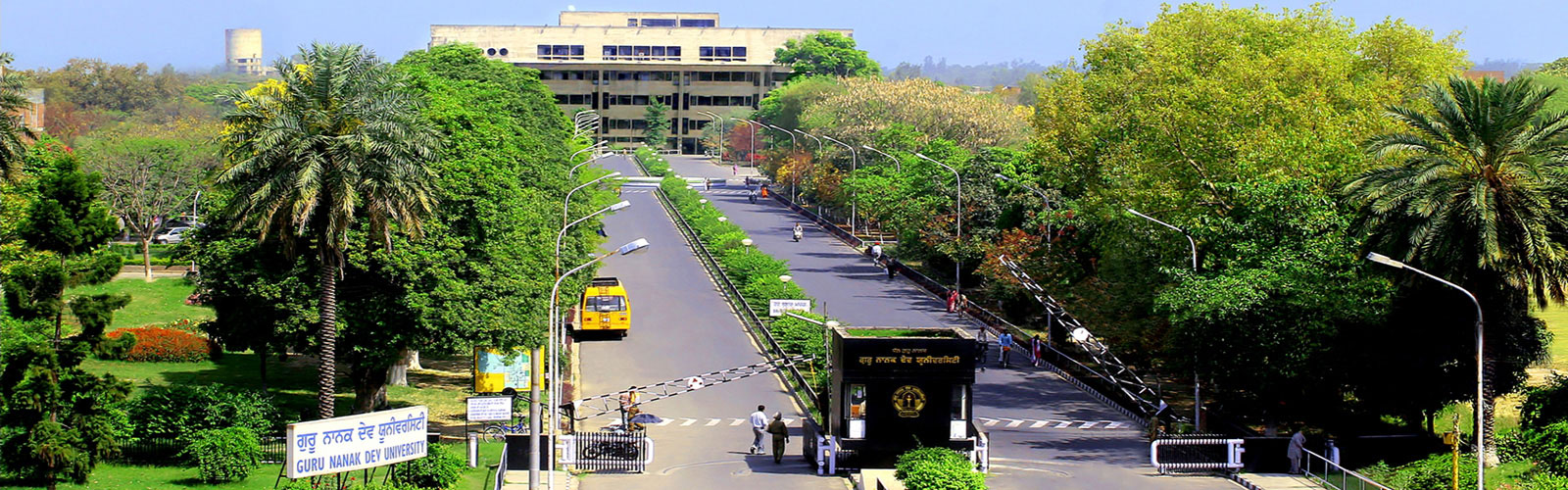
Introduction about Ph.D. in Urdu at Guru Nanak Dev University
Embarking on a Ph.D. in Urdu at Guru Nanak Dev University (GNDU), Amritsar, is more than an academic endeavor; it is a profound journey into the heart of one of the world's most poetic and culturally rich languages. Guru Nanak Dev University, an 'A++' grade institution accredited by NAAC, stands as a beacon of excellence in higher education. The Department of Urdu provides an intellectually stimulating environment where tradition meets modern research methodologies. For professionals looking to specialize in classical literature, contemporary prose, or linguistic evolution, this Ph.D. program offers the rigorous training required to become a thought leader in the field. By choosing GNDU, you align yourself with a legacy of academic rigor and a community dedicated to the preservation and promotion of the Urdu language.
In the current academic landscape, the demand for high-quality research is paramount. Scholars often seek Research Paper Writing Services to ensure their findings are published in reputed journals, enhancing their professional standing. A Ph.D. from GNDU empowers you to contribute significantly to the literary world, bridging the gap between historical heritage and futuristic linguistic trends.
Ph.D Admission 2026-2027 & Writing Support Services by Shiksha Research
Eligibility Criteria for Ph.D. in Urdu at Guru Nanak Dev University
To maintain the high standards of research within the department, Guru Nanak Dev University has established specific eligibility criteria for aspiring Ph.D. candidates. These criteria ensure that scholars possess the foundational knowledge necessary to undertake advanced doctoral research.
- Educational Qualification: Candidates must hold a Master?s degree in Urdu or a relevant allied subject from a recognized university.
- Minimum Marks: A minimum of 55% aggregate marks (or an equivalent grade) is required in the qualifying postgraduate examination.
- Relaxation: A relaxation of 5% marks (from 55% to 50%) is provided to candidates belonging to SC/ST/OBC (non-creamy layer) and differently-abled categories, as per UGC and university guidelines.
- Exemptions: Candidates who have qualified for UGC-NET (including JRF), SLET, or GATE are typically exempted from the university's entrance test, though they must still participate in the interview process.
Professionals transitioning from teaching or journalism into core research find these criteria a balanced gateway to higher specialization.
Entrance Exam for Ph.D. in Urdu at Guru Nanak Dev University
The entrance exam is a critical filter to identify candidates with the right aptitude for doctoral-level inquiry. The GNDU Ph.D. Entrance Test (PET) for Urdu generally consists of two distinct components designed to evaluate both general research skills and subject-specific expertise.
Paper I: Research Methodology: This section assesses the candidate's understanding of research ethics, logic, data interpretation, and qualitative research techniques. Many students find it beneficial to consult Questionnaire Design and Development experts when preparing for the practical aspects of research design.
Paper II: Subject Knowledge: This part focuses entirely on Urdu Literature and Language. It covers classical poetry, the evolution of the Urdu novel, critiquing literary movements like the Progressive Writers' Movement, and the nuances of Urdu grammar and linguistics. To clear this examination, a deep familiarity with both classical and modern texts is essential. The qualifying marks for the entrance test are usually 50% for general category candidates.
Fee Structure for Ph.D. in Urdu at Guru Nanak Dev University
Investing in a Ph.D. at Guru Nanak Dev University is highly cost-effective compared to other premier institutions. The fee structure is designed to support long-term research without placing an undue financial burden on the scholar.
| Fee Component | Approximate Amount (INR) | Occurrence |
|---|---|---|
| Application & Entrance Test Fee | 2,000 - 2,500 | One-time |
| Admission/Registration Fee | 10,000 - 15,000 | One-time |
| Tuition Fee (Annual) | 15,000 - 25,000 | Yearly |
| Library & Lab Charges | 5,000 - 7,000 | Yearly |
| Thesis Submission Fee | 15,000 - 20,000 | Once at submission |
Note: The fees mentioned above are indicative and subject to change as per university notifications. Additional charges may apply for infrastructure development or late submissions.
Admission Process for Ph.D. in Urdu at Guru Nanak Dev University
The admission process at GNDU is transparent and strictly merit-based. It follows a systematic path to ensure that only the most dedicated scholars are inducted into the program.
- Online Registration: Candidates must monitor the official GNDU website for Ph.D. admission notifications and fill out the online application form.
- Entrance Test: Eligible candidates (non-NET/JRF) must appear for the Ph.D. Eligibility Test conducted by the university.
- Declaration of Result: A merit list of qualified candidates is released.
- Interview/VIVA: Qualified candidates and those exempt from the entrance test are called for an interview. During this stage, candidates must present their research interest before the Departmental Research Committee (DRC).
- Enrollment: Once selected, candidates complete the document verification and fee payment to finalize their enrollment.
- Coursework: Every admitted candidate must undergo six months of mandatory Ph.D. coursework before beginning their primary research.
Ph.D. Subjects and Specializations in Urdu at Guru Nanak Dev University
The Ph.D. program allows for a high degree of specialization, catering to the diverse interests of modern scholars. The subjects offered during the coursework and research phase include:
- Classical Poetry: Study of Mir, Ghalib, and Iqbal.
- Urdu Fiction: Evolution of Dastan, Novella, and Short Stories.
- Linguistics and Philology: The history and structural development of the Urdu language.
- Literary Criticism: Deep dive into various schools of criticism (Tazkira, Marxi, and Modernist).
- Urdu Journalism: The role of the Urdu press in the Indian freedom struggle and modern media.
For those handling massive amounts of literary archives, Research Data Analysis Services can assist in identifying patterns and trends in literary evolution.
Research Areas in Urdu at Guru Nanak Dev University
Research at GNDU is not limited to rote learning; it encourages innovative exploration. Some of the most prominent research areas include:
- Sufism and Urdu Literature: Exploring the spiritual roots within poetic traditions.
- Comparative Literature: Comparing Urdu texts with Punjabi, Hindi, or Persian literature.
- Diasporic Urdu Literature: Researching the works of Urdu writers living outside the Indian subcontinent.
- Urdu in Punjab: Investigating the unique linguistic features and literary contributions of Urdu in the Punjab region.
- Women?s Writing in Urdu: Analyzing the themes of gender, identity, and resistance in female-authored texts.
Documents Required for Ph.D. in Urdu at Guru Nanak Dev University
To ensure a smooth admission process, candidates should keep the following documentation ready:
- High School (10th) and Higher Secondary (12th) Marksheets.
- Undergraduate (BA) and Postgraduate (MA) Degree Certificates.
- Detailed Mark Sheets (DMC) of all semesters of the Master's degree.
- UGC-NET/JRF/SLET Certificate (if applicable).
- Caste Certificate (for reserved categories).
- Character Certificate from the last attended institution.
- Migration Certificate (if coming from another university).
- Research Proposal (A preliminary draft outlining the research objectives).
- Passport-sized photographs and ID proof (Aadhar/Voter ID).
Guru Nanak Dev University Ph.D. Syllabus for Urdu
The curriculum for the Ph.D. program is designed to build a solid foundation before the actual research phase starts. The primary components include:
Part A: Coursework (6 Months): This involves two to three subjects, including "Research Methodology in Urdu" and "Current Trends in Urdu Literature." Students learn about bibliographic techniques, referencing styles, and the application of technology in research.
Part B: Main Research: After successfully completing the coursework, the scholar works under the guidance of a supervisor. This phase involves extensive data collection, literature review, and thesis writing. During the final stages, many scholars seek professional Thesis and Dissertation Writing Services to ensure their final document meets the highest linguistic and formatting standards required by the university.
How To Apply for Ph.D. in Urdu at Guru Nanak Dev University
Applying for a Ph.D. is a critical step that requires careful attention to detail. Follow these steps to apply at GNDU:
- Visit the official GNDU website (gndu.ac.in).
- Navigate to the "Admissions" or "Ph.D. Portal" section.
- Register using a valid email ID and mobile number to generate login credentials.
- Fill in personal details, educational history, and the subject of choice (Urdu).
- Upload scanned copies of the required documents and signatures.
- Pay the application fee via the integrated online payment gateway (Net Banking/Credit Card/Debit Card).
- Download and print the application form and fee receipt for future reference.
Career Scope and Job Opportunities After Ph.D. in Urdu from Guru Nanak Dev University
A Ph.D. in Urdu from a prestigious university like GNDU opens several doors in both the academic and corporate worlds. The expertise gained through years of research makes you a specialist in cultural and linguistic nuances.
- Academician: Assistant Professor or Lecturer in universities and colleges.
- Research Scientist/Fellow: Opportunities in research organizations like the National Council for Promotion of Urdu Language (NCPUL).
- Translator and Interpreter: Working with government agencies, NGOs, or international publishing houses.
- Journalism: Content editors, columnists, and news anchors for Urdu news outlets and digital media.
- Creative Writing & Scriptwriting: Opportunities in the film and television industry for dialogue writing and lyrics.
- Civil Services: Urdu is an optional subject in UPSC and state PSC exams; a Ph.D. provides an unmatched advantage here.
Scholarship for Ph.D. in Urdu at Guru Nanak Dev University
GNDU supports its scholars through various financial aid programs, ensuring that financial constraints do not hinder intellectual growth.
- UGC-JRF (Junior Research Fellowship): Candidates who have cleared the NET-JRF receive a substantial monthly stipend for five years.
- GNDU University Fellowship: The university offers its own fellowships based on merit and the availability of funds within the department.
- State Government Scholarships: SC/ST/OBC students can apply for post-matric scholarships and Rajiv Gandhi National Fellowships.
- Maulana Azad National Fellowship: Specifically for minority students pursuing higher education.
FAQs Regarding Ph.D. in Urdu at Guru Nanak Dev University
1. Can I pursue a Ph.D. in Urdu part-time at GNDU?
GNDU primarily focuses on full-time research; however, for employed professionals, specific provisions may exist under university ordinances regarding part-time enrollment, provided they meet residency requirements.
2. Is the PhD Entrance Test mandatory for everyone?
No. Candidates who have cleared UGC-NET, JRF, or SET are usually exempt from the entrance test but must appear for the interview.
3. How long does it take to complete the program?
The minimum duration is 3 years, and the maximum is usually 6 years, including the coursework period.
4. Does GNDU provide hostel facilities for Ph.D. scholars?
Yes, GNDU has dedicated hostels for research scholars with modern amenities and a conducive atmosphere for study.
5. What is the importance of the Research Proposal during admission?
The proposal is vital as it demonstrates your clarity of thought, the novelty of your topic, and your preparedness for the doctoral journey.




