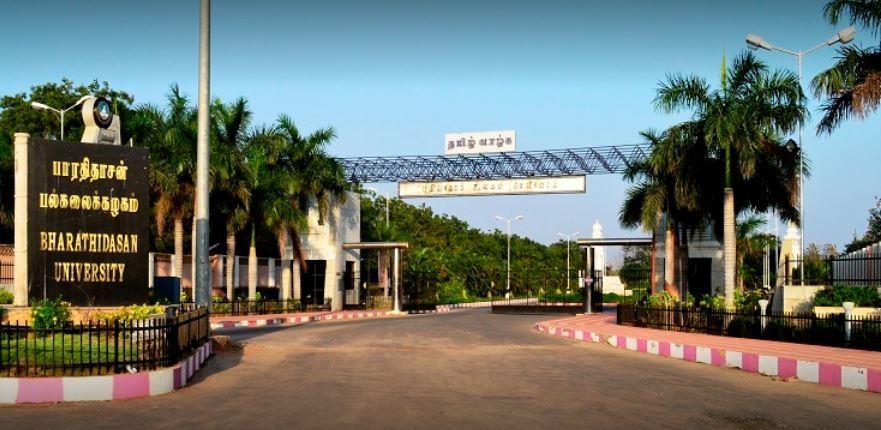
Introduction about Ph.D. in Women's Studies at Bharathidasan University
The Doctor of Philosophy (Ph.D.) in Women's Studies at Bharathidasan University is a distinguished research programme designed for scholars who aspire to contribute to gender scholarship, feminist theory, and policy‑making. This interdisciplinary doctorate blends sociology, literature, history, and political science, empowering professionals to lead transformative research that addresses gender inequities in Indian and global contexts.
Future academicians, policymakers, and social entrepreneurs will find this programme uniquely positioned to foster critical thinking, methodological rigour, and a deep ethical commitment to women’s empowerment.
Ph.D Admission 2026-2027 & Writing Support Services by Shiksha Research
Eligibility Criteria for Ph.D. in Women's Studies at Bharathidasan University
- Master’s degree (M.A./M.Sc.) in Women's Studies, Sociology, History, Literature, Political Science, or any related discipline from a recognized university.
- Minimum aggregate of 55% (or 5.0 CGPA on a 10‑point scale) for general category candidates; 50% for SC/ST/OBC candidates.
- Qualifying the University’s Ph.D. entrance test or a national level test (e.g., UGC‑NET, CSIR‑NET) with a minimum qualifying score as prescribed.
- Candidates with a direct Ph.D. entry based on research proposal may be admitted if they have a minimum of 60% in their postgraduate degree.
Entrance Exam for Ph.D. in Women's Studies at Bharathidasan University
The university conducts a comprehensive written test followed by a personal interview. The written exam evaluates:
- Core concepts in Women's Studies and feminist theory.
- Research methodology and statistical tools.
- Interdisciplinary knowledge linking social sciences and humanities.
- English language proficiency.
Successful candidates are required to submit a research proposal during the interview stage. Candidates who have cleared UGC‑NET (Women’s Studies) or an equivalent national test are exempted from the written exam.
Fee Structure for Ph.D. in Women's Studies at Bharathidasan University
| Fee Component | Amount (INR) | Notes |
|---|---|---|
| Application Processing Fee | 2,500 | One‑time, non‑refundable |
| Entrance Examination Fee | 3,000 | Applicable only for candidates appearing for the university test |
| Annual Tuition & Registration | 15,000 | Payable at the start of each academic year |
| Library & Laboratory Charges | 2,000 | Inclusive of digital resources |
| Thesis Submission & Examination | 5,000 | One‑time, payable after successful defense |
| Total Approximate Cost (4‑Year Programme) | 80,000 | Excluding scholarships and waivers |
Admission Process for Ph.D. in Women's Studies at Bharathidasan University
- Online Application: Fill the official application form on the university portal and upload scanned copies of academic certificates.
- Payment of Fees: Pay the processing and entrance fees through the integrated payment gateway.
- Entrance Examination: Appear for the written test (if applicable) on the scheduled date.
- Interview & Proposal Review: Shortlisted candidates are invited for a personal interview and must present a concise research proposal.
- Final Selection: The Selection Committee issues an admission letter based on merit, research potential, and availability of supervisors.
- Enrollment: Complete the enrollment formalities, including submission of original documents and payment of the first year’s tuition.
Ph.D. Subjects and Specializations in Women's Studies at Bharathidasan University
The doctorate offers diverse specializations to match evolving research interests:
- Feminist Theory & Philosophy
- Gender and Development Studies
- Women’s Health and Reproductive Rights
- Women’s Education and Literacy
- Gender, Media, and Cultural Representation
- Policy Analysis on Women’s Empowerment
- Indigenous Women’s Knowledge Systems
Research Areas in Women's Studies at Bharathidasan University
Faculty members and research centres focus on cutting‑edge topics such as:
- Intersectionality of caste, class, and gender in South India.
- Impact of digital media on gender identities.
- Women’s participation in grassroots politics.
- Climate change resilience among rural women.
- Legal reforms and gender‑sensitive jurisprudence.
- Economic empowerment through micro‑finance and entrepreneurship.
Documents Required for Ph.D. in Women's Studies at Bharathidasan University
| Document | Format | Remarks |
|---|---|---|
| Completed Application Form | PDF (Online) | Submitted via university portal |
| Mark Sheets & Degree Certificates (Post‑graduate) | Scanned copies (PDF/JPEG) | Attested by the issuing authority |
| Research Proposal (2,000‑3,000 words) | Must align with faculty expertise | |
| Entrance Exam Score Card (if applicable) | UGC‑NET, CSIR‑NET, etc. | |
| Curriculum Vitae | Highlight publications and relevant experience | |
| Two Academic References | PDF (Signed letters) | From professors or research supervisors |
Bharathidasan University Ph.D. Syllabus for Women's Studies
The syllabus is structured into three phases:
- Coursework (Year 1): Core modules – Feminist Theory, Research Methodology, Statistics for Social Sciences, Ethics in Research.
- Comprehensive Exams (End of Year 2): Written and oral exams covering coursework and literature review.
- Thesis Research (Years 3‑4): Original research, data collection, analysis, and dissertation writing under the guidance of a designated supervisor.
How To Apply for Ph.D. in Women's Studies at Bharathidasan University
Prospective candidates should follow these steps:
- Visit the official university website and navigate to the “Ph.D. Admissions” section.
- Register using a valid email address and create a secure password.
- Complete the online application form, ensuring all mandatory fields are filled accurately.
- Upload the required documents (see the “Documents Required” table) and pay the processing fee.
- Monitor the portal for notifications regarding the entrance exam schedule or interview invitation.
- Prepare a robust research proposal; consider using PhD Topic Selection and Proposal Assistance for expert guidance.
- After receiving the admission letter, submit original certificates to the university’s Office of the Registrar.
Career Scope and Job Opportunities After Ph.D. in Women's Studies from Bharathidasan University
A doctorate in Women’s Studies opens diverse professional pathways:
- Senior Lecturer / Professor in Universities and Colleges.
- Research Scientist in government think‑tanks (e.g., NITI Aayog, Ministry of Women & Child Development).
- Policy Analyst for NGOs, International Agencies (UN Women, WHO).
- Program Manager for gender‑focused development projects.
- Consultant for corporate diversity and inclusion initiatives.
- Editor / Author for academic journals and publishing houses.
- Independent researcher with opportunities for Research Publication Support and grant acquisition.
Scholarship for Ph.D. in Women's Studies at Bharathidasan University
Merit‑based and need‑based scholarships are available through:
- University’s Own Ph.D. Fellowship (₹12,000 per month).
- UGC Junior Research Fellowship (JRF) – competitive national award.
- State Government Scholarships for SC/ST/OBC candidates.
- External fellowships – Commonwealth, Fulbright, and DAAD.
- Students may also explore PhD Admission Assistance services for streamlined application to scholarship programmes.
FAQs Regarding Ph.D. in Women's Studies at Bharathidasan University
- 1. How long does the Ph.D. programme take?
- Typically 4 years, subject to timely completion of coursework, comprehensive exams, and thesis submission.
- 2. Can I pursue the Ph.D. part‑time while working?
- Yes, the university offers part‑time registration for eligible working professionals. The duration may extend to 6‑7 years.
- 3. Is there a provision for credit transfer from other universities?
- Credits for relevant postgraduate courses may be considered after approval by the Academic Council.
- 4. What is the role of a supervisor?
- The supervisor provides academic guidance, monitors research progress, and facilitates access to resources and funding.
- 5. How can I improve my research writing




